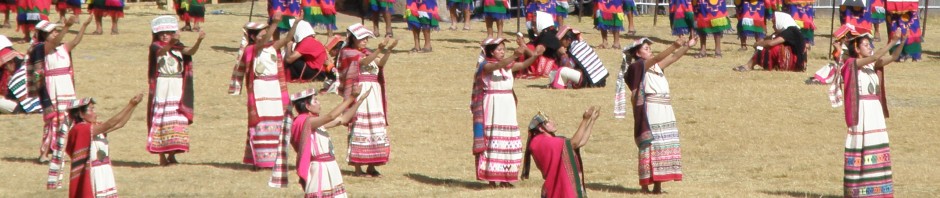
-

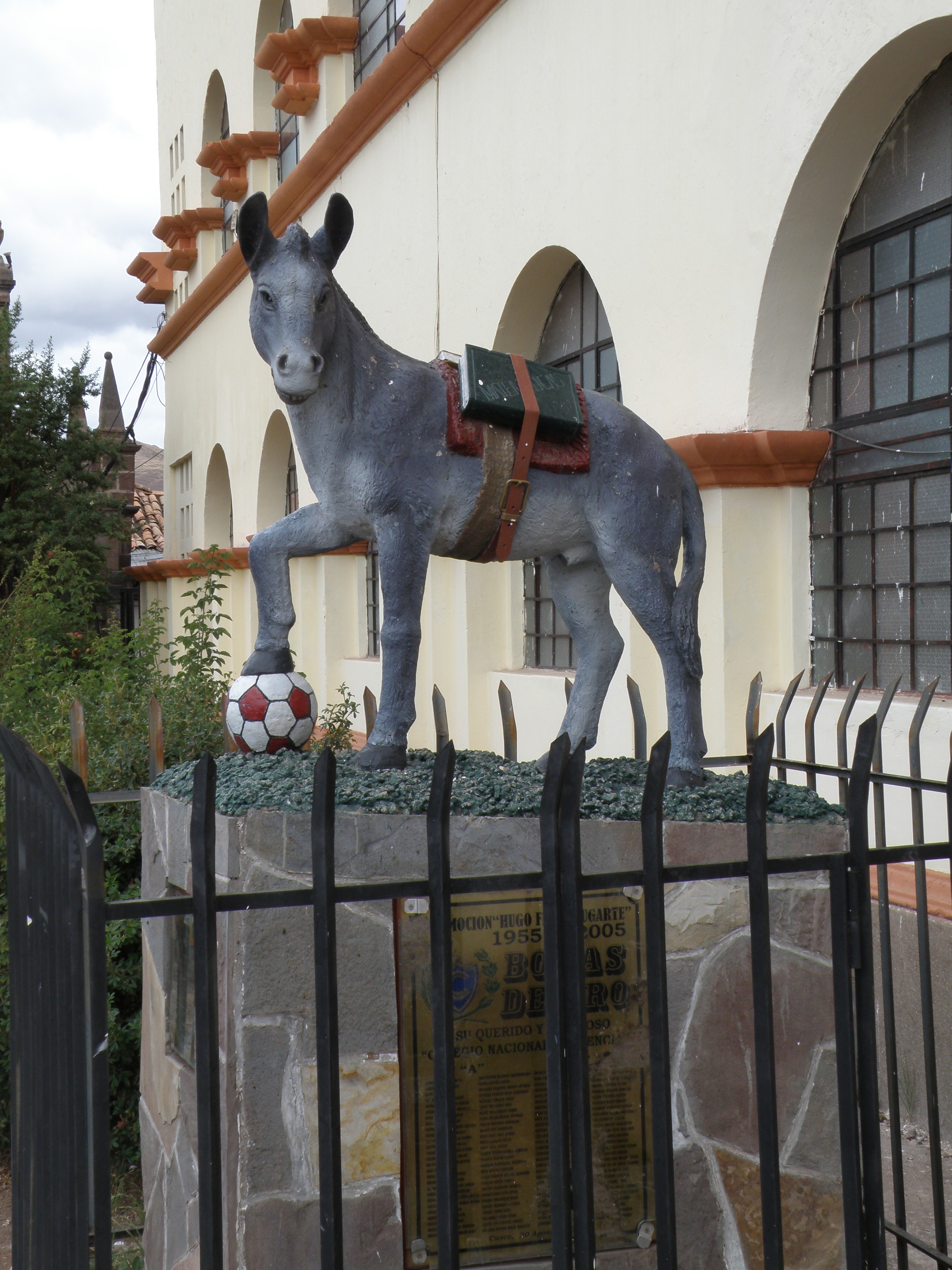
- The Cienciano Donkey
-

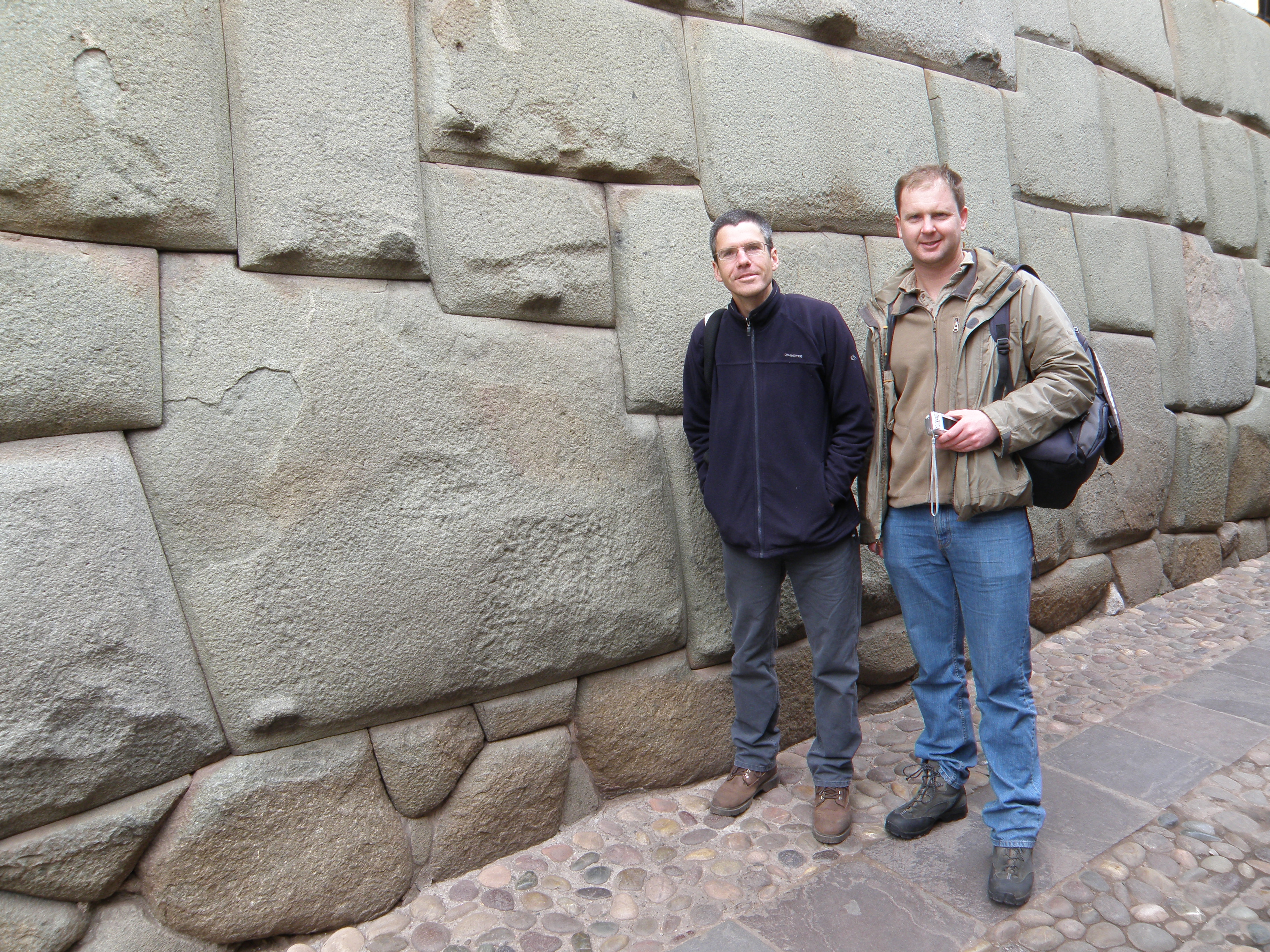
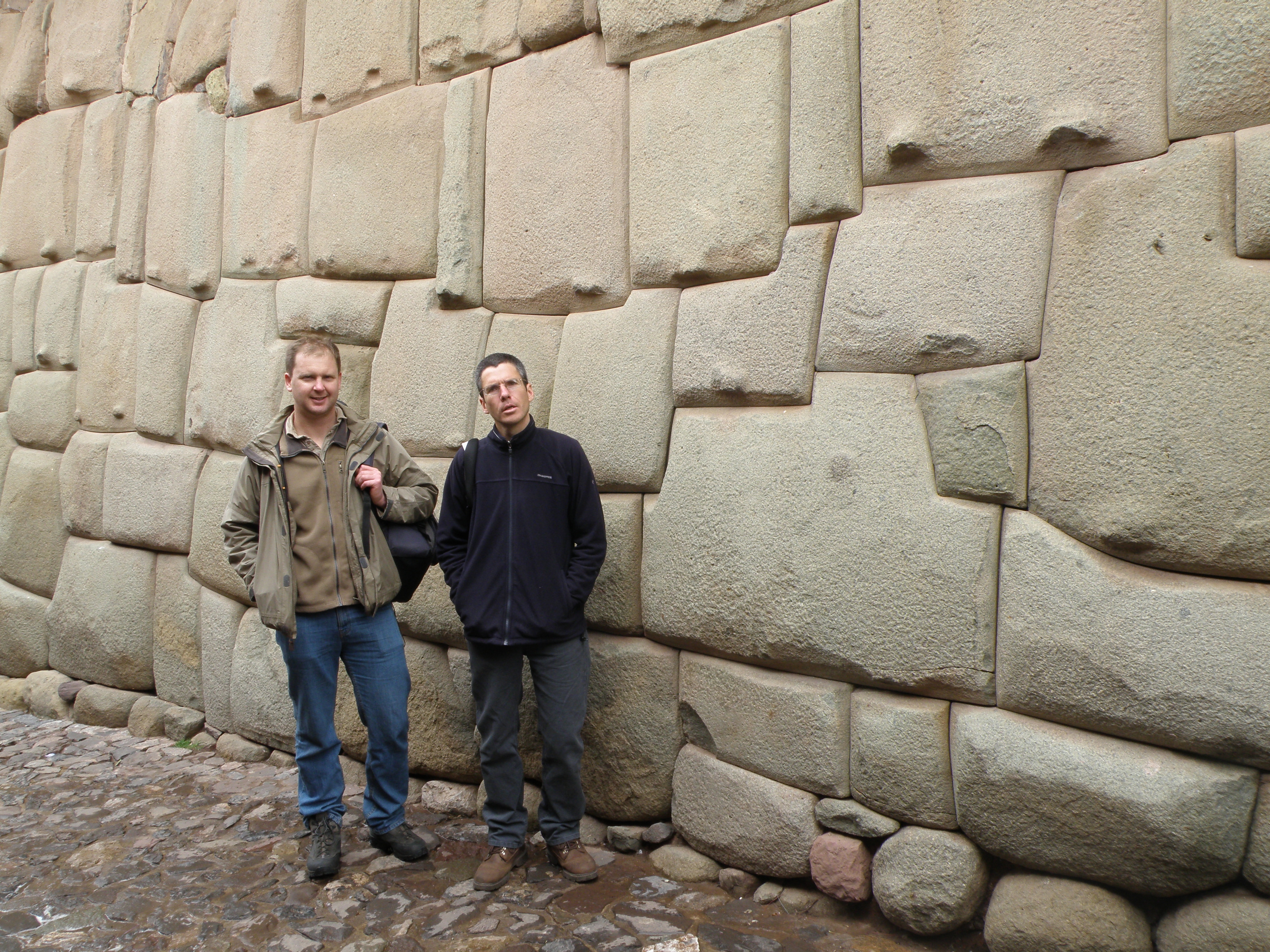
- Hatunrumiyoc

-

- Hatunrumiyoc

-
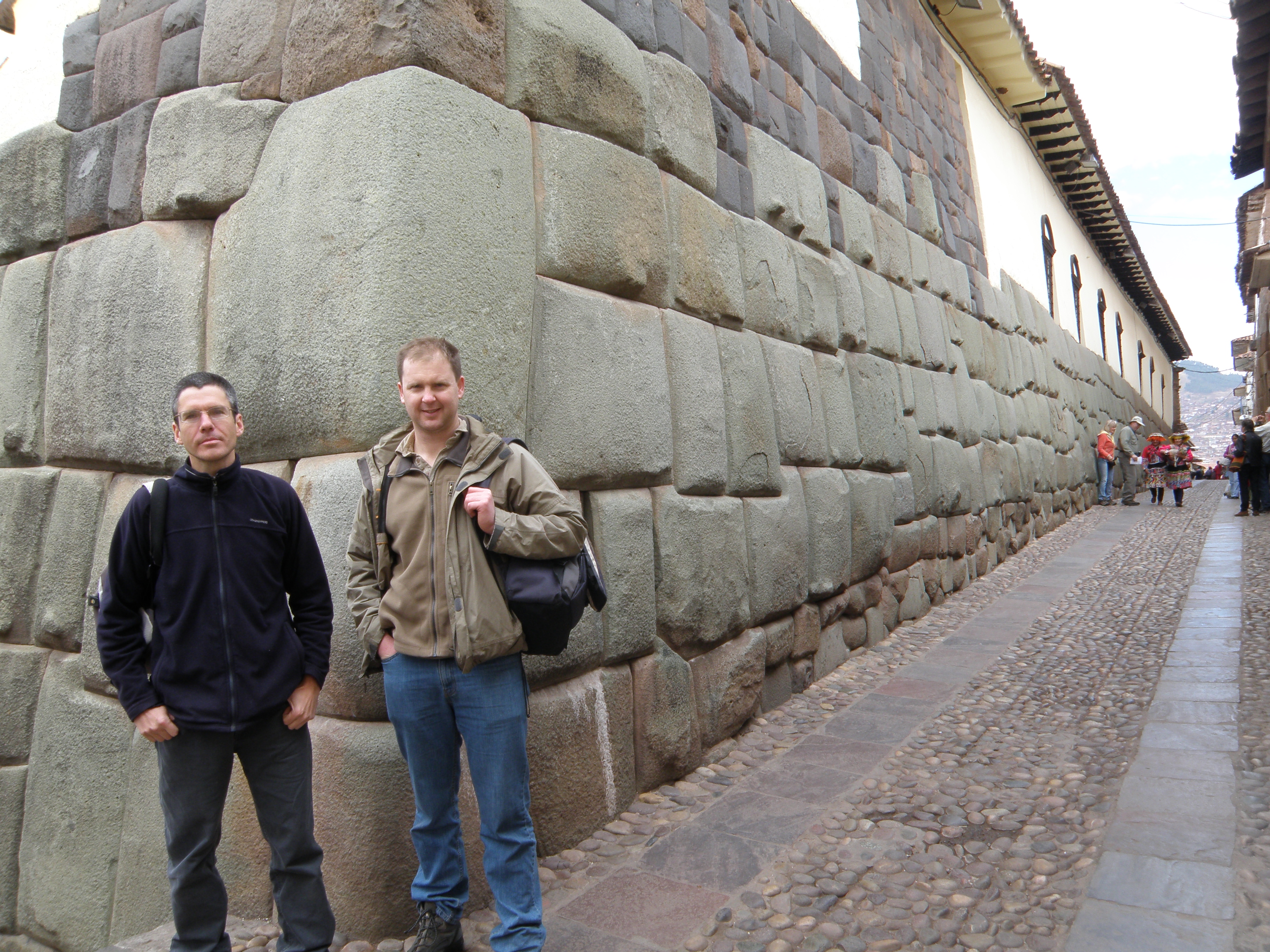
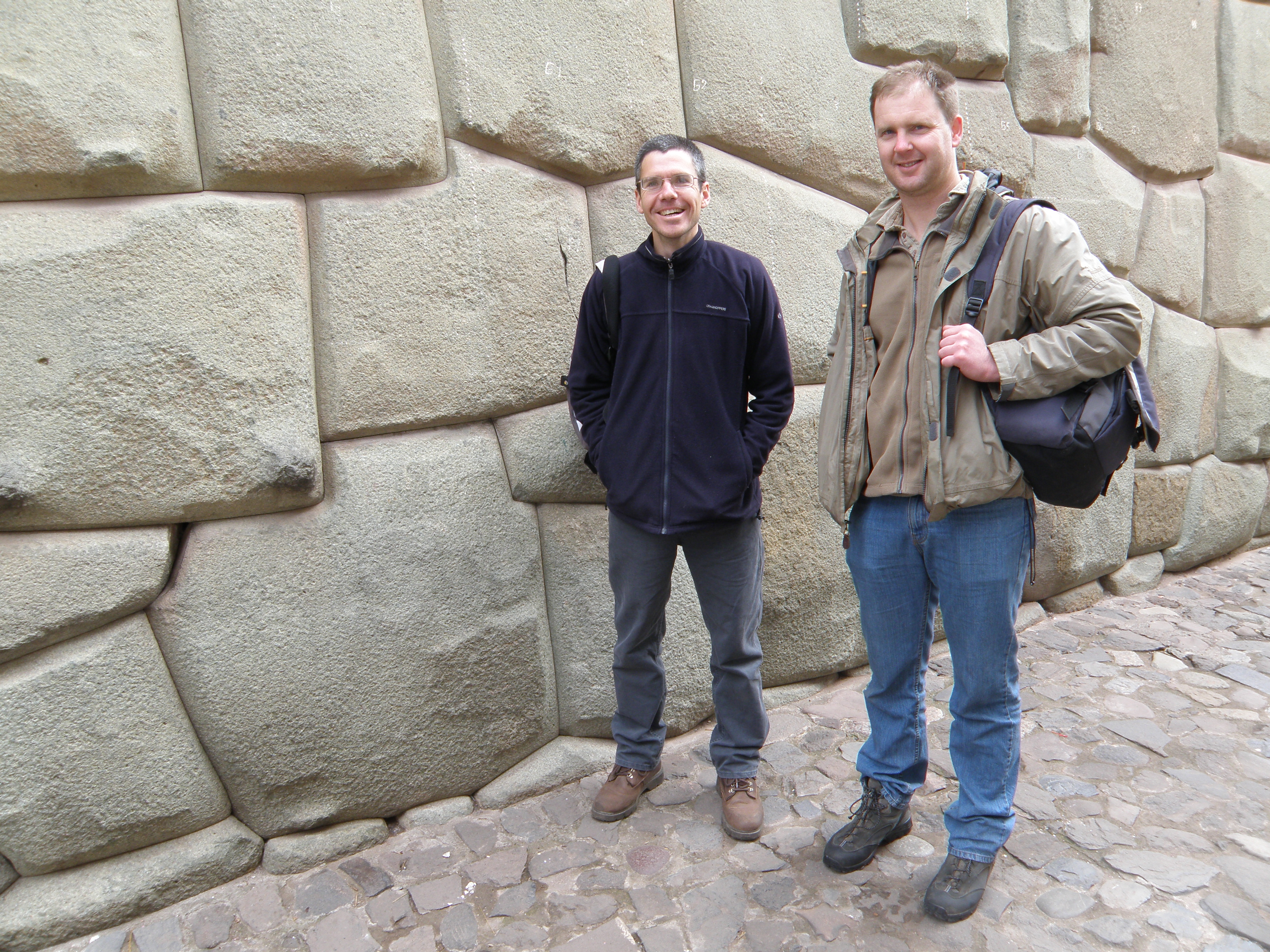
- Next to the 13-sided stone
-
- Start of the Salkantay trek
-
- Cruzpata


-

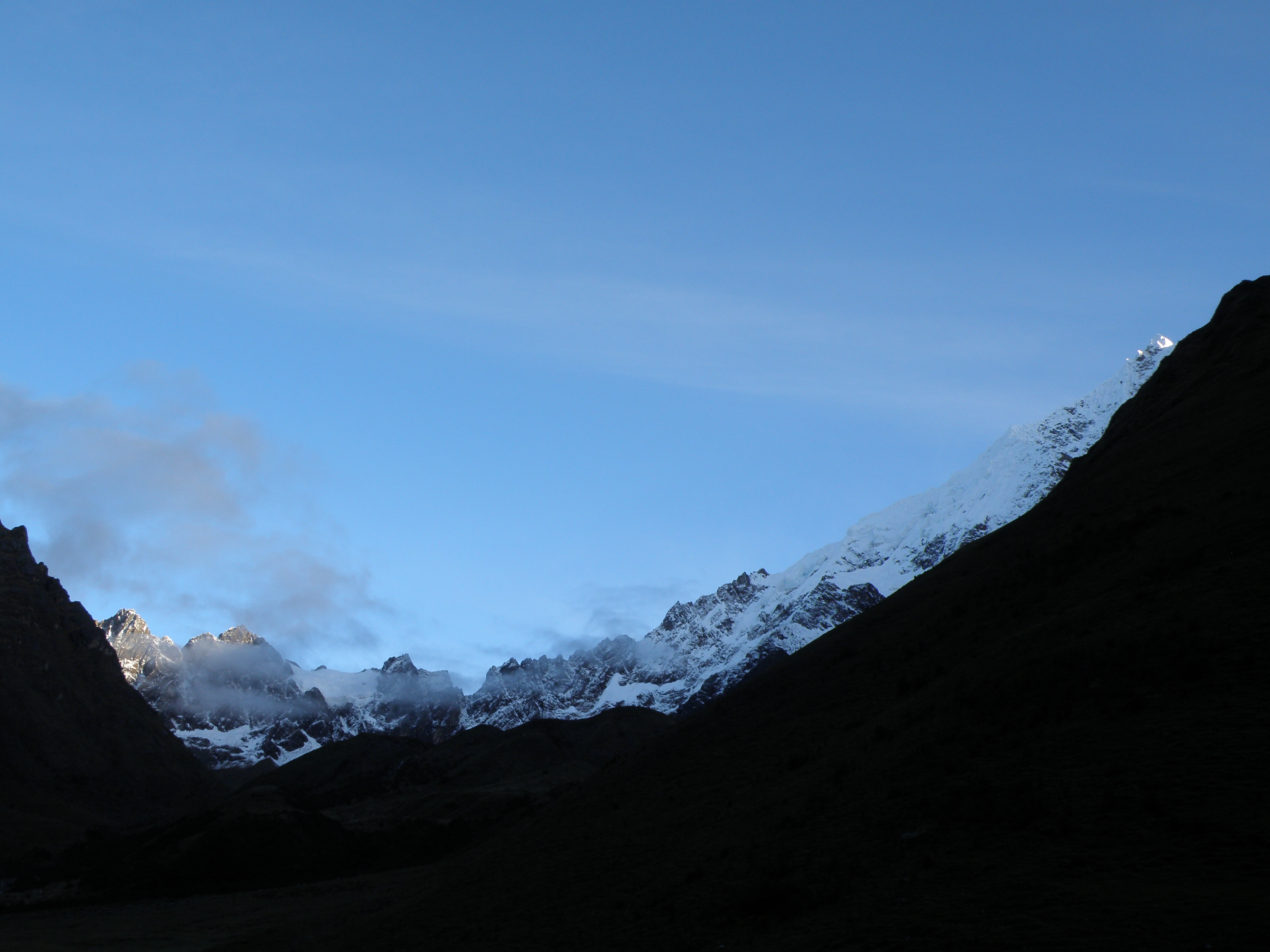
- Soraypampa


-

- Track towards the Paso Humantay Pass


-
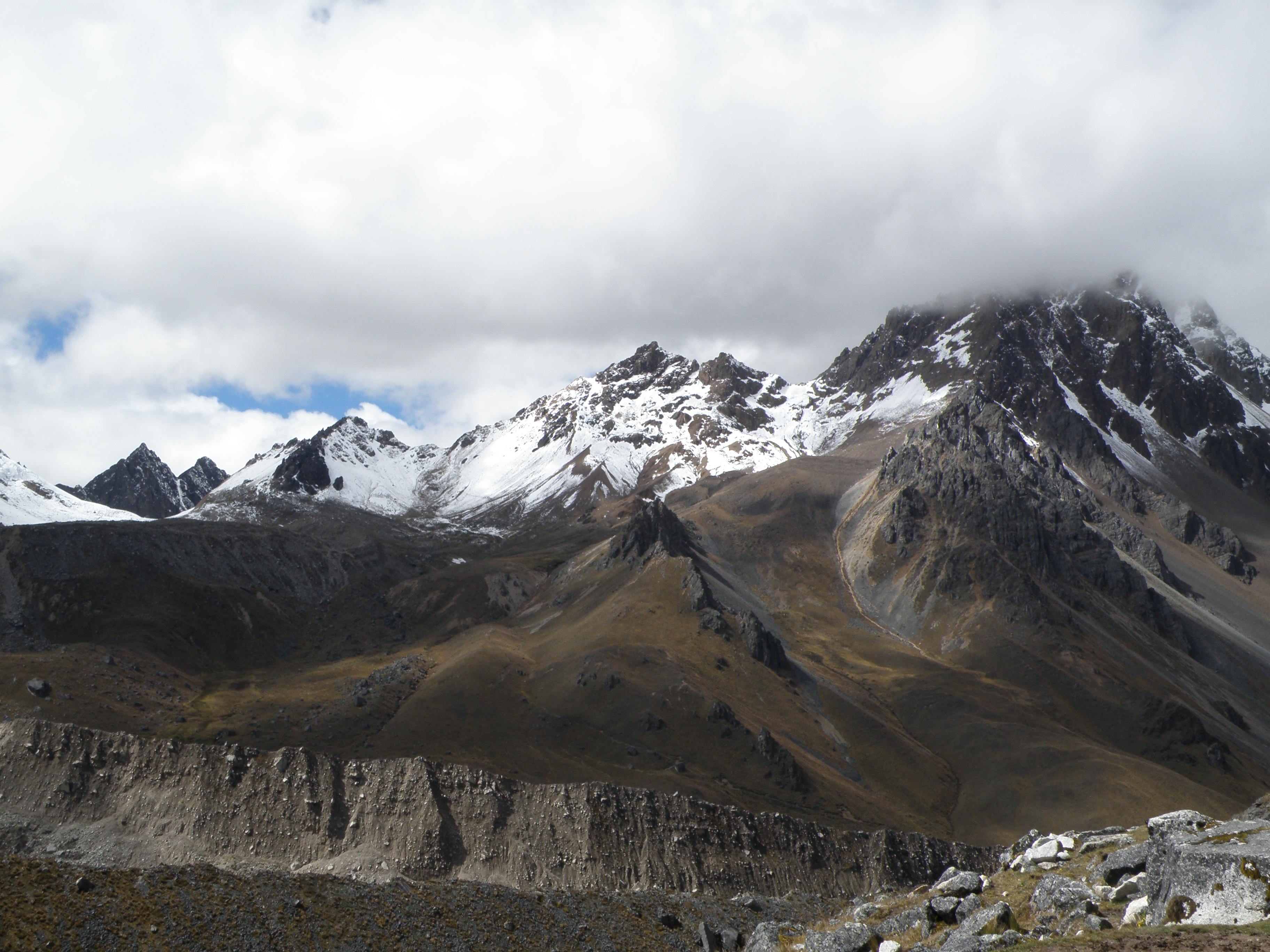
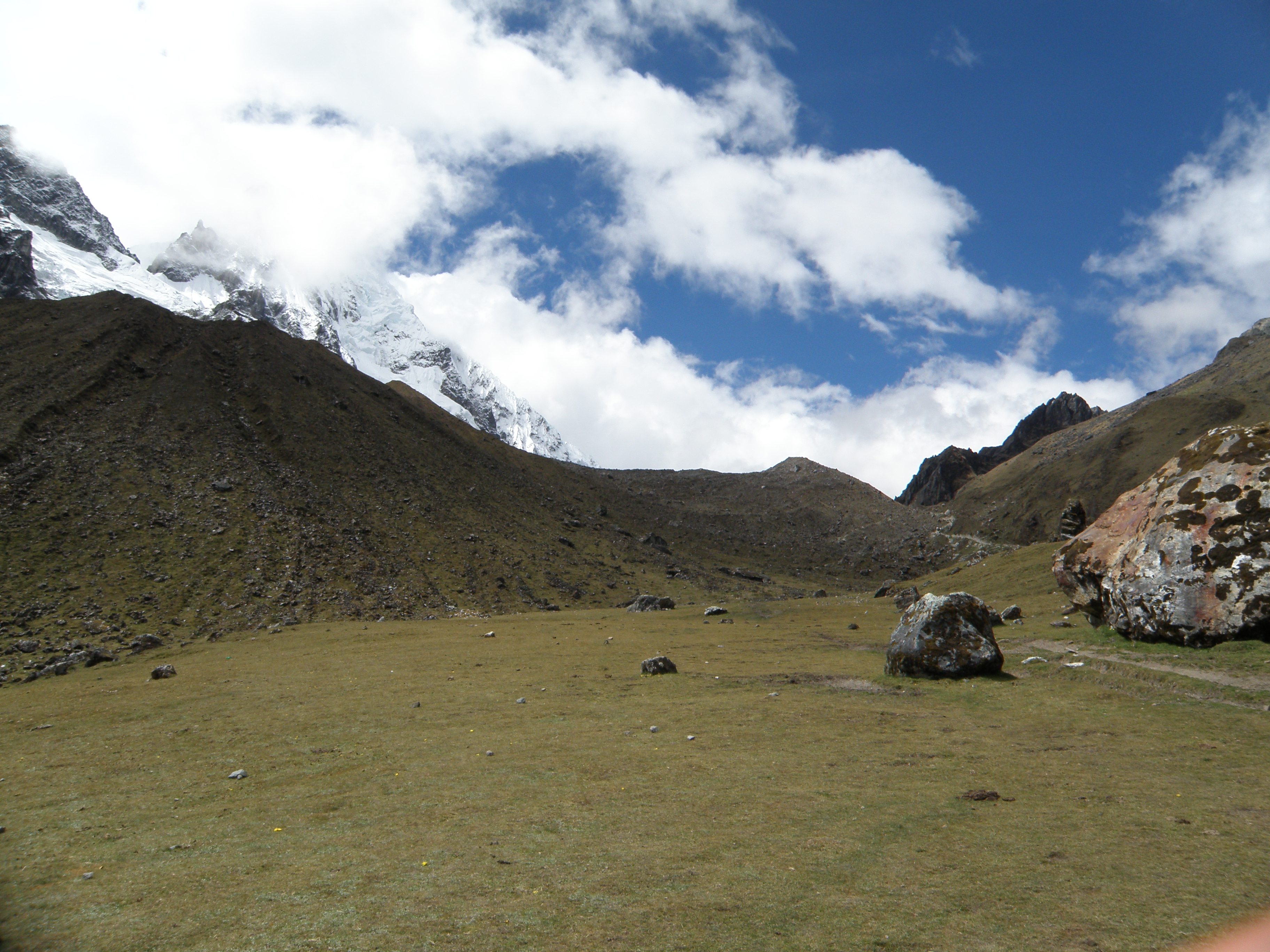
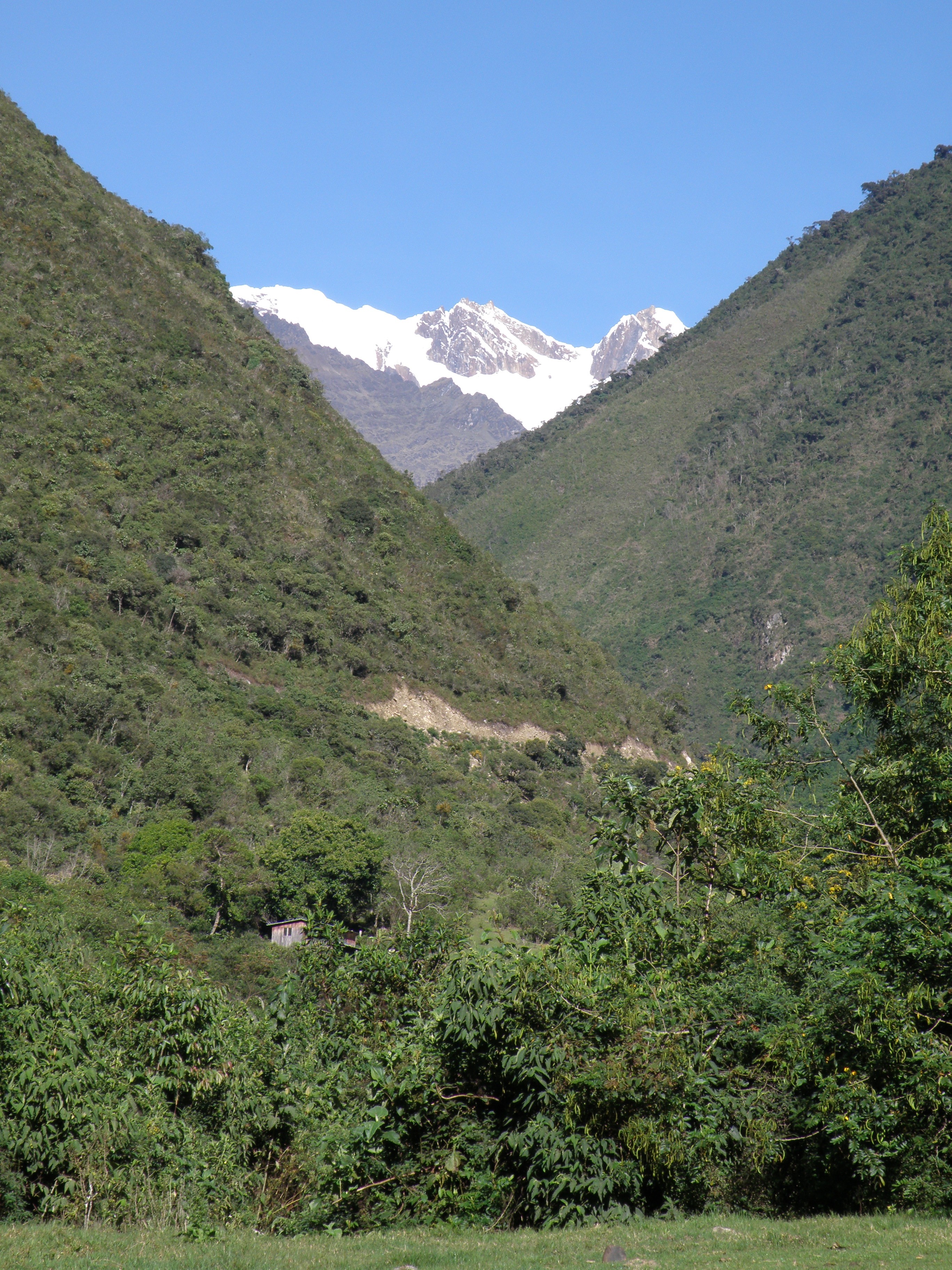
- Salkantay

-

- Salkantay

-
- Salkantay


-

- Salkantay


-

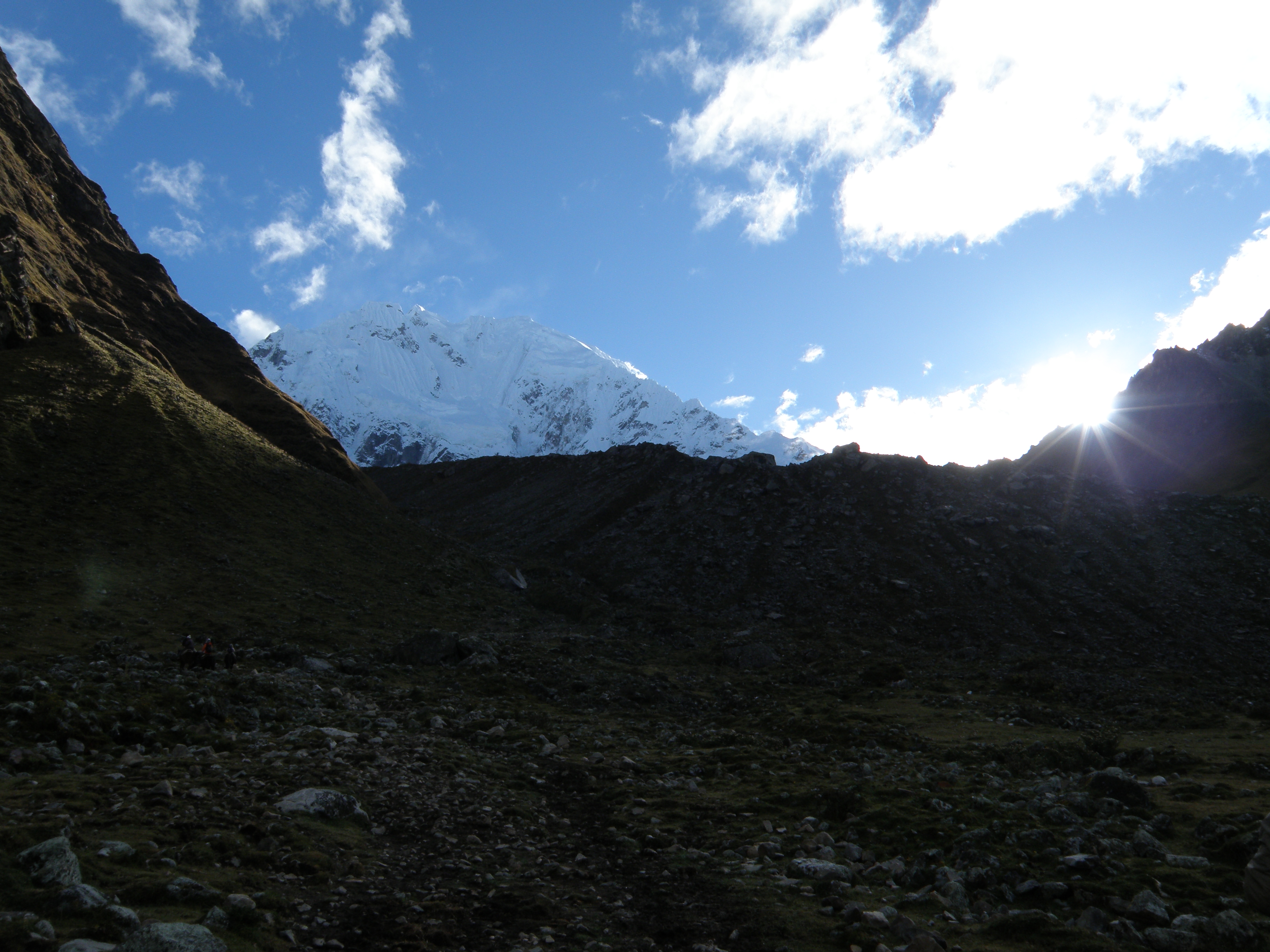
- Salkantay from the top of the Pass

-
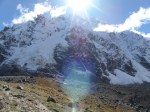
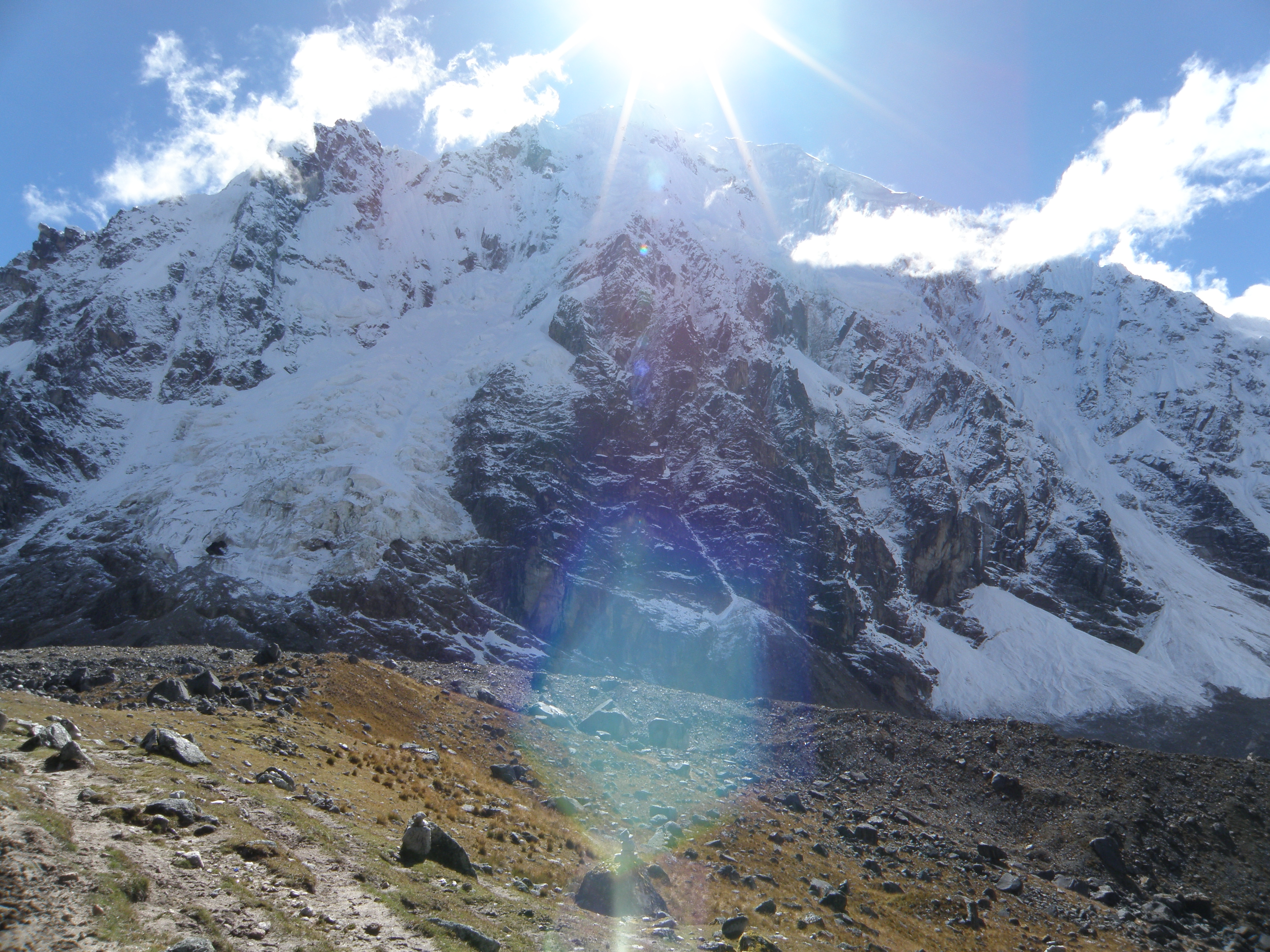
- Salkantay
-

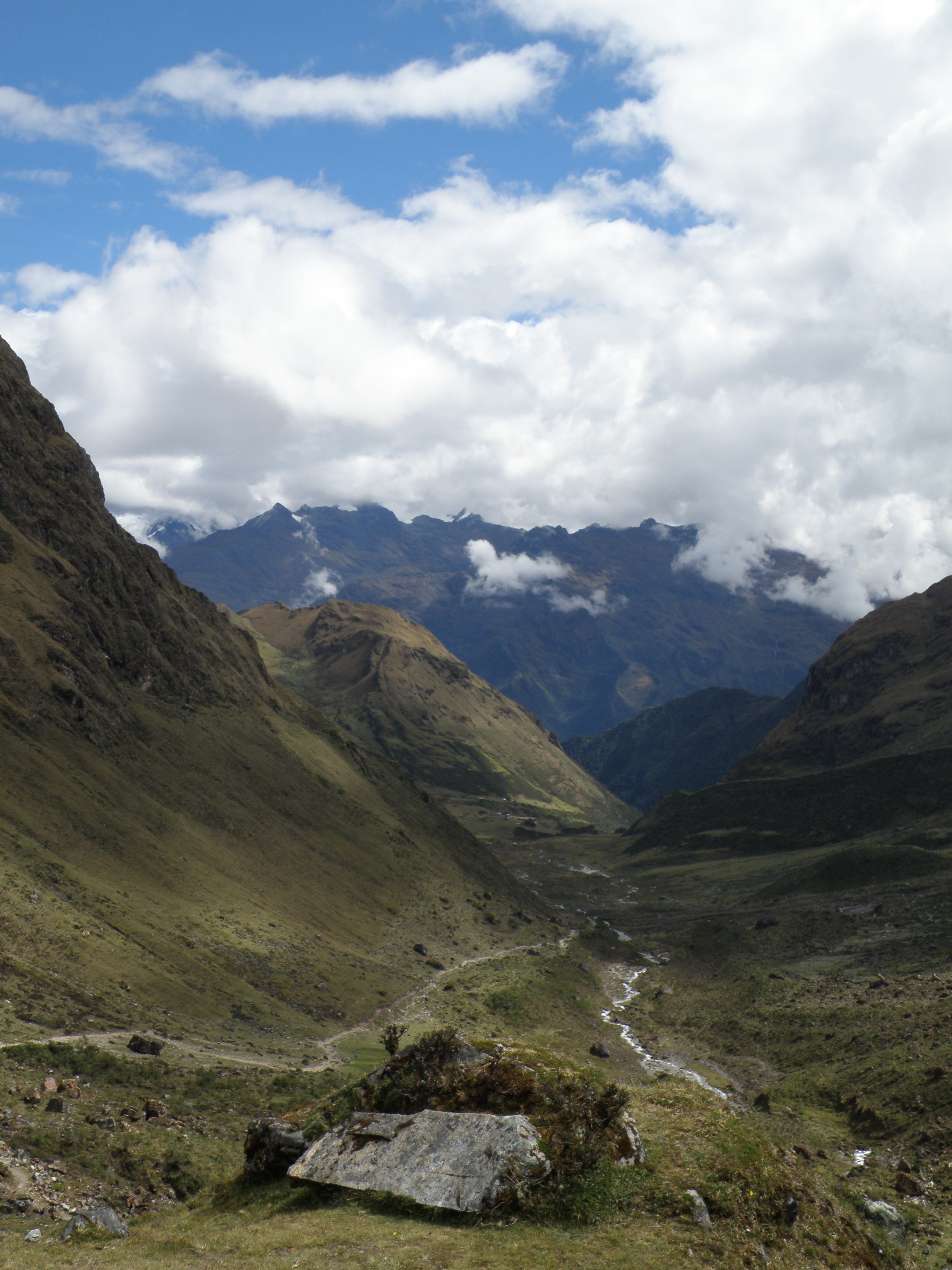
- Paso Humantay Pass

-
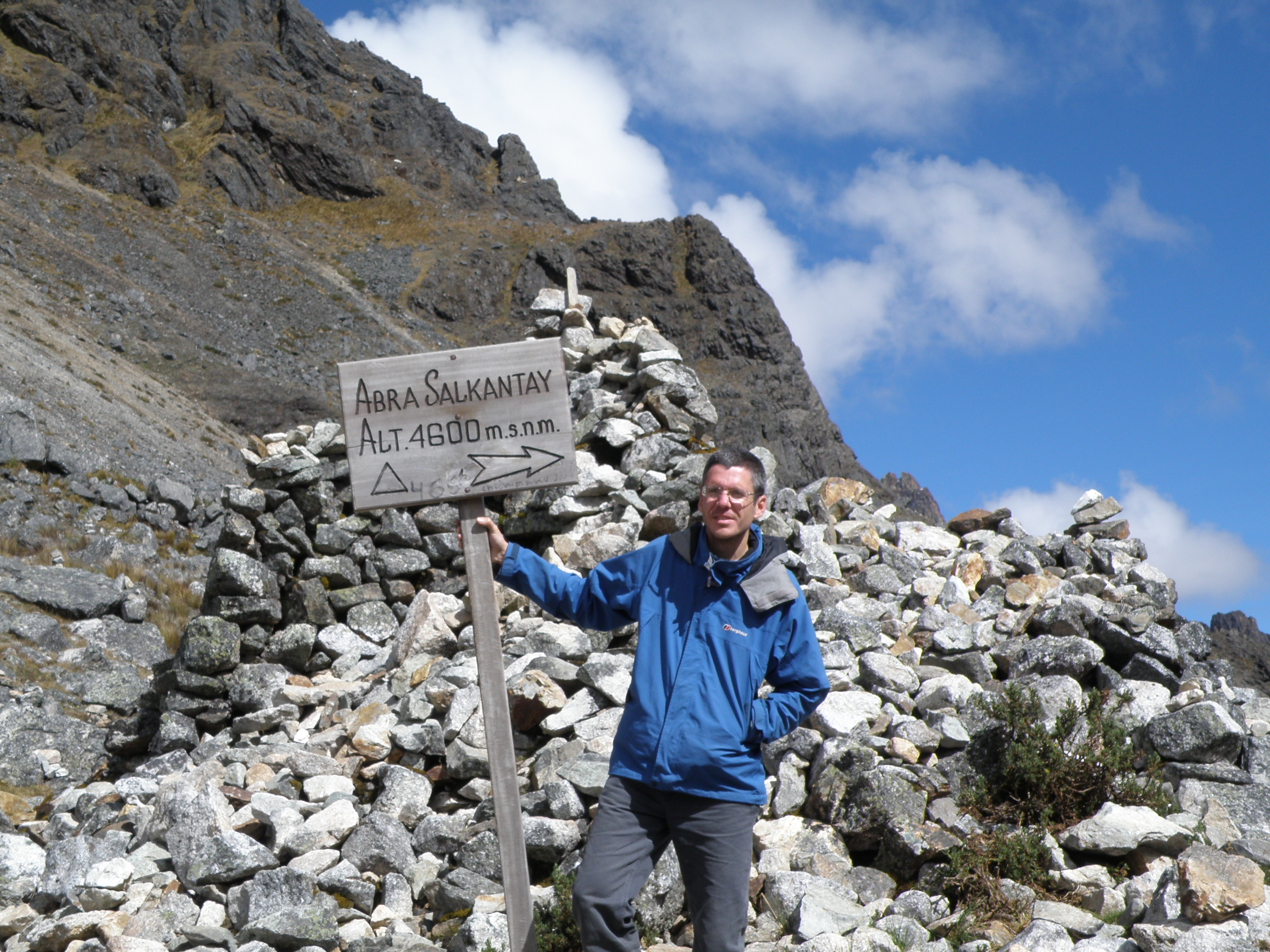
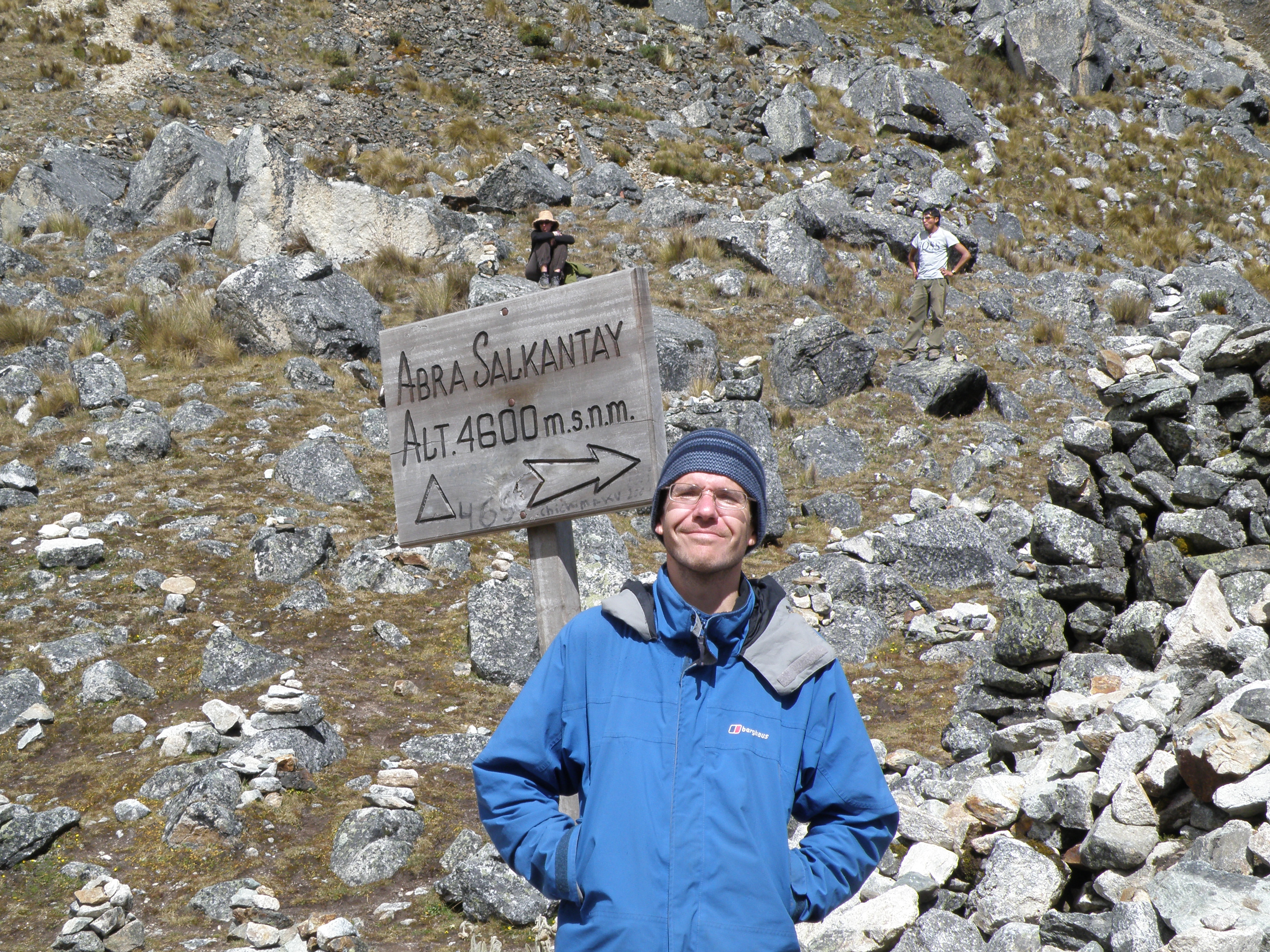
- On top of the Paso Humantay Pass








-

- Santa Teresa

-
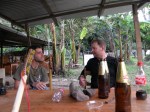
- Ido Kahlon and Cameron Ward

-
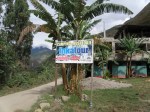
- Campsite in Santa Teresa



-
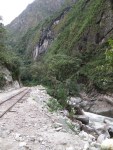
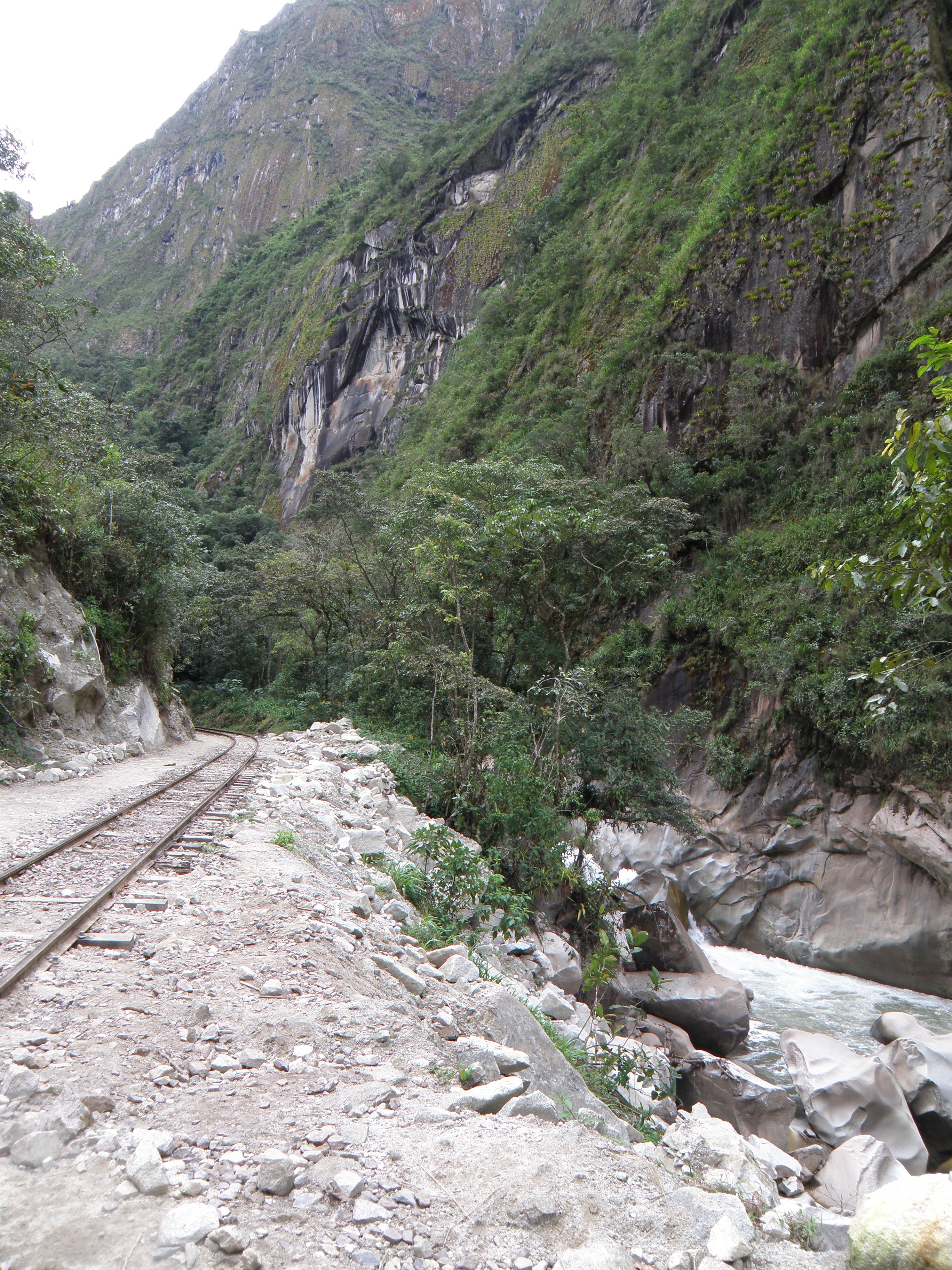
- En route to Aguas Calientes

-
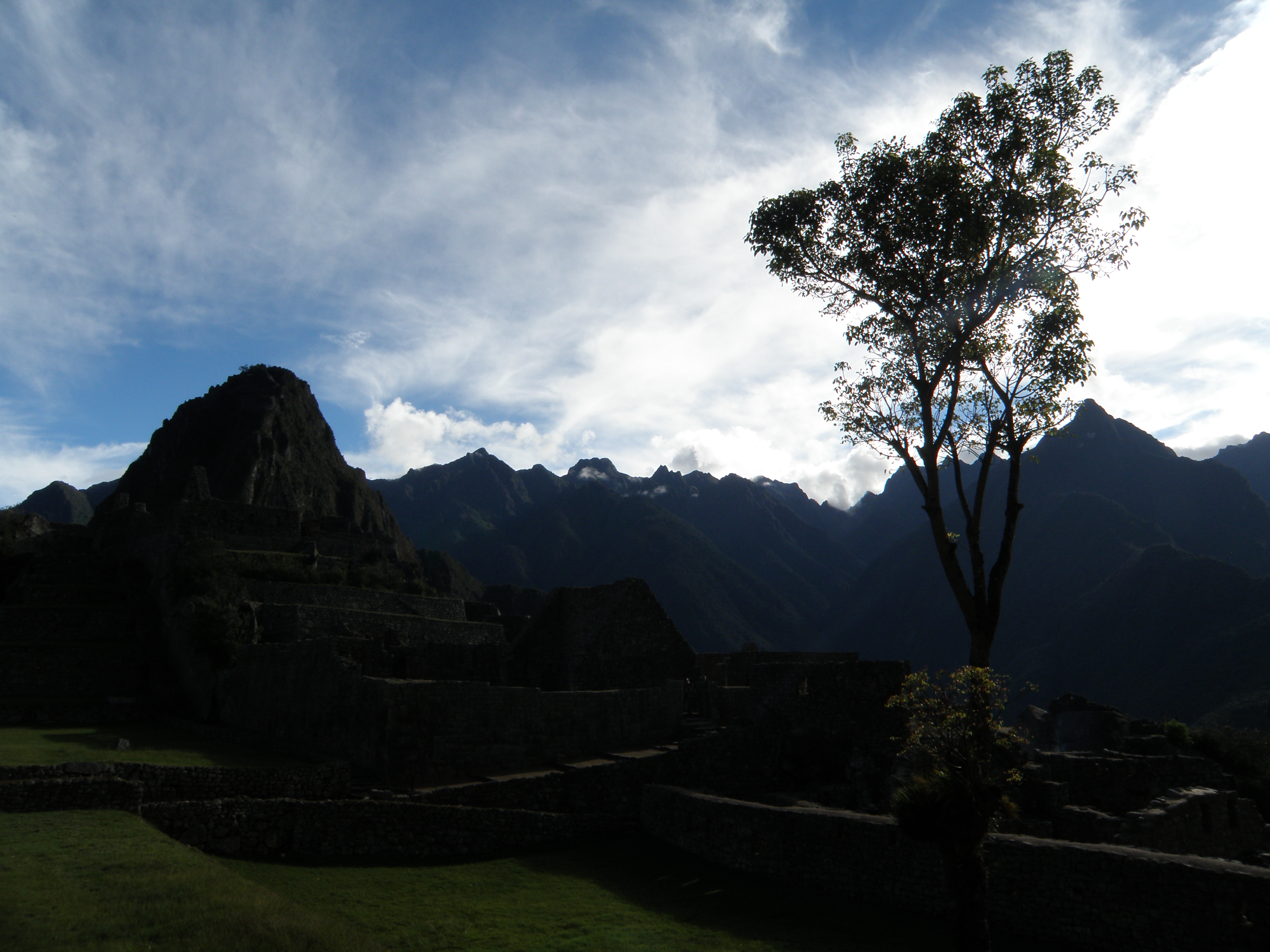
- Daybreak in Machu Picchu


-

- Machu Picchu

-
- Machu Picchu

-

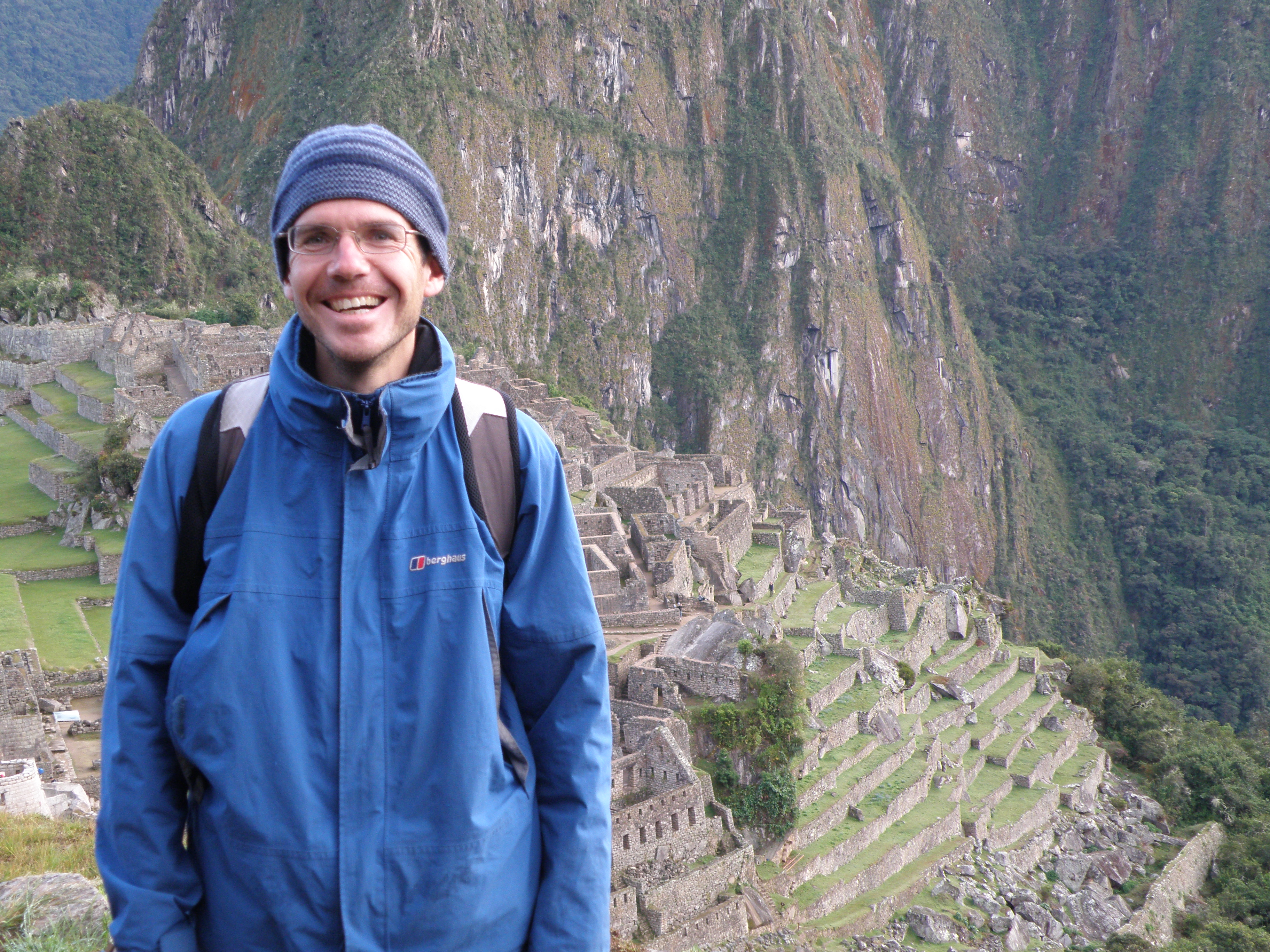
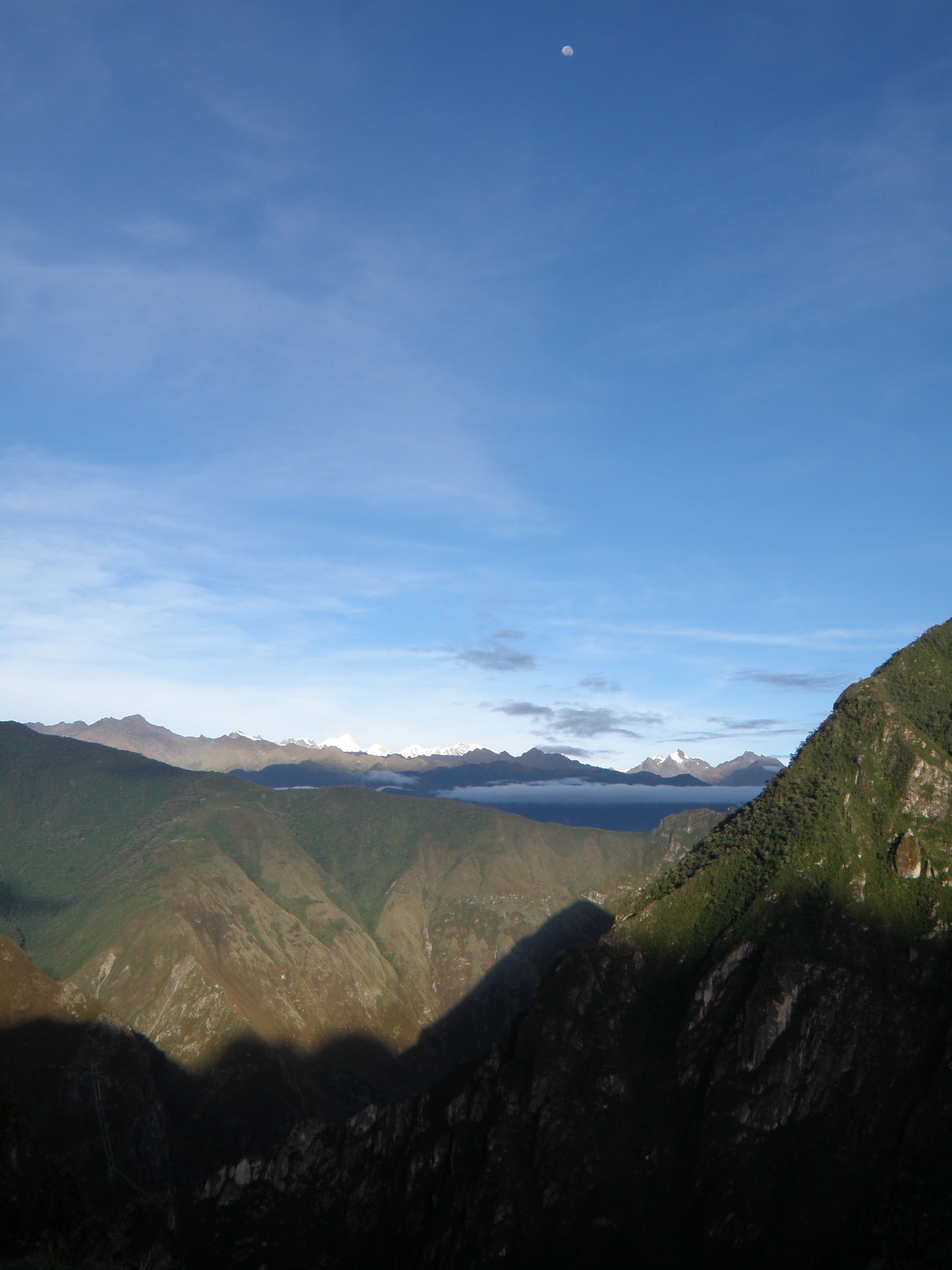
- Looking west at the Cordillera Vilcabamba


-

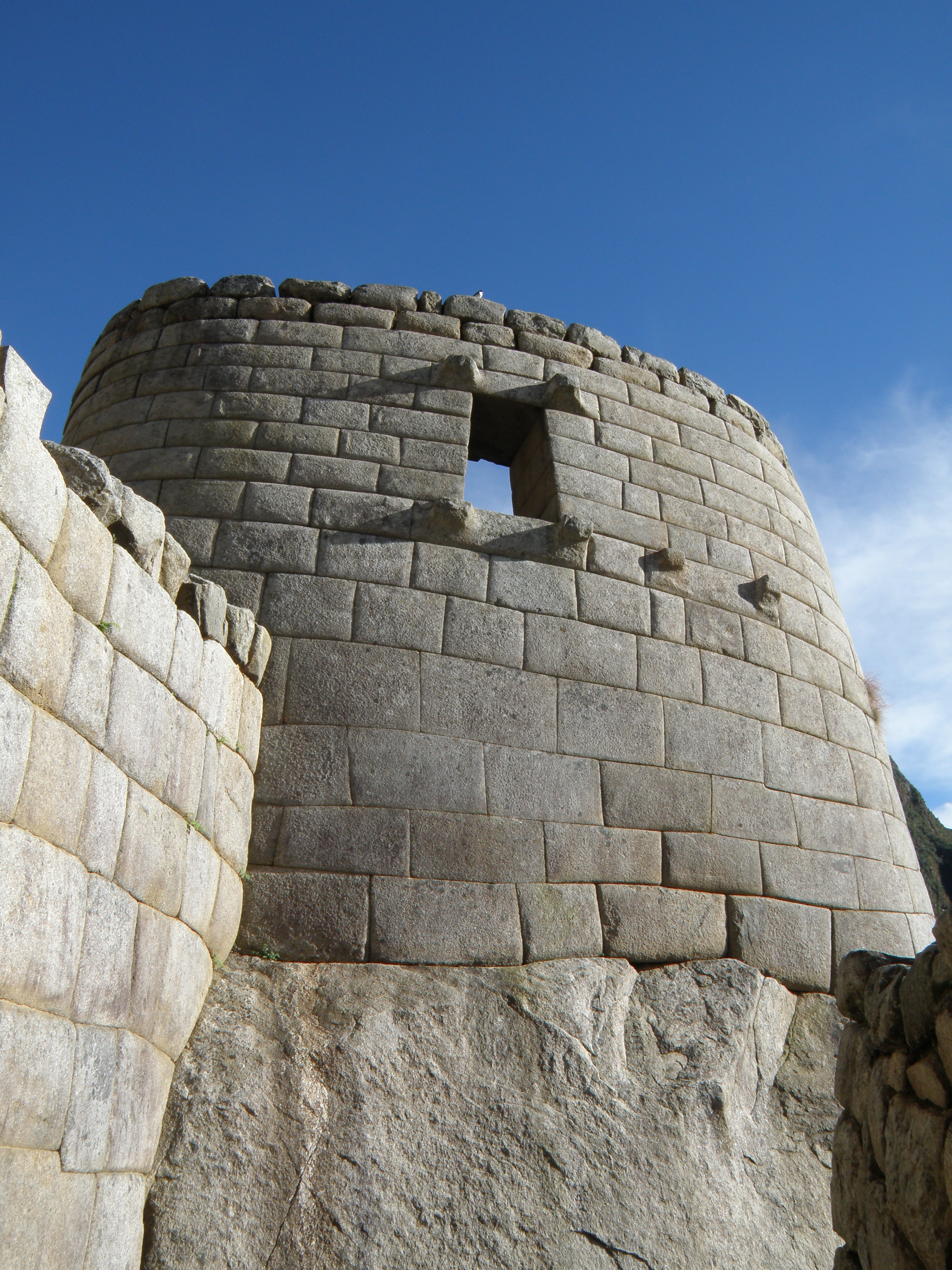
- Temple of the Sun, Machu Picchu
-
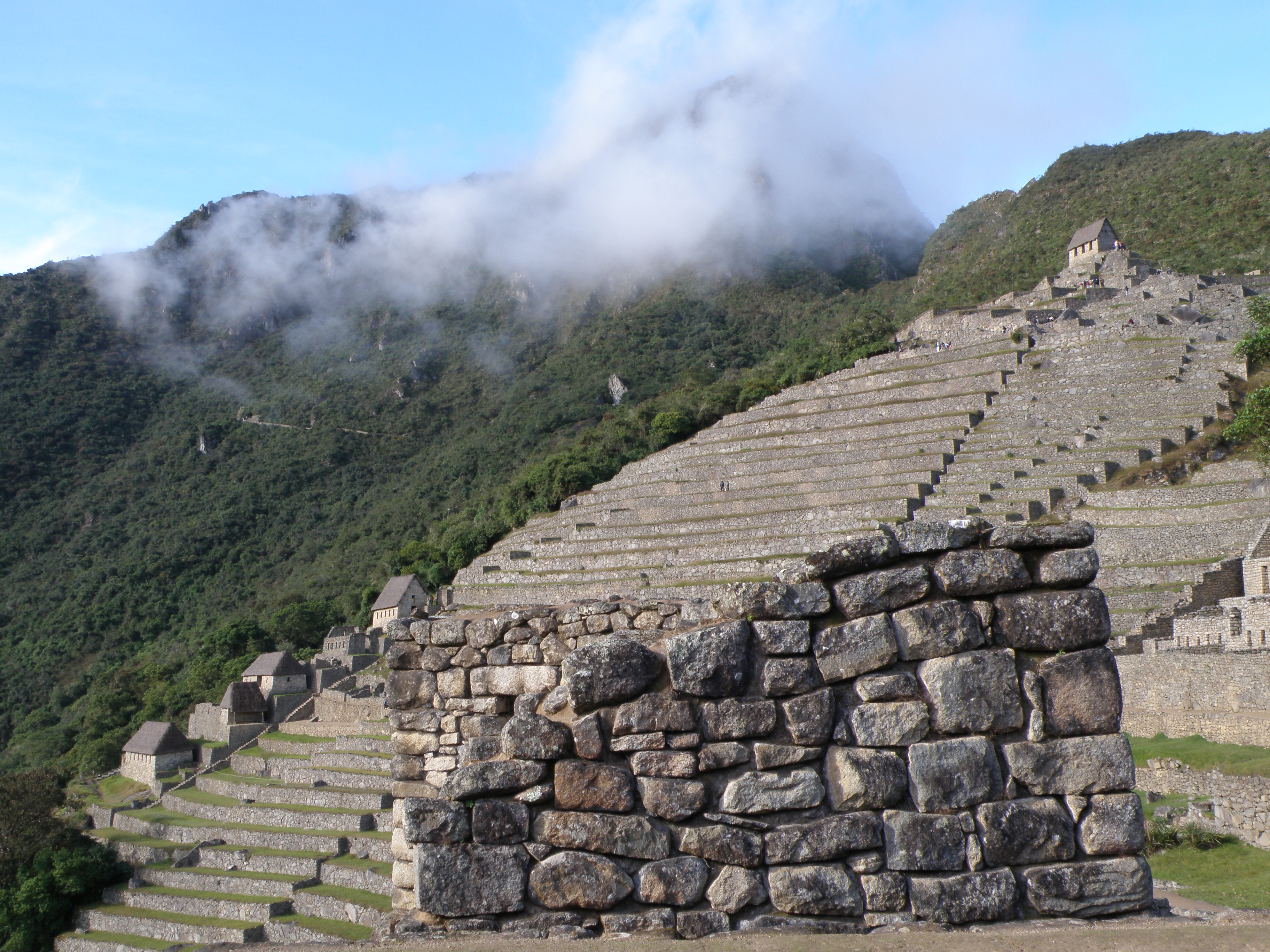
- Agricultural terraces, Machu Picchu
-
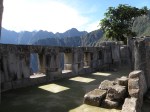
- Temple of the Three Windows

-

- The Intihuatana stone


-

- Fernando, the tour guide

-
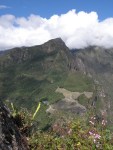
- View of Machu Picchu from Wayna Picchu



Chapter 14: Machu Picchu
Monday, May 24
I was up for breakfast at a strangely early time. Rosa, with her big smile, welcomed me back to the house. I wanted to play some guitar, but a cut finger made it difficult. Instead, I gladly received some help from Rosa with my Spanish homework (tarea). I was very happy to be back at the hostel. The home stay was a positive experience, but I was speaking more Spanish at the hostel. I was at a loss on my first day away from Spanish class though, so I started formatting my exercise books.
Out of the sunshine and into the shade, it was a cold day to be sat in the hostel’s central courtyard. There seemed to be a lot more Germans about. I was starting to like German phonetics. The thoughtful sounding turn of phrase and eager expressions in the conversations pleased me. The characters I met were always generous in their willingness to speak English. They shame us Brits with our dour, lethargic response to other languages.
After lunch in Plateros, I returned to the Centro Artesenal Cusco and found a suitable alpaca hat for Uncle Graham. The total cost of the hats, plus postage and packaging, came to 159 soles, about £38. The attentive attendant in Serpost had my package taped up in no time at all. It was ready to fly back to Britain. I was gleefully imagining the expressions of my nieces and nephews when the hats arrived. I just about kept my hat on as firecrackers exploded all around Cusco. Festivities were a regular occurrence. In Peru, there were vast differences in culture and approaches to life. It was all around me in Cusco, the street smart and sharp looks. Then the colourful codes, identities, and traditions of the rural folk.
I popped into a British themed bar, Norton’s Rat, later in the afternoon to catch the second half of an England versus Mexico football match. I wished I hadn’t. An ignorant sounding man with a strong London accent started to irritate me with his rather rude behaviour towards the barman. I soon left.
Cameron had arrived in Arequipa. He was about to set out on a guided trip to Colca Canyon. After a meagre meal of sardines and bread earlier in the evening I became further engrossed in my new book. It was all about King Arthur, and I relished and finished off all the tales before midnight.
Tuesday, May 25
My velux window gave me the wonderful spectacle of a moonlit night over Cusco. Light beams shone down into my room. It was quite magical and otherworldly, and I felt a light weight on me. When I came around it was the sun’s turn. Its warmth cloaked my room, but my arms were aching all the way down to my fingers. What was affecting me now I don’t know, but I had to leave the guitar alone, much to my frustration. I took two paracetamols and had breakfast in the dining room.
It was a cool sort of day with spots of rain, so I remained in my room studying my Spanish notes. I vowed to remove the stubborn Gennaro Gattuso sticker from my frosted glass window before the World Cup started. Irritation turned into an aching chill. My hands were particularly cold. I put this down to poor circulation. Deeper breathing was said to improve circulation, by taking in more oxygen to the lower lungs. At Cusco’s altitude though, I pondered what difference a few deep breaths could make?
Health concerns, including a dodgy stomach, couldn’t have come at a worse time. Cameron had travelled across an ocean, and we were about to start an 85 km five-day trek. I wandered down to Plateros and tried out the lunch at Fogon. A television and radio were blaring out so much noise, drowning out luncheon guests’ chatter. They should have renamed the place Foghorn! I later wandered the streets. I stopped outside the Cusco University Science Faculty to take some photographs of the inspirational Cienciano Donkey statue. With his hoof on a football this donkey was no ‘donkey’. I then visited a really good book exchange on Heladeros. There were charges on a one for one exchange. I gladly paid five soles for a mouldy copy of Aldous Huxley’s Island. I downed a pint, almost an armful, of orange and mango juice at San Pedro but felt rotten. I took two more paracetamols, some coca leaves to chew on and then returned back to bed. I slept till 7pm but flu-like symptoms, aches and stomach pains remained.
Wednesday, May 26
A night of mild fits and strange dreams. Stomach pains, chill and nausea greeted my waking hour. I struggled with a breakfast of orange cordial, instant coffee, bread and jam. It was an overcast start to the day with intermittent rain.
After some Spanish study I sank into Aldous Huxley’s Island. It grabbed my attention and took my mind away from my ailments.
I decided to visit the bank. Along Tucaman I bumped into Jeneen and her boyfriend Andy. He had just flown over from England. We briefly chatted. Then I continued along a narrow passageway, with its dank and pungent smell of urine seeping out of the walls backing onto the Hotel Monasterio. You had to hold your breath to pass the spot. To the left ran a collapsed street, aptly named Purgatorio.
The rain became more persistent. Despite a dodgy stomach I tried the cheap Italian set lunch at Torqunok on Carmen Alto. I then visited the toilet yet again. It was becoming a real concern, but I didn’t feel as weak. I later plucked up a decent little phrase on the guitar. I conjured up a movement which reflected Cusco’s noisy streets, in particular the way the Daewoo’s bobbled along the cobbles. By fusing the A7 and G open chords, a new song grew inside my head.
Matt Hurst, a former newspaper colleague, responded to my email. His wife Ayesha was expecting their first child at the end of July. It was Matt who at one time recommended I read Island. So affected by the novel, he wanted to write a screenplay based on it. There was a noisy crowd in the hostel. The Pirwa was certainly a transit spot, full of eager and excited Machu Picchu-bound travellers. The Lost City was closed for the first part of 2010 due to floods and landslides. Reconstruction workers continued to repair the damage after the heavy rains. The area was gradually opening again. However, there was now an evident backlog of tourists swelling up in Cusco.
My mood over the last few days was as damp as the weather but at long last my stomach began to settle down. I continued taking paracetamol and retired early to bed. Cameron was due to arrive on the overnight bus from Arequipa. I was looking forward to seeing him.
Thursday, May 27
I thought I could hear Cameron’s booming voice before daybreak. Indeed, as soon as I surfaced at 7am Ruben, the night porter, said my friend had arrived at about 6am. As I checked my emails Cameron appeared. It was great to see him at long last. I was so glad to see someone from back home. There was a lot to talk about. I’d known Cameron for several years. He shared a house with Phil Foster, an old university friend, in Smithdown Road, Liverpool. He moved to Liverpool from New Zealand to work in chemical engineering in Widnes.
Later in the morning we walked down to the town centre. We stopped to admire the 12-sided stone along Hatunrumiyoc. A local expert caught our attention, and he treated us with an informative talk about the district’s Inca walls. The large stone was said to be part of the palace of the sixth Inca, Roca, now represented by a street actor coordinating present day guides and photo opportunities. We were shown a 13-sided stone and told how important and stable to the wall structure these multiple-sided stones were. Faint shapes of pumas and snakes could be seen on the stone surfaces.
Cameron felt peckish so we called in at Paddy’s for lunch. We later sat overlooking the plaza as the clouds thickened. It rapidly cooled off and large hailstones began falling. We spent an increasingly expensive afternoon buying essentials, including insect repellent and rucksack waterproof covers. We visited the San Pedro Market. Its wide variety of maize and potatoes fascinated Cameron and he explained the domestication of these vegetables.
We returned to pay for the trek, but an issue arose. Caesar, another hostel porter, relayed a message over the telephone from Inca World Peru. The original price, equivalent to $210, had shot up to $230 due to exchange rate changes. We were paying the advertised amount in Peruvian Soles though and firmly stood our ground. Cameron barked heated commands and they relented.
The evening’s thunderstorm seemed to spell bad omens for our trek. After a visit to McDonald’s, we stocked up on snacks. We then had an early evening briefing with our guide for the trek, a lad called Fernando. Flanked by two sullen looking characters in suits and looking like the local heavy mob, Fernando enthused about the wonderful trek which lay ahead. We had to be sure on many points, however. Baggage was to be restricted to 5kg per person. We also had to be prepared for a 4am rise the next morning. It wasn’t so much a bad omen, but a wake-up call that this would be no walk in the park.
Friday, May 28
The early call came as Fernando arrived on the Pirwa doorstep to guide us to the pickup point. We were properly prepared having spent a little time the night before sorting out what to take in our rucksacks and backpacks. Obviously, the sleeping bag being a priority. We were excited to start the trek. This feeling started overriding whatever was plaguing my physical and mental state. However, there was a long wait in the darkened cold for the minibus to arrive at Plaza San Francisco. Street dogs stirred in the bushes and an assortment of all night stragglers dragged themselves along the sidewalks to find some rest.
I’d felt the last days to be one of waiting but now I was here where I wanted to be, ready to walk, ready to move again. The cloud was beginning to lift on this particular morning, in more ways than one. The big black cloud over my head disappeared as the gloom evaporated over Cusco. The sudden Friday morning brightness accompanied a growing anticipation as the daylight hours ascended.
It’s often a weather effect for me. After a week of low cloud and drizzle at an altitude of 14,000 feet I preferred to be moving along like the weather was now seeming to do. I didn’t realise at this time that I had a serious parasite infection, but now I was about to start a five-day hike. It was either the coca leaves acclimatising me to the air or a stunning sense of adventure. I just knew the natural light helped especially when it arrived right on cue.
The bus eventually arrived. Fernando gave a brief introduction. We then began the three-hour journey to Mollepata, the starting point for the Salkantay trek to Machu Picchu. An Eighties hits medley entertained us along the way. We arrived and gathered to have our backpacks weighed before they were hoisted on to the horses. There were 15 of us in the group and Fernando invited each one of us to introduce ourselves. He then brought in the cook, his assistant and the two horsemen. There were some niggling points about package inclusions because some had booked through different firms and were promised extras.
We had breakfast and continued the ice breaking. Kamilla, one of a group of Norwegian girls, came to talk with us and seemed pleasant.
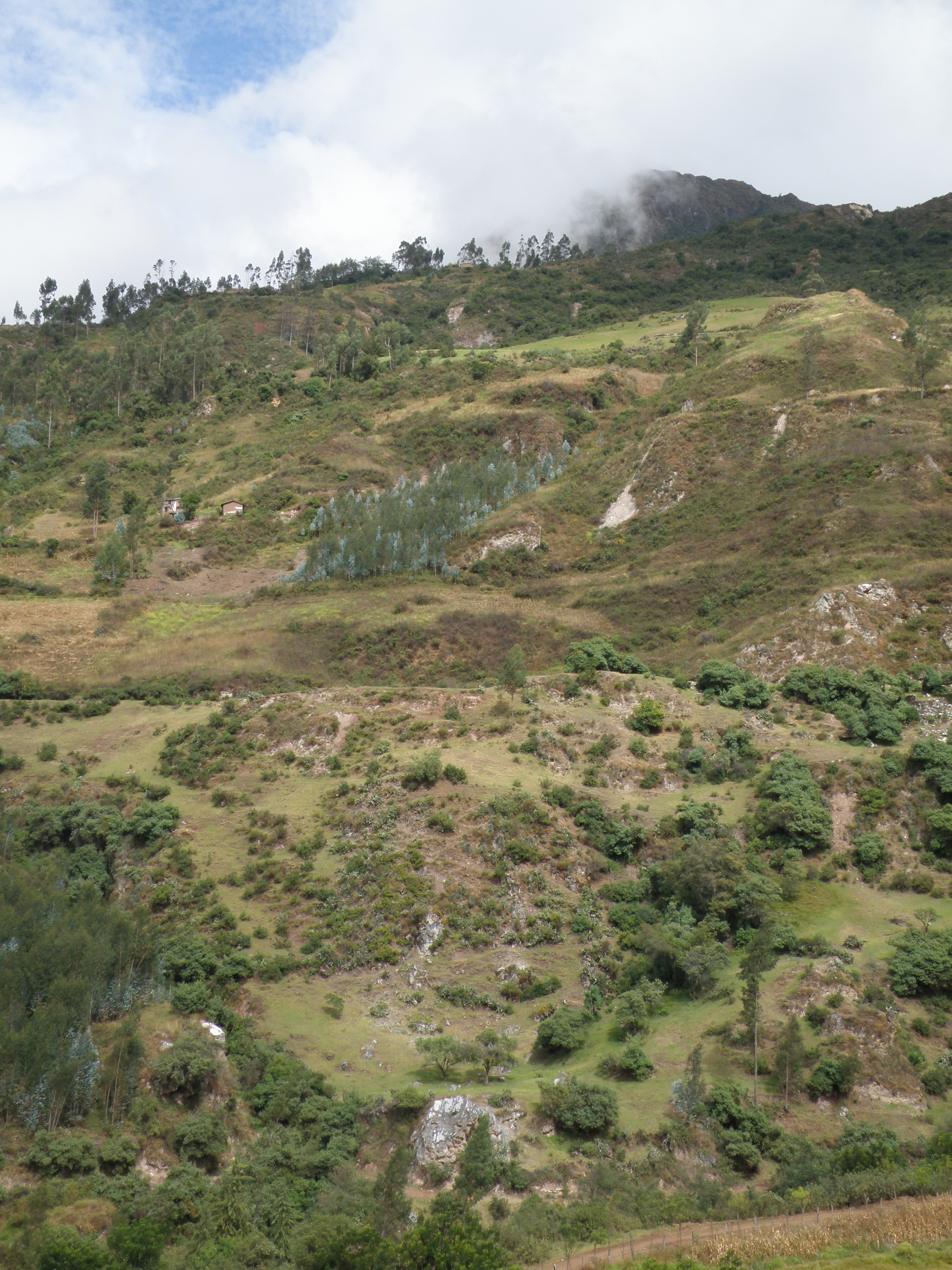
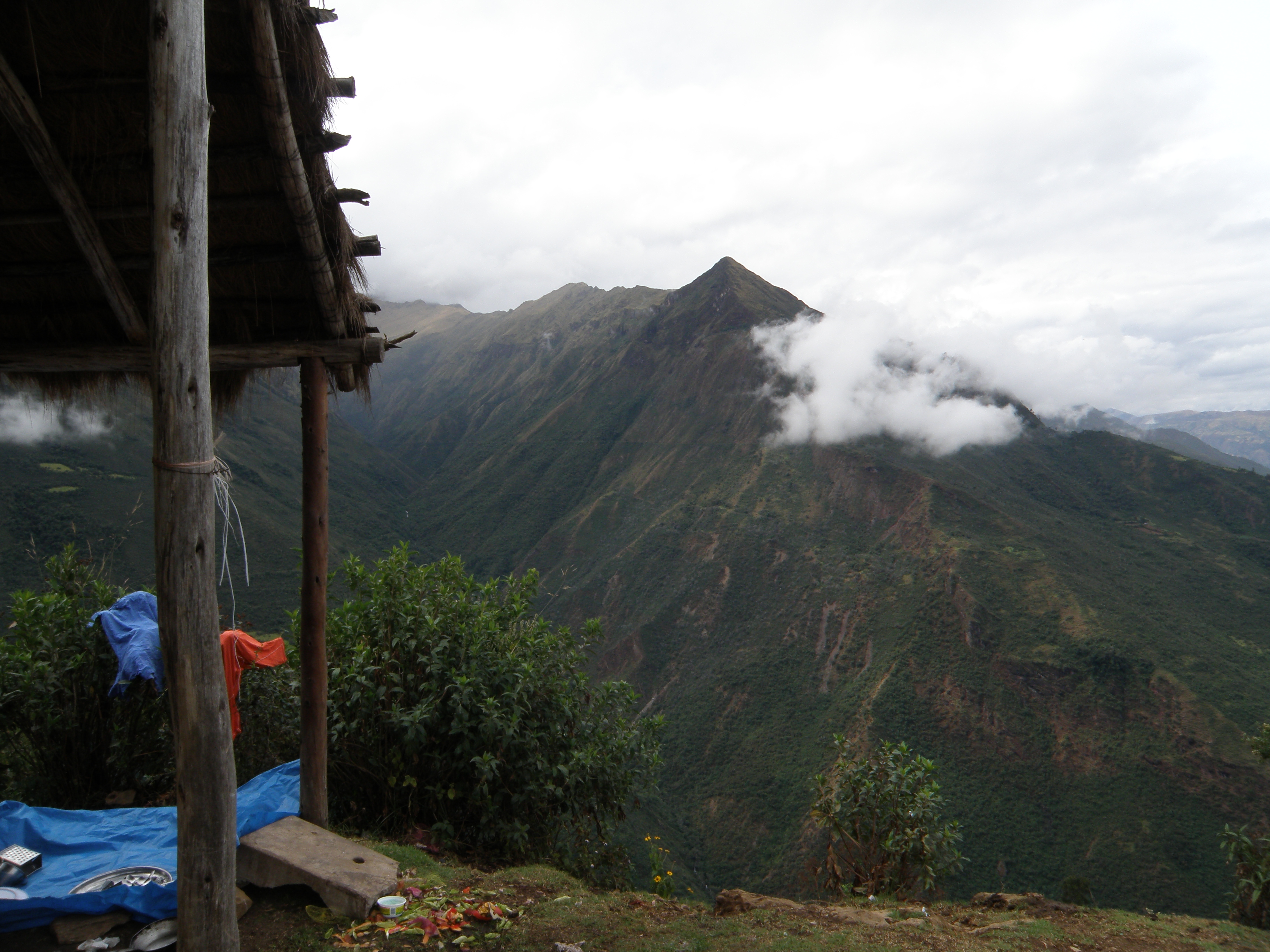
The first steps from the starting point left everybody gasping for breath. We reached a rather fine plateau, then continued down through some stunning forestry and open countryside. We enjoyed our first lunch together perched on a little hilltop called Cruzpata at 3,400 metres. There were stunning panoramic views to admire as we all squeezed round a small table underneath a canopy to eat our chow mein and rice.
It remained pleasantly warm during the afternoon trek above the Rio Blanco Valley up to Soraypampa at 4,200 metres. In an eagerness to resume, I’d left my walking stick back at Cruzpata. It cost me about 10 minutes on Cameron who was already in some sort of jolly race with the three Norwegians, Kamilla, Hege and Mariell. They’d won the vote to have our team named The Flying Noruegas.
Over the next hour I accomplished a catch up of Lewis Hamilton-proportions. The terrain became more challenging as we reached a hard rocky track. A huge scale of wild scenery opened out and snowy peaks towered up ahead of us. We were dots on the landscape. I stayed up there with Cameron but tracked back a little and hung out with Ido from Israel. We initially missed the tiny bridge to take a right up to our first base camp, but quickly corrected ourselves to come in fifth and sixth. Cameron and the Norwegians greeted us with big handshakes and smiles.
Some of the group was way behind. As darkness approached around 6pm Cameron went back to see what was happening. He still hadn’t returned an hour later as the gloom thickened. But all was well. Fernando was trailing with the Canadian couple. They might have struggled but probably also savoured the first day rather than race and go through the paces like the first six! We were all reunited with our big bags as the horses also arrived. My 20-litre rucksack just about fitted what I needed during the walk, especially drinking water. The base camp consisted of eight two-man tents. They were underneath a larger canvas to cope with the frequent storm force winds and night-time temperatures of minus 12 Celsius.
The collective yawns, after dinner by candlelight, signalled an early night for all. Before bedtime some of us stood outside to watch the waxing moon rise over the eastern peaks. It shone a glimmering light over the snowy tops. It was an awesome sight. Fernando marvelled at it and recalled to us the full moon nights from the same location. He readily admitted to being a Cusco townie and affirmed that taking such trips brought him back closer to nature and the old ways. He felt a spirituality and connection with his forefathers high up in the mountains.
Unlike another nearby group with individual tents exposed to the elements, we were snuggled up in relative warmth. We were with a nice, sociable group. The three Norwegians were serious and competitive, in an admirable sort of way. They were semi-professional handball players, with extremely long names to match their impressively long legs. Cameron and I shared the end tent. We were out for the count by about 8pm. I woke once, at about 3am, to use the toilet. It was situated in a small hut a hundred metres from the camp. Cloud cover had kept the frost away but there was still the light of the moon to grace the surroundings.
The coca tea call came at 4.30am. It promised to be the most strenuous day of walking. The climb from this remote and windswept plateau would really shake us all up. My stomach was surprisingly settled, and I was already enjoying the experience.
Saturday, May 29
We reconvened around the hastily prepared breakfast table at the corner under the big canvas. A family in an adjacent wooden shack were up and about. Out of their blustery isolation they appeared so glad to serve our group and many others with provisions for the day.
The second day’s hike covered almost 20 miles. It began with a blistering climb to the highest point, the Paso Humantay Pass. At 4,800 metres it was close to the snow line. The Canadian couple opted for a horse ride to the top. We became quite envious. The final stretch up the winding pass, underneath the stinging sun, really sapped us. It was a real challenge, almost tortuous for some. I stopped for breath after every 50-pace stint, the air was that thin. Lauren, from Colorado, went up way ahead of even Cameron and continued her impressive climb to the top. She was used to the high altitude from living in the Mile High City of Denver, reckoned Cameron.
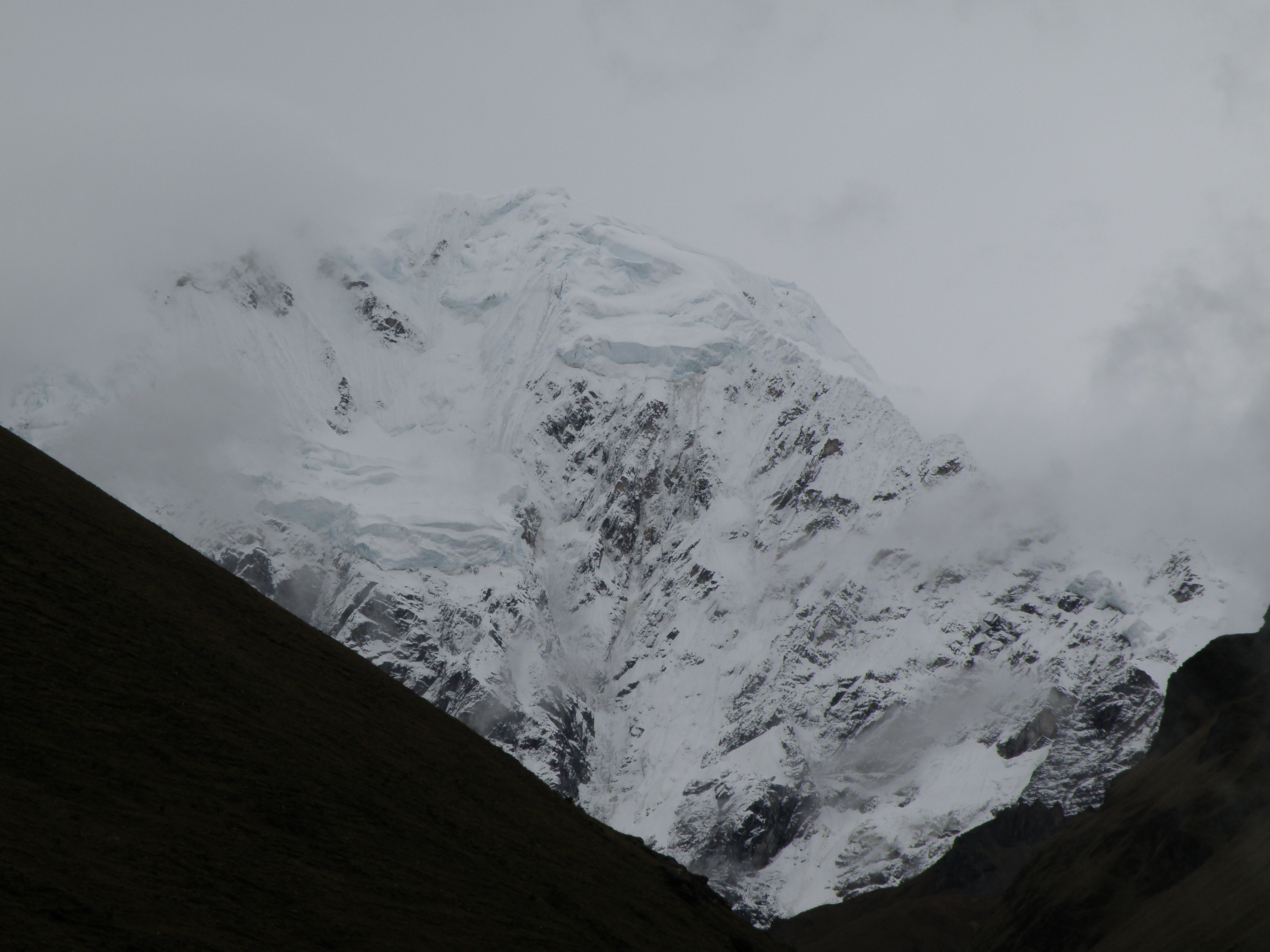
The high altitude started to play its thin oxygen tricks on us. Kamilla struggled with sickness. Another of the Norwegians had ankle trouble while Murray and Sarah from Surrey found the climb tough. However, we all eventually made it and celebrated on the top. The white majesty of the Salkantay summit provided a spectacular backdrop. A landslip on its massive ice face had left a scar shaped like a large bear. The sun shone brightly but the gusty winds and thin air left me gasping. High altitude can play havoc in various ways. I also felt a disorientation. It can affect concentration, like what happened in San Pedro de Atacama when I slipped and grazed my knee. Cameron’s carbonated water, bottled at a much lower altitude, exploded with fizz when he opened it.
The mountain pass was just a narrow path, like a sheep track, through the gorse. Some of the horses following us almost ran into Ido, pushing him sideways into a thick bush. He wasn’t injured though, just a bit startled. My building site boots perhaps weren’t suited for this trek. After the first day, there were large blisters on my heels, despite me wearing roll layered socks to prevent this happening. The lovely, sun blessed descent to Huayracpampa at 4,000 metres was tempered by sore feet. We were all pretty much in union by now with our aches, pains, and grumbles. Poor Kamilla was really having a tough time though. Her eyes rolled around in resignation as she bravely continued.
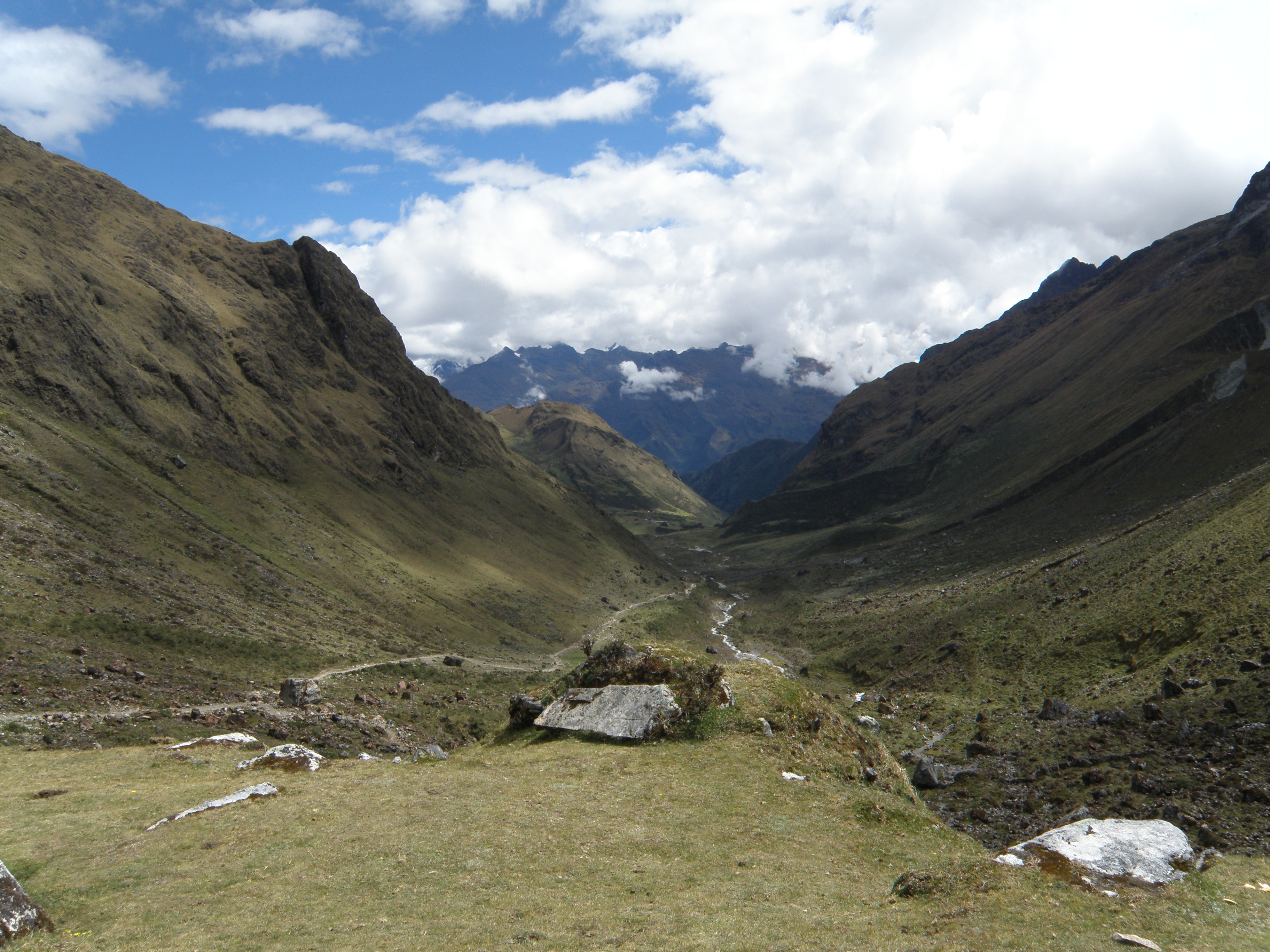
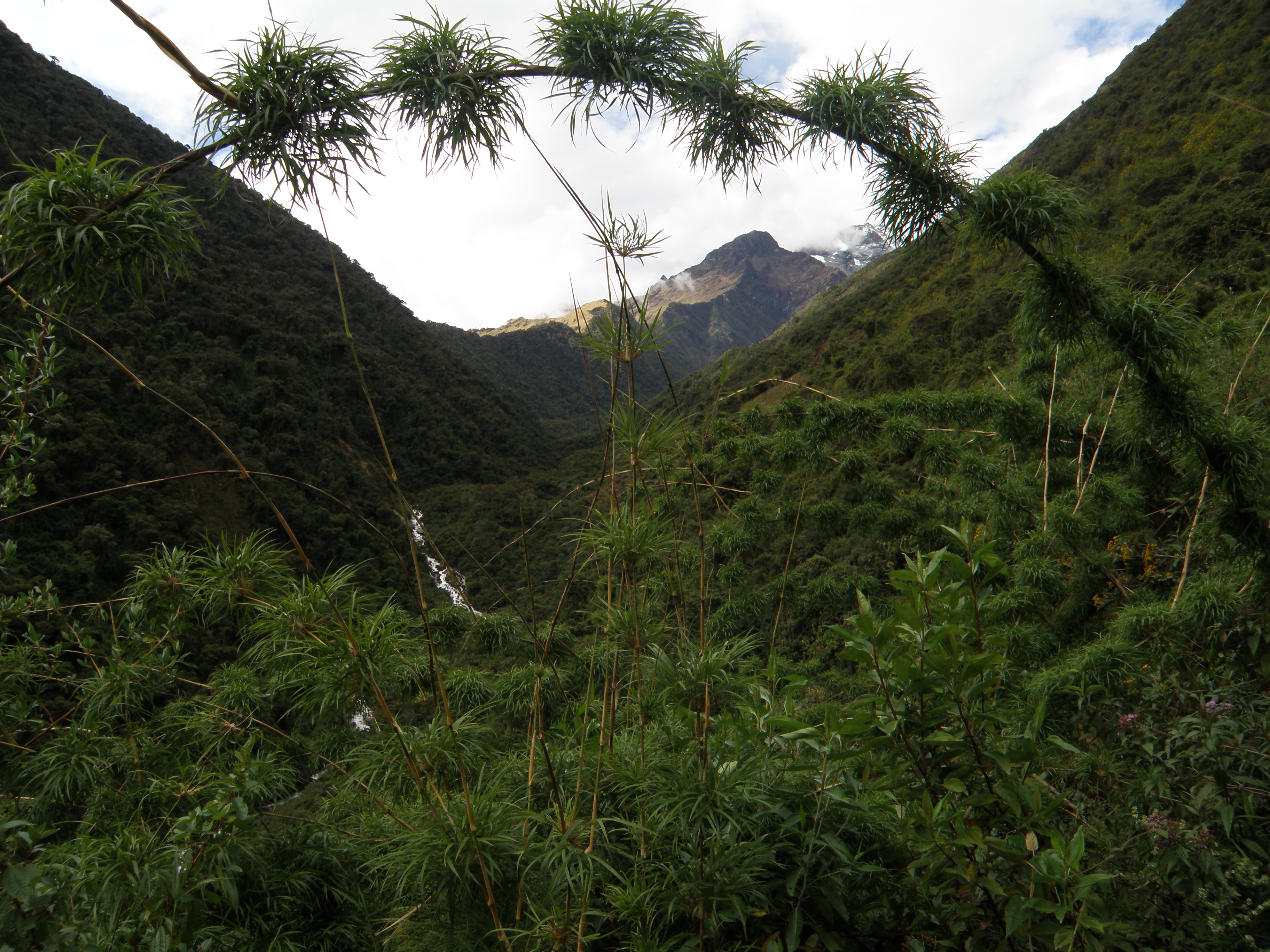
We enjoyed a nice lunch inside a stone barn in Huayracpampa, and stocked up on bottled water at a nearby shop. We descended into mountain jungle. A steady pace meant one could admire the abundance of butterflies and hummingbirds. We occasionally stopped to look back and admire the stunning contrast between the leafy foreground and the spectacular icy peaks of Salkantay and Humantay. They were a major badge of honour for mountaineers and also a dice with death, according to Fernando. Only experience and properly organised expeditions could aid a successful ascent.
We arrived in Challhuay in good time for our second night’s rest. I was glad we all paid attention to Fernando’s directions as we soon found our tents. A mild group tension surfaced during the evening meal. Cameron and I were expecting to camp out in Playa on our third night. However, some of the others were heading for Santa Teresa. This was now Fernando’s preferred option so as to keep us together for the rest of the trek. My main complaint was that someone hadn’t been straight with us. We’d all booked through different agencies, but they still came under the Wayna Tour Operator service. It left us all feeling a little bit confused and put out. It was soon settled though. The only issue remaining was why we didn’t eat our popcorn after the main meal instead of before!
The next part to Santa Teresa would be by minibus so Cameron also felt it was a bit of a cop out. Challhuay, at 3,900 metres, was a nice site and much warmer than the previous night. I was in my sleeping bag by 8.15pm after a walk in the dark to the dry toilet. I slept soundly despite my desperately sore feet.
Sunday, May 30
There were blisters to sort out but the 5am coca call announced another challenge. Our boots, left overnight in the tent porch, were missing. We’d unfortunately come to the end of our journey. We had not heeded the warnings about opportunist thieves taking hikers’ belongings. But our boots, no! Where were they? Fernando gave us a stern look over his glasses. He revealed how the porters scoured the tents before they went to bed and took our boots for safe keeping. Phew, the relief was massive!
After cake and porridge for breakfast we were on our way down a steep descent and over the Vilcanota River. By now the group was seriously starting to resemble a company coming back from a front-line battle. Sarah’s knees were packing in. She was a Wimbledon ball girl in her teens and reckoned this, combined with competitive sports, had long affected her knees. Fernando gave her a piggyback as we clambered down closer to the river crossing. Some, including Sarah, took the minibus from this point.
The air was much better and the vegetation over the river looked a lot thicker. It was a classic Sunday morning walk along the woodland track down to Playa. We witnessed nature in all its glory. There were so many different coloured butterflies. The little bridges over the various streams and rivers were magical as the blue sky and approaching midday sun sparkled above. The pace setters stopped at a forest clearance just 30 minutes from Playa. We were expecting Ido to appear behind us shortly afterwards, but an hour passed and Cameron went back to see what was happening. The rugged descent had damaged Ido’s Achilles tendon. Further along, we reached an old bridge destroyed by the recent rains. There was no way one stubborn donkey would cross over the new bridge. It was fascinating to watch as he eventually took a safe plunge across the shallower part of the river. The minibus then took us all to Playa. After a fine salad lunch the cooks and horsemen said goodbye. We combined a generous tip and prepared for a bus trip down to Santa Teresa.
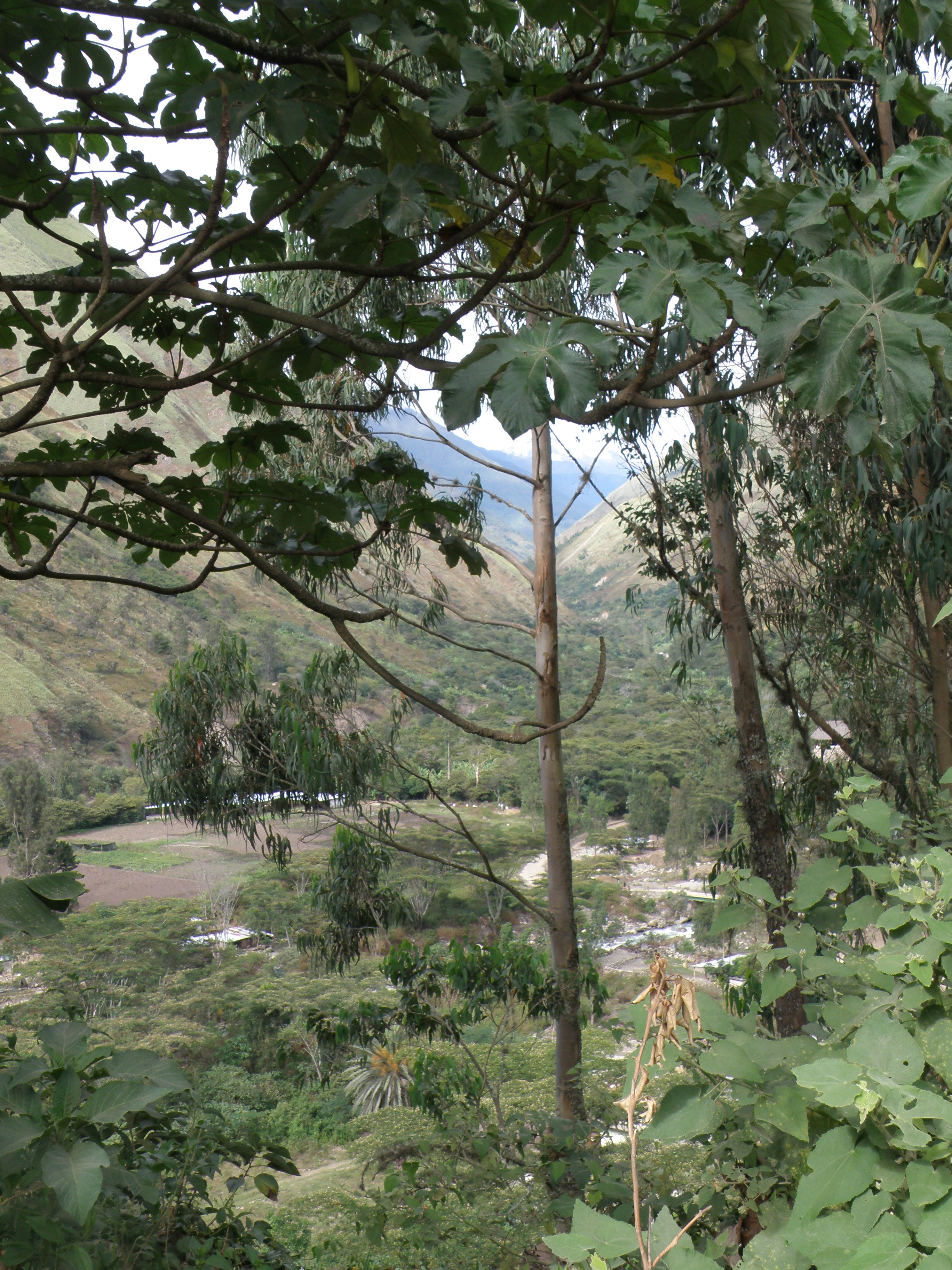
An exciting journey in a stiflingly hot bus took us down a very steep pass. There were no barriers to vertical drops of hundreds of metres. We eventually levelled out through a region of thick banana and coffee plantations, and the Eighties soundtrack reappeared! There was a buzzing feeling of achievement as we entered the campsite grounds above Santa Teresa. Cameron started proceedings by getting the beers in. Sarah, Murray and Ido joined us around a garden table for a game of cards called Yer Bastard, which Sarah and Murray picked up from some Geordie lads whilst in Argentina. A small pet monkey suddenly appeared and started fidgeting about, climbing over my shoulders and eating jam on the table. It then clambered up beside the drainpipe of a very badly built house to eat a massive moth. The tents were set up for us and a sound system cranked up at the bar with some Bob Marley. After taking a cold shower and re-joining for more beers, the food arrived.
We later retired to a campfire to pass away the rest of a really lovely evening. We learnt a lot more about Ido and how his reduced lung capacity came about. A couple of years ago he’d been at an Israeli army parade where a sergeant somehow fired a rocket propelled grenade, with shrapnel piercing Ido’s chest. He subsequently spent a year in hospital, including two months in a deep coma. He made an astonishing recovery but only has a two thirds lung capacity to this day. It explained so much his struggle for breath on the trek, especially over the higher parts.
The campsite hosts were nice people. They accommodated us throughout the evening, stoking up the fire, serving us beer and sharing a good laugh. The music repeated itself somewhat but included a second melodious helping of Paul McCartney’s Hope of Deliverance. The only things missing by the end of the evening were a guitar and some smokes. Cameron and I were quite merry by the early hours. We were feeling very happy. Despite a very noisy frog beside our tent, we crashed out quite quickly, safe in the knowledge of a much later start on Monday.
Monday, May 31
It was a fresh start on a bright and breezy morning. We approached the self-operating cable car over the rapids of the now ferocious looking Vilcanota River. Fernando seemed in an amiable mood. He repeated a heartfelt mantra about the love of life and nature. It heightened my excitement for the rest of the journey to Machu Picchu. We were all achieving something special on the Salkantay Trek. The Inca Trail is about a third less in terms of distance and is booked months in advance. Salkantay is equally spectacular and might be a greater challenge. As Cameron commented, who’s to say this wasn’t another Inca Trail? I liked alternative anyway. Variety is the spice of life.
Throughout the trek Fernando always tracked with the last person of the group. It ensured the pace was a safe and enjoyable one. Safety seemed the last word to describe the cable car. Fernando explained the contraption as best as he could. We had to go across in pairs, the first then having to rewind the rope, with the car, back for the second pair. They would then take the rope and cross, and so on. The rope was meant to be wrapped outside of the car to prevent it from becoming tangled. It was fed carefully back over the river, and I went across with Kamilla, who was still feeling quite ill.
Quite suddenly a mix of bridge phobia and vertigo came over me. We were about 10 metres over the rapids. I lost my concentration, tangled the rope and briefly we came to a halt. The tangle was soon untangled, and we were hoisted onto the other bank. Cameron asked me what I was playing at, as Fernando fell into a fit of giggles. Kamilla just seemed relieved to get across in one piece and even thanked me. We then fed the rope and car back for the final pair to cross over.
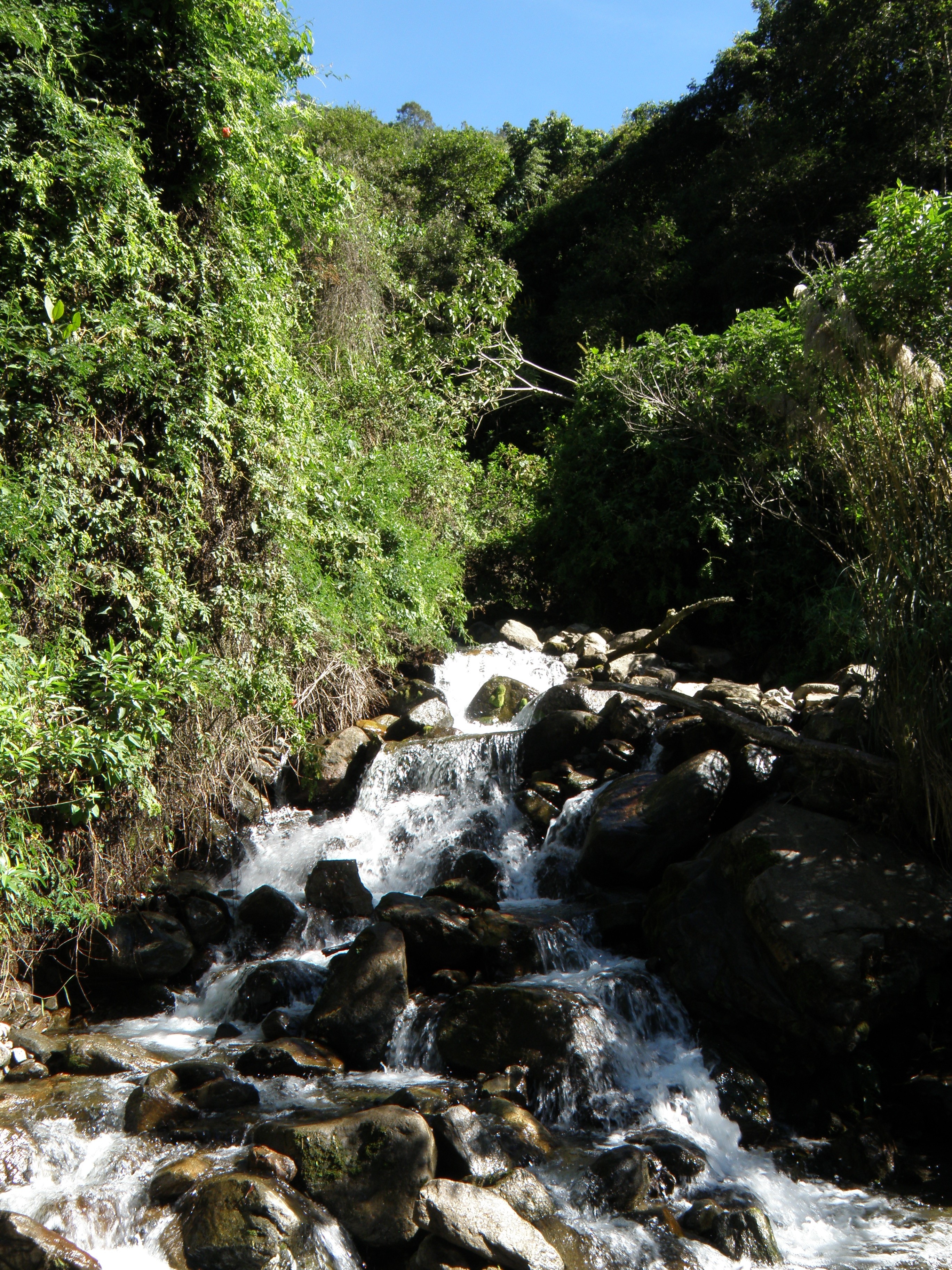
We continued along the flat rocky outcrops then embarked on a steady, increasingly gruelling climb in the hot sun and humidity. After descending a precarious drop to cross the river again we began an equally tough walk up to Hidroelectrica. The usual road route was still blocked following the torrential rains and landslips. The cascading waterfalls to our left were a terrific sight. The group was closer together by now and Fernando led at a fair pace. I felt quite exhausted and soaked in sweat when we reached the checkpoint for the Machu Picchu district. Fortunately, I had a change of t-shirt.
We stopped to rest by a small cafe alongside the train station. There were two more hours of a relatively easy ramble on the footpath alongside the narrow gauge line to Aguas Calientes. Cameron, Murray, and I opted to walk with Fernando while the rest took the train. We admired the spectacular backdrop of trees, cliffs and rocks and sighted the high peaks of Machu Picchu to our top right. By now Murray was struggling with an Achilles tendon strain. We quietly approached the town and Fernando led us to the Maska Restaurant. This was to be our meeting point for the evening pep talk and tickets for Machu Picchu.
Cameron and I had beds in the Pirwa hostel. We made our way up the steep streets. Aguas Calientes is a riverside town set in a dramatically deep and dark valley at 2,000 metres. Sharp featured modern architecture crams this town full of hostels and hotels. After checking in I took my first hot shower in five days. My blisters were drawing blood, so I then sat in the foyer to properly treat my heels with a dab of antiseptic and fresh dressings. Despite the noisy air conditioning in my room, I took a short nap then later joined Cameron to look for some new t-shirts. This was a town overflowing with ‘wonder of the world’ souvenirs. Our backpacks were being returned to Cusco. Therefore, we couldn’t really buy too much as we needed to travel lightly up to Machu Picchu.
In the evening the group reconvened for dinner at the restaurant. This was included in the trek package. This also covered the 126 soles Machu Picchu tickets that Fernando distributed before we all departed for an early night’s sleep. I bought a torch, some water, and snacks as we headed back up to the hostel.
Tuesday, June 1
We were up at 3.45am. I had to switch the light on. I wouldn’t have normally done so but we had to check our belongings. The snoring guy in the bottom bunk really unsettled the others throughout the night so we determined it was his time to wake up as well! Out into Aguas Calientes everybody seemed to be on the go. Cameron and I met Ido in the small plaza. We walked down across the railway line to the bottom road adjacent the River Urubamba, then down a flight of stone steps and across the bridge which Fernando had pointed out to us on Monday. This was where the Lost City tickets and passports would be checked and stamped. We were alert enough despite the darkness. A group of Brits behind us initially headed off in a completely different direction before they decided we were going in the right direction.
The streetlights faded behind us as we ventured beyond the bridge. Thanks to our torches, we spotted the signposts for Machu Picchu. An American guy joined us to take advantage of our light. We reached the start of the 2,000 stone steps up to the top. We were all breathless and rested briefly at each point where the steps glanced against the winding road. There must have been about a hundred people attempting the walk at this early hour. Some real competitive characters were striding upwards, bare chested and gasping to be the first to the top entrance. We reached the entrance in a hot and sweaty state by 5.30am. It took us an hour and 10 minutes. I had ticket number 56. We waited in the designated spot for others in our group to arrive by bus. Taking a bus was a far easier option but you risked being late for the best part of the day.
The strenuous climb promised to reward us with the awe-inspiring sunrise and guaranteed an early bird ticket. This granted you permission to also climb Wayna Picchu and its almost vertical, narrow pathway another 300 metres up to a spectacular vantage point.
Queues were building up in an atmosphere of anticipation. The approaching daylight sharpened the outlines of the surrounding peaks. As the sun rose to the northeast our group was reunited. Fernando then arrived and led us through the main entrance. He would give us a two-hour tour of Machu Picchu. Once inside the citadel, there were many rules to obey, one being to keep noise to a respectful level. The awe-inspiring surroundings and sweet birdsong deserved respect.
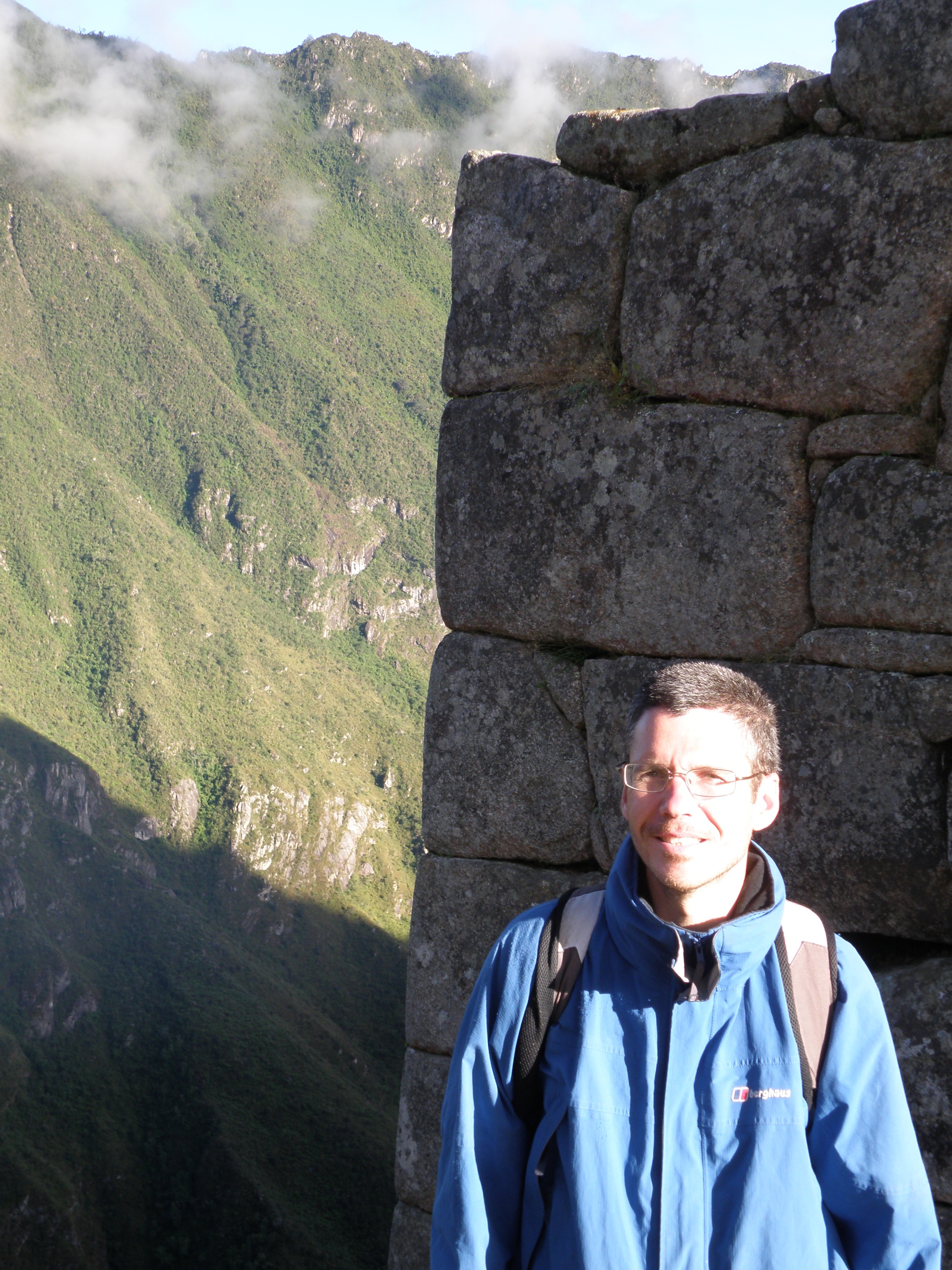
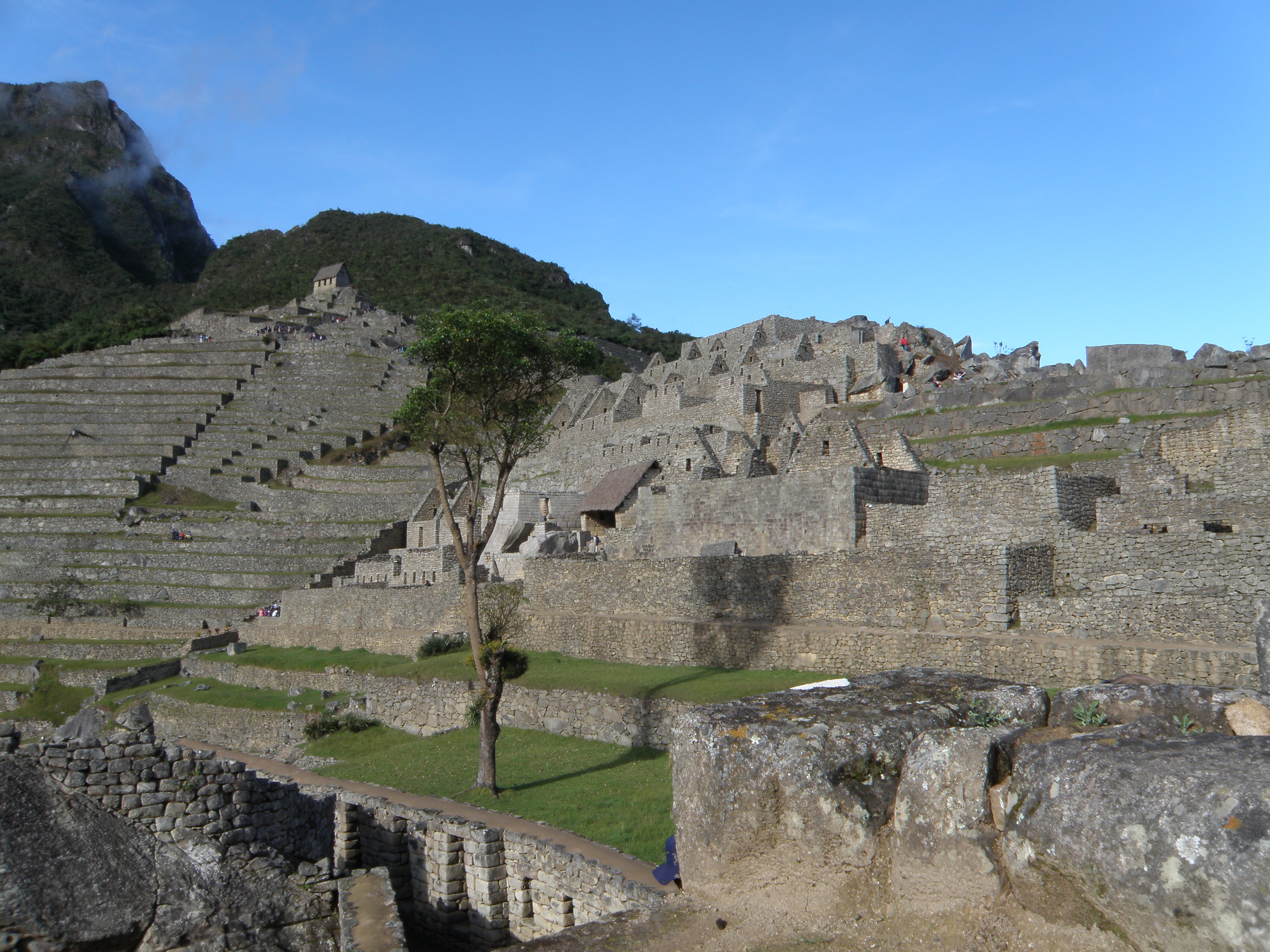
The first sight of the Lost City blew me away. A far view of the snow peaked Cordillera, which we’d trekked through, also offered a fine perspective on the last few days. Euphoria elevated my mood. Fernando gave an excellent rundown on the history and workings of the site. He took us through the Sacred District of the Intihuatana, the Temple of the Sun, the Three Windows Temple and the Tower of the Condor.
The number three was revered by the Incas. The Inca Cross, Chakana, is the three-stepped shape representing the Southern Cross stars. It symbolises the three tiers of Inca life, the lower world, this world, and the higher world, and also represents the snake, puma and condor. The Incas had an advanced understanding of the earth and universe.
A stone compass grabbed my attention. Pointing to the south, it represents continuing claims by southern hemisphere astronomers that they’re the true northerners of our planet! These Southerners contest that the south points closest to the centre of our galaxy, the Milky Way. Astronomic orientation related much to the whole cosmos. The Moral Principle, taken from the ancient Andean code Ayn (to share) meaning reciprocity, solidarity, and help, was turned into the only rule of God. Each person was ordered to develop three other gifts from the Gods, love, wisdom, and work. Completely opposite to the Machiavellian principle of divide and rule, ninth Incan emperor Pachakuteq promoted togetherness to rule. This introduced great reforms, expansion, and integration.
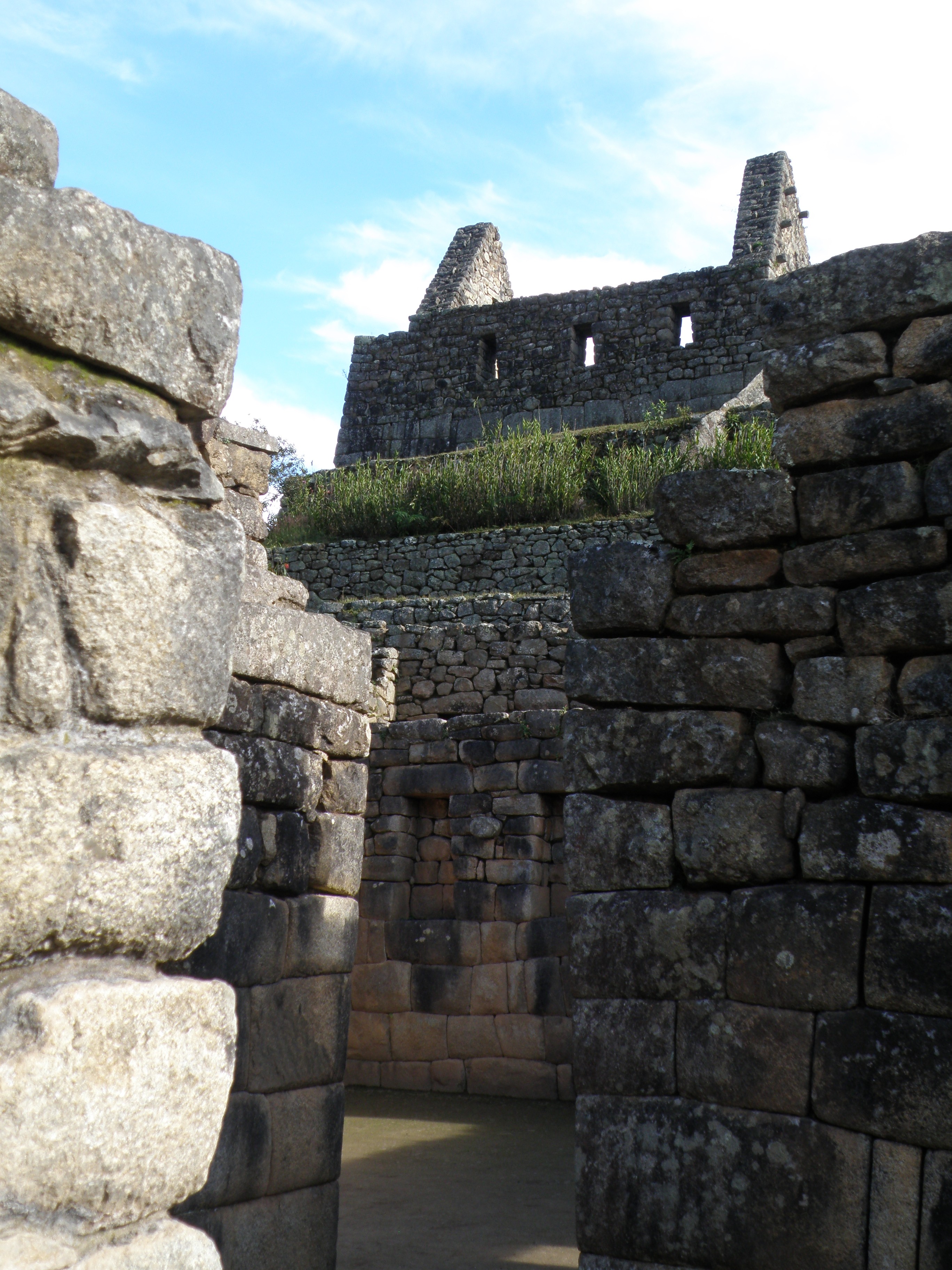
Fine stonework was typified by the Temple of the Sun. The Incas were masters of a technique called ashlar, in which blocks of stone were cut to fit together tightly without mortar. Arguably the best stone masons the world has ever seen, the Incas’ earthquake proof structures were so perfect that it’s said not even a blade of grass fits between the stones.
Machu Picchu was divided between the urban areas and agricultural sectors. Crops were grown on the West Agricultural Zone terraces to feed the community. Dismissed as pagan blasphemy by the Spanish, this devotion to the earth and sun sustained the Inca Empire for a golden period of a hundred years. These structures were designed to harness all that nature could offer, like a Middle Ages permaculture. Che Guevara’s Motorcycle Diaries first convinced me to visit this place. His reflective and respectful thoughts about his visit were truly inspirational. He paid tribute to the strength of the human spirit and the possibilities of endeavour.
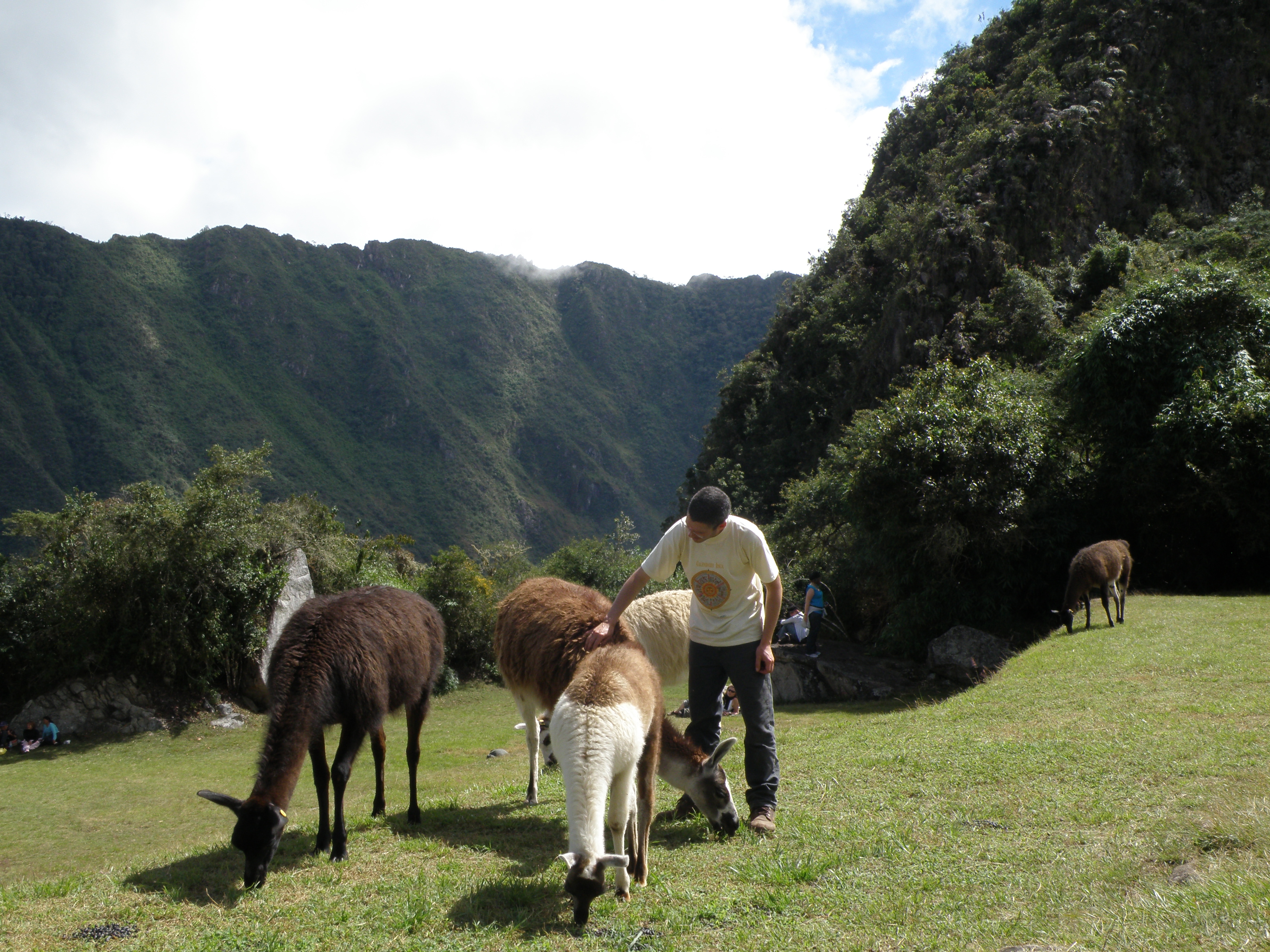
The end of our guided tour brought us to the thickly grassed gardens where a herd of llamas were quietly grazing. We took some Beach Boys Pet Sounds album cover type photos of me and a few others stroking the calm and contented animals! My mood was light and happy. This really was turning in to a day to remember.
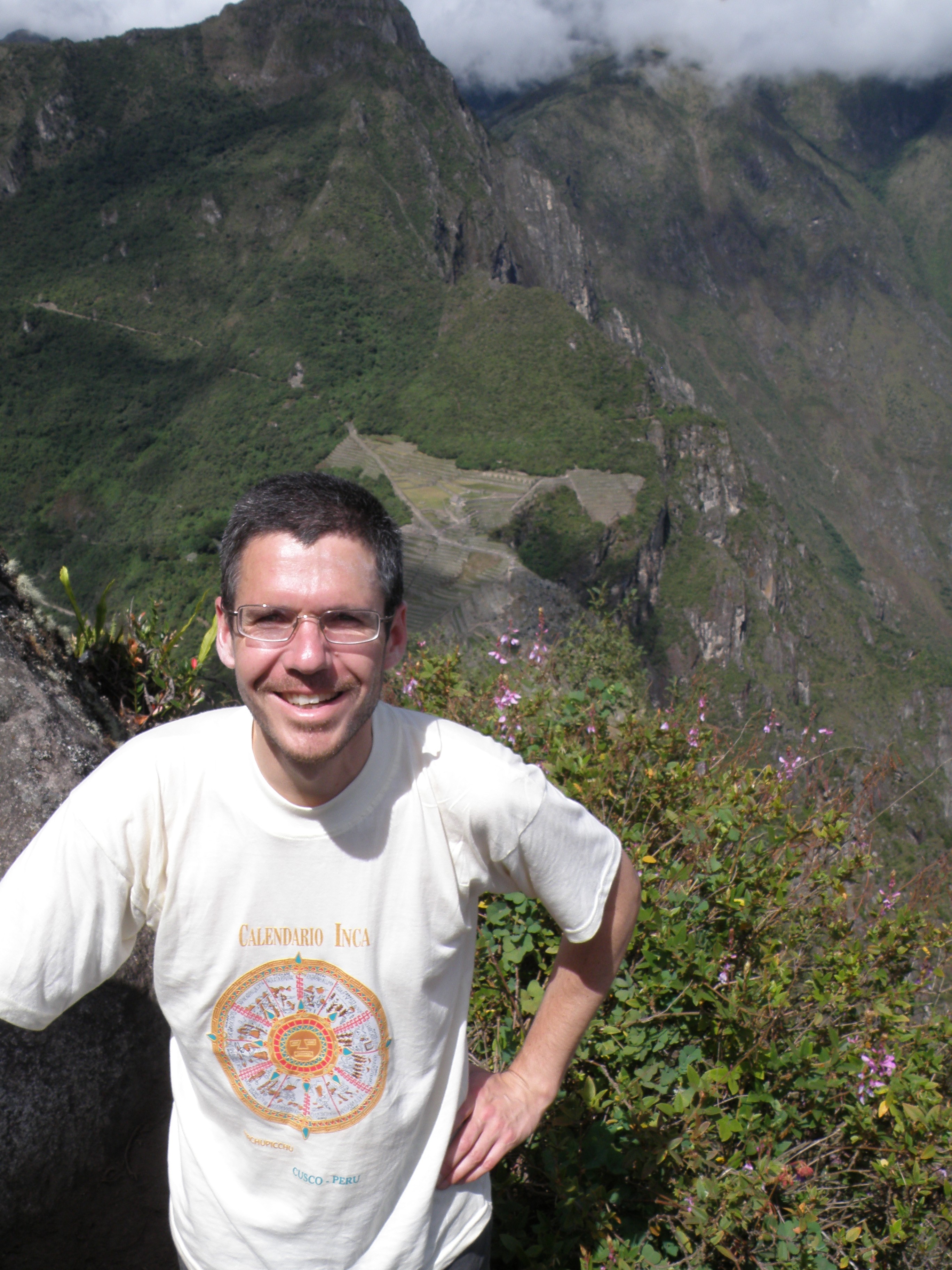
Most of our group then lined up to wait our turn for Wayna Picchu. It was an incredibly steep climb which became much narrower near the top. Not everyone heeded the advice to stick to the correct path and hold on to the thick wired handrails. However, most were aware of the confined space and were looking out for each other. After clambering through a very low tunnel, we were finally out on the top, a small summit with little space to move around. No wonder the site authorities limited numbers. The views were spectacular.
On the way down Cameron got talking to a young woman who was born and raised in Bangor but had lived in London for many years. She was on a similar trip of a lifetime. We shared a few words of Welsh, as one does in the Lost City! We slowly made our way back to the entrance, being constantly treated to fresh perspectives of this truly magnificent place.
The Norwegians opted to walk down to Aguas Calientes and soak in some of the afternoon sun. The rest of us enjoyed the blessed relief of a bus back down. We all re-joined for a celebratory meal and relaxed with some beers for the rest of the afternoon. Lots of happy chatter filled a previously empty restaurant. A kind gentlemen, sitting on a far table, even bought a big pizza for us all to share. We were so happy, but it was time for a snooze. Cameron decided to go up to the hot springs while I had a shower and then rested at the hostel.
Our return train wasn’t until 9.45pm so we found a neat little joint to eat and drink in and watch some televised football. We later met up again with the rest of the group, amidst the pandemonium of the train station. Crowds of travellers were desperately trying to find information on train times. The slowly reopening train line to Cusco would only take us as far as halfway to Ollantaytambo. Confusion then continued as we looked for our designated bus to Ollantaytambo. There were literally thousands of people milling around and looking rather directionless.
The terminal attendants seemed to be trying their best at getting everybody safely away. Cameron and I were briefly split up before boarding the next and final bus to Cusco. Another clutch of tourists was eventually let through to board the bus. An angry, fat American, resembling Michael Moore, came on board. He had a wild eye and immediately got into a shouting battle with a lad who wouldn’t move his bag to let him take the seat beside him. Language difficulties compounded the situation. It was a bus full of different people from different lands. All we needed was a little patience for the final leg to seal what had been a remarkable day. But the big guy really lost his temper. From the back seat he muttered all the way to hollers of agreement from his equally bitter sounding lady friend.
We reached Cusco when my stomach started hurting again. It was strange that it had settled down so well during the arduous trek. Perhaps I should have just kept on walking around South America! Seriously though, it was a downer to end such a great day. To take my mind off the pain though, I reflected on a postcard picture of a summer solstice sunrise over Machu Picchu. The Lost City’s remarkable outline resembles an Inca warrior’s face looking up to the heavens. What an adventure the last few days had been!
Wednesday, June 2
I reflected on the previous day in Machu Picchu. What a momentous halfway point for my South American journey! It felt quite symbolic, a pinnacle of achievement. With the Solstice approaching I felt a momentum of the mind and of my surroundings. I was glad to have chosen Cusco as a stopping point. This town was also on a trip. So many people wanted to jump onboard.
Cameron joined me for breakfast. He’d chosen a good time to be in Cusco. The Corpus Christi festival was now underway. Large processions filled the streets. Statues of saints on huge wooden boards were being carried from the different churches and communities to the centre of town. We made our way to the Plaza de Armas and sat down among crowds of locals on the cathedral steps. Frenzied activities prior to the processions’ arrival were a spectacle. There were street sellers imploring the crowds to stock up on sunshades and refreshments. The beating midday sun prompted me to buy a straw hat. We all stood up on what suddenly resembled the Cusco Kop as huge, wooden floats arrived. The atmosphere went up a further notch as tens of thousands flocked into the centre. Adoring wives, girlfriends, sisters, and mothers waved to their men whose strength carried the saints into the cathedral.
We had a late lunch at the Emporium Restaurant. I chose a local speciality, choclo and queso, (maize and cheese) followed by a succulent roast lamb dish. The scene outside continued to sparkle as we looked over from our balcony table. We later collected our backpacks from the Wayna Tour office where Fernando introduced us to his mother, a sharp-featured businesswoman.
I slept until early evening. Then I re-joined Cameron for a hook up in Santa Ana with Ido. He was staying at the Loki Hostel, a great old building. It was efficiently geared up for the travelling fraternity, if not a slight detachment from the real Cusco. We enjoyed the big bar. In a very smoky atmosphere, we got into a round of pool. I partnered Ido and we went on a six-game unbeaten run. Arne and Phoebe called in on a FairPlay Salsa canvassing run. We had a good catch-up chat. Cameron and I later decided to get out of the smoke and into the fresher air. We walked back up to Carmen Alto and popped into 7 Angelitos for the mojitos.
Thursday, June 3
I was sick in the litter basket in my room. A horrible green slime was not a good sign. It seemed more than just a hangover. I stayed in bed all day as the noise of the festivities filtered into my room. Wednesday’s Corpus Christi was only the build-up. Today was the big day. It was also a public holiday in Cusco. However, I felt rotten.
Cameron occasionally returned to see how I was doing. He urged me to get myself checked out in the next few days. I barely registered an acknowledgement as the nausea and stomach aches took hold. He described a packed main plaza as firecrackers frequently exploded and the floats were manoeuvred through the large crowds. I felt thoroughly lousy. I took a shower and later chatted with Rosa. She also expressed concern about my health. I agreed to stay at Pirwa till the following Monday.
I later summoned the energy to walk down to the Plaza de Armas. It was a proper post-festival scene. Street cleaners were working flat out to clear the mass of strewn litter. I couldn’t bring myself to eat anything but drank some Coca Cola and orange juice. Cameron set out for the Loki again to meet up with Ido. I remained in my room, aching and feeling terribly weak and subdued. Street parties in San Blas and other neighbourhoods swung into action late into the night.
Friday, June 4
After such a long stay in bed I was wide awake by 4am. I couldn’t get back to sleep so I sat up and began writing about my Machu Picchu experience. Sickness often prompted me to write or play guitar, just to distract from the low feelings really. By 7.15am I was up and about, feeling a lot better and enjoying my breakfast. Cameron reckoned he might have been affected by the food he’d eaten, possibly at the Emporium on Wednesday.
Since the end of April, the exchange rate had dropped from 4.25 to 4 soles to the pound. I didn’t know the reason for this, but it did remind me to return to the Serpost. At long last my sentry card had arrived. I could now resume online banking and budget my travelling spends. Cameron joined me for lunch at Torqunok. My appetite was still poor. I slept from 2.30pm until 5pm, then continued my Machu Picchu write up on the hostel computer.
The song I’d come up with a week ago was now developing. Its rhythm replicated the moving people amid the street scenes of Cusco. It really hit home during the evening as Cameron and I took a Daewoo taxi ride down past the main plaza. The bumps along the rain-washed cobbled stones, streetlights and passing pedestrians all added something. I finally grasped my Cusco song out of the thin air and called it Bombs and Songs.
We met Ido in his hostel. His eyes were sparkling, and he eagerly told us he’d met a young Peruvian woman the night before. He was hoping to link up with her later in the evening. We hung around the Loki, playing pool and enjoying the music. There were many more boys than girls there than the night before though. There was an alpha male atmosphere around the pool table. So, we left Ido to wait for his lady and headed back to 7 Angelitos to enjoy the live Latin rock night. We were joined by some American women and their male friend for a couple of mojitos. It became another late one. Even Cameron knocked it on the head before me, much to the consternation of the friendly, good-natured Americans.
Saturday, June 5
I liked the streets of Cusco and marvelled at how the place had expanded in such a short space of time. I enjoyed a sunny hour in the San Blas neighbourhood, but my stomach was still dodgy and distracting. Cameron was nowhere to be found when I returned to the hostel. When he finally appeared, we went to the Cross Keys for a late lunch. A football match between Italy and Switzerland was showing on the television but a female beach volleyball tussle on another channel caught our attention, much to the amusement of the barman! I managed to finish the meal, a tasty chicken breast with ginger and honey sauce, a bread roll and chips.
The cathedral was closed so I took Cameron to check out the textile weavers at the Centre for Traditional Textiles of Cusco. My energy was low, so we stopped to sit on a bench in the Plaza de Armas. We fended off several hawkers before my guard slipped. This young Cusco artist approached us. I was looking over his lovely drawings and paintings. One water colour featured a couple of traditionally dressed ladies in an Andean village. I gladly bought it. Cameron then kindly offered to take it home with him, have it framed and then take it over to my Mam’s. I should also have waited before posting those hats, Cameron reminded me!
Despite the sun, it was a progressively cold Cusco afternoon. Unfortunately, Cameron was returning to Britain with a back problem. He had no success finding a clinic in Cusco. I also had post-trek aches and pains to add to my stomach issues. Whenever we’d passed Cuesta Triunfo over the previous few days there were various ladies handing out leaflets advertising massages. We both agreed a massage could ease our ailments.
I later returned there and caught the eye of a young woman. She broke out into a wide smile and readily said yes, of course, when I asked about a massage to ease my pains. The lady’s name was Sabrina. She guided me through a textile store and to an upstairs room. I clumsily lay down the opposite way to start with, which raised some laughter. I chose an Inca massage.
We chatted throughout the hour as Sabrina worked my back, shoulders, and sides with her soft and tender hands. I remembered FairPlay’s John saying some of these young ladies were prostitutes. But who was this gorgeous young woman from Cusco, only 19 years of age and with such a happy outlook?
Surely it was too easy to presume all these young ladies were prostitutes. Sabrina was lovely and left me in a far more relaxed condition. My body felt far more supple and ache-free. I paid the 40 soles and an extra 10 tip for what was a great hour. She hoped I’d return. I certainly wanted to. After later reading a bit more of Island I decided to stay in. I gradually fell into a long, deep sleep. Sabrina’s magical massage had certainly worked.
Sunday, June 6
Cameron and I went for a substantial breakfast at the Bagdad Cafe overlooking the Plaza de Armas. A military parade was in full swing. It was a parade with a difference. The local police had received seven new 4×4 vehicles. They were now lined up in front of the cathedral. Their bonnets were open and sirens blazing as the church gave its blessing to these new acquisitions.
Cameron’s taxi arrived at 11.30am for the start of his return journey, a flight from Cusco to Lima and then the long haul back to Amsterdam via KLM. I wished him a safe travel. It was sad to see him go. I’d enjoyed his company. I later took dinner at Paddy’s, again on my own. A young English crowd soon arrived to add a buzz to the place, albeit keeping themselves to themselves apart from one older fellow. He popped his head over to acknowledge me and engaged in conversation. To socialise was like oxygen.
Back at the hostel Rosa greeted me with some good news. As a long stay resident my room charge would be reduced to 15 soles per night from Monday, seven soles less. A message from Lourdes also awaited me. My practical Spanish lesson was changing back to 2pm. I could afford a lie in. During the evening I played my guitar and wondered about finding a studio to record a little demo of my songs. Another cold Cusco night seeped into my room. The prolonged chill permeated the whole hostel. Even Kitty the cat and her newborn kittens sought some comfort and warmth on the hostel computer monitor!

 Reading English, Hearing Spanish