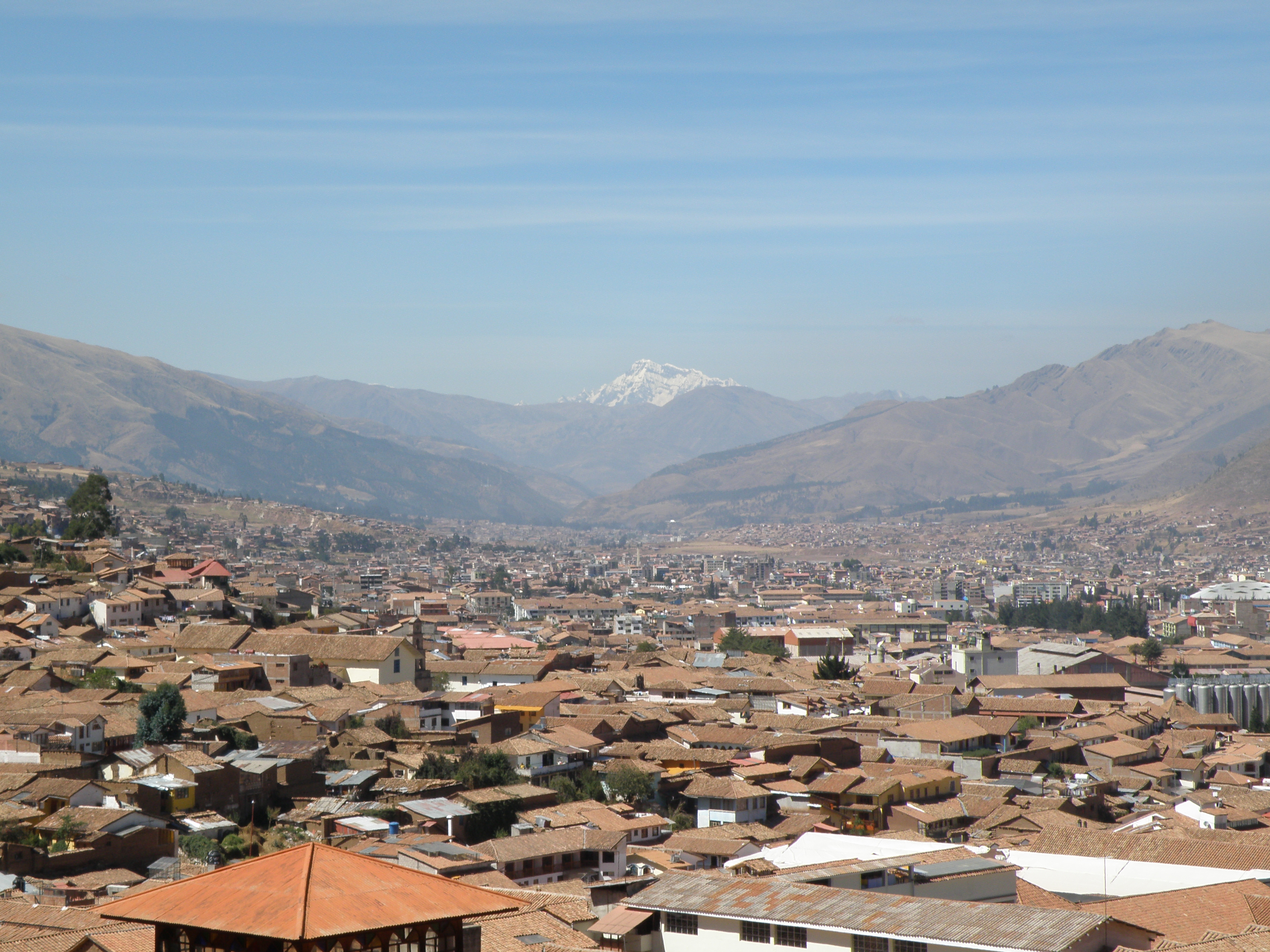
Cusco, with Ausangate mountain in the distance
-

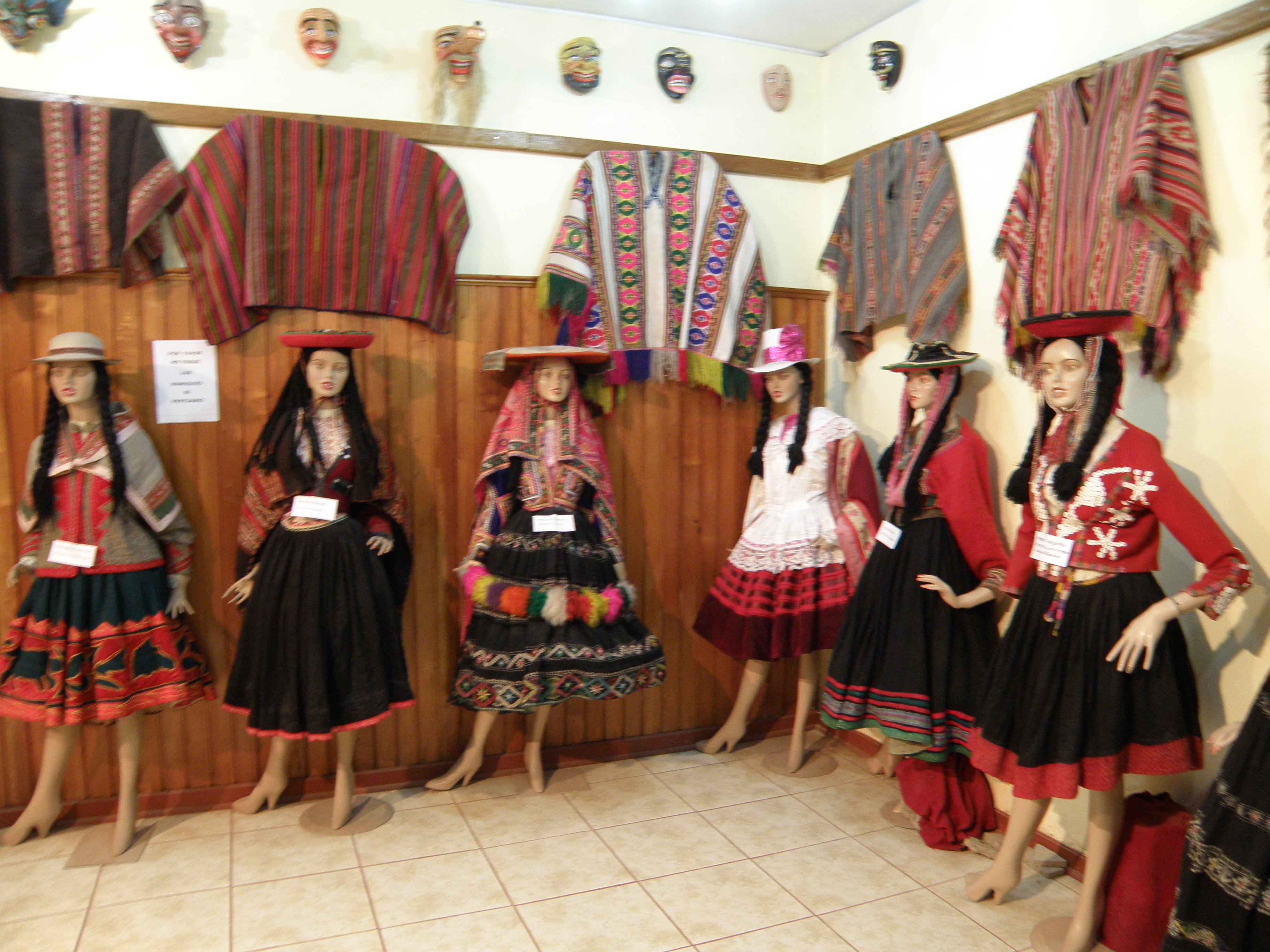
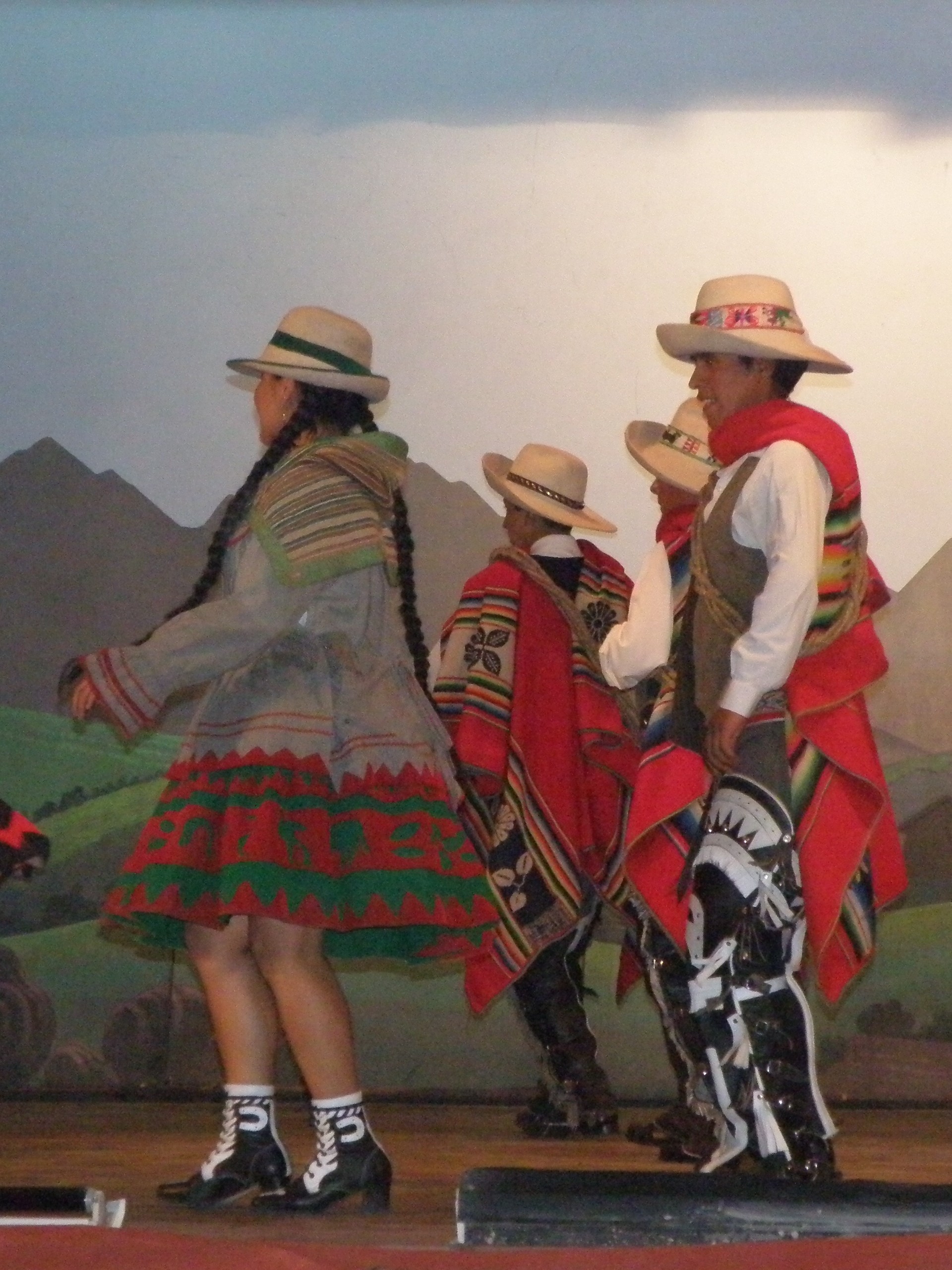
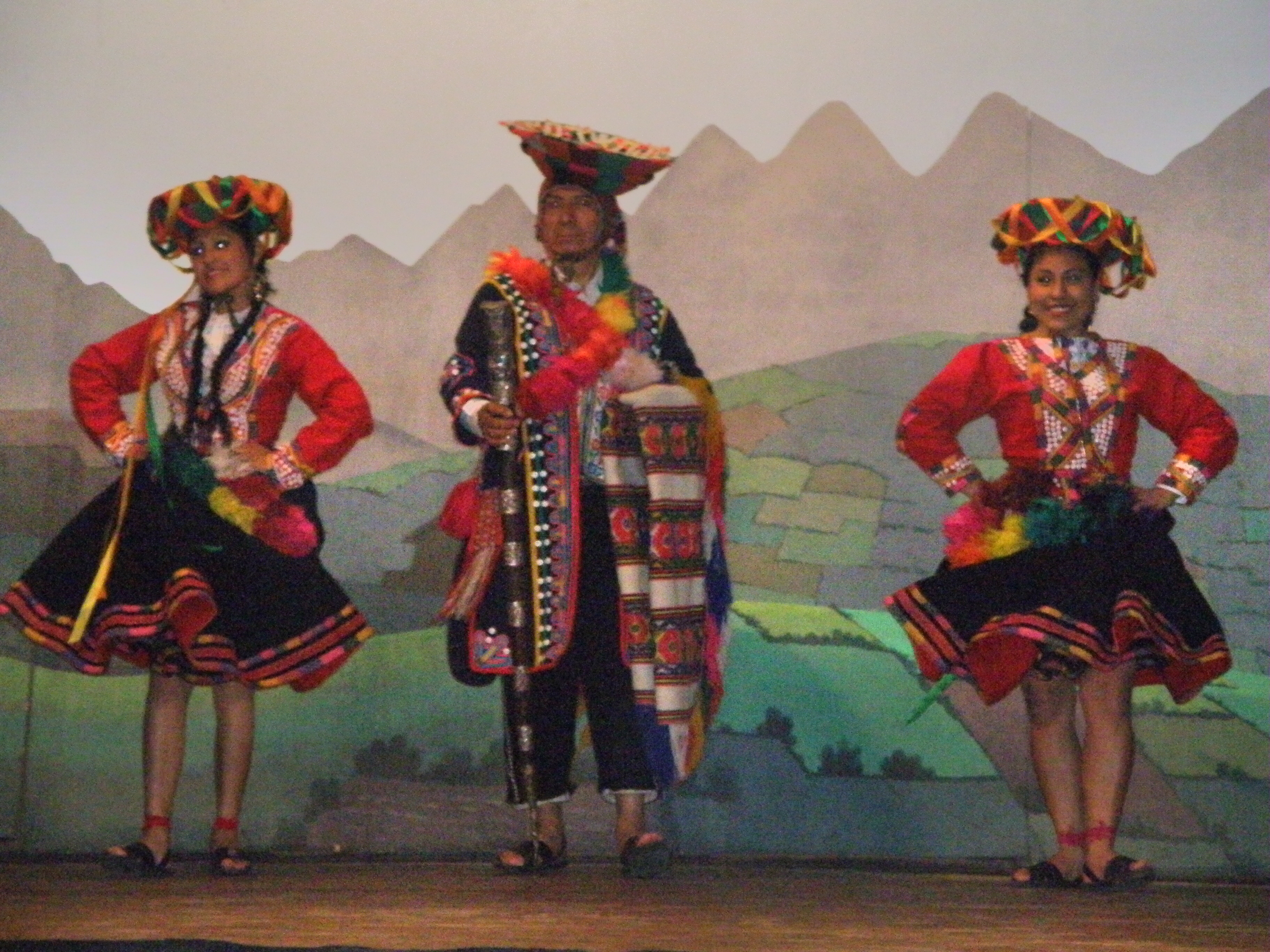
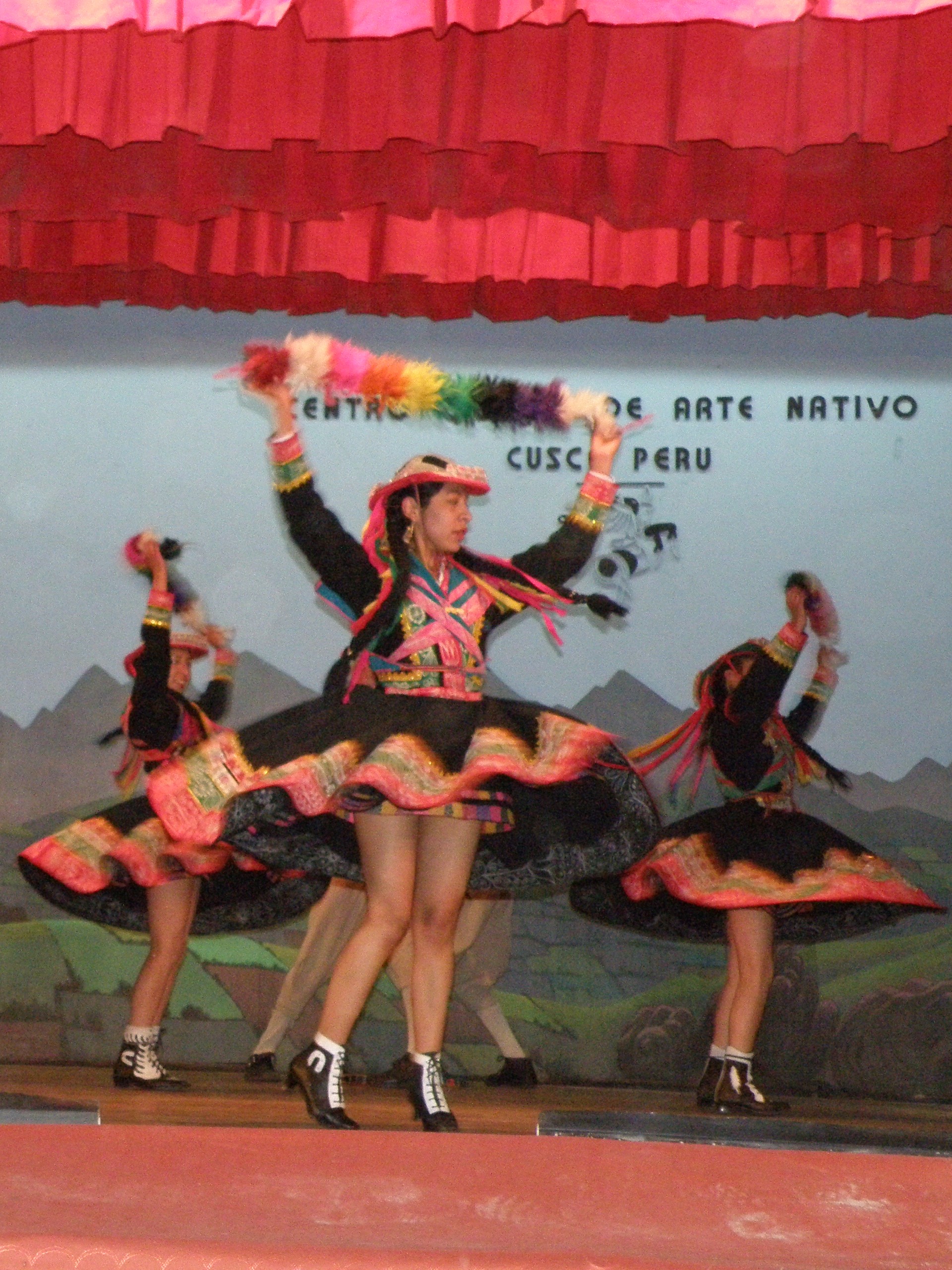
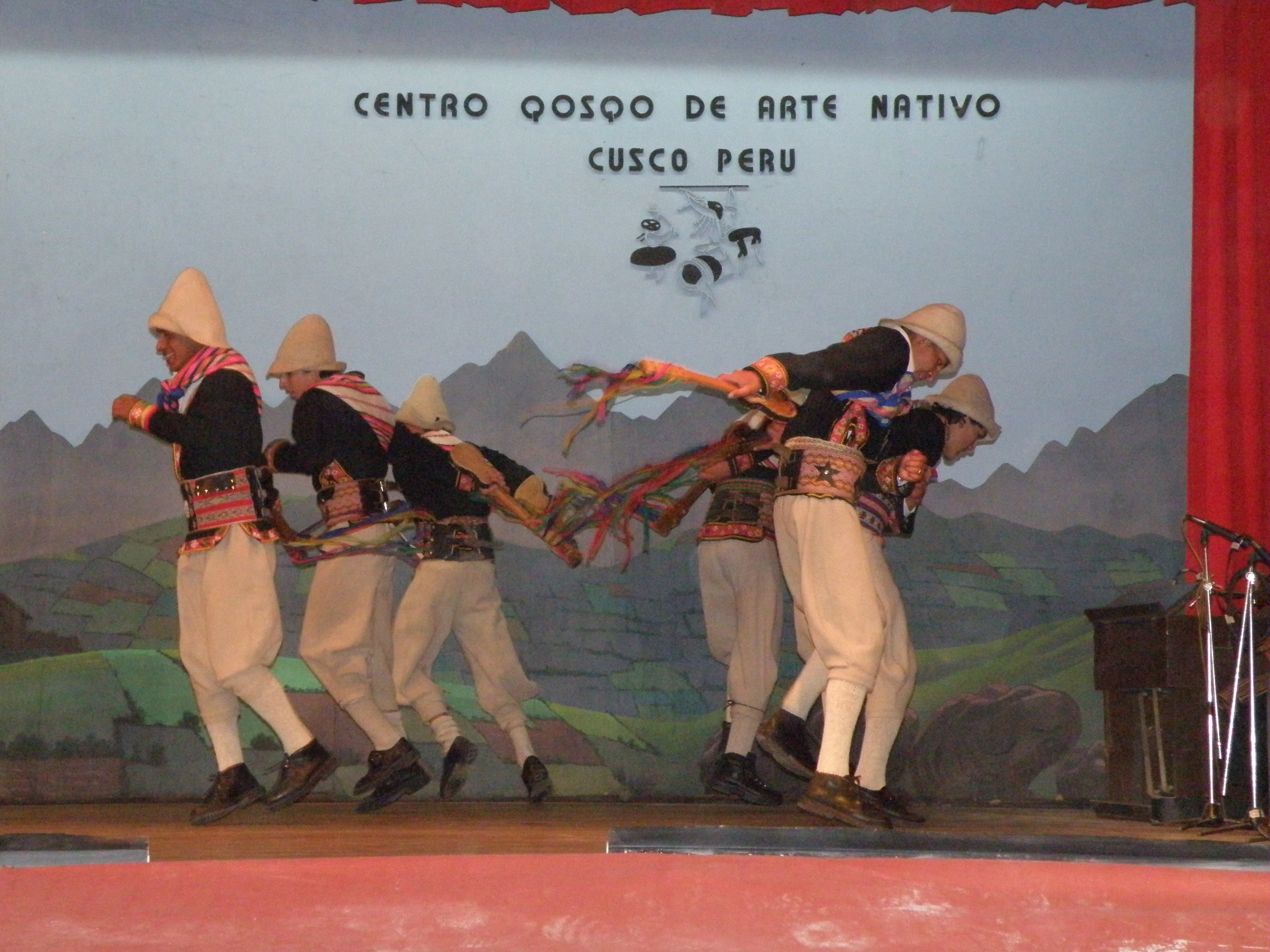
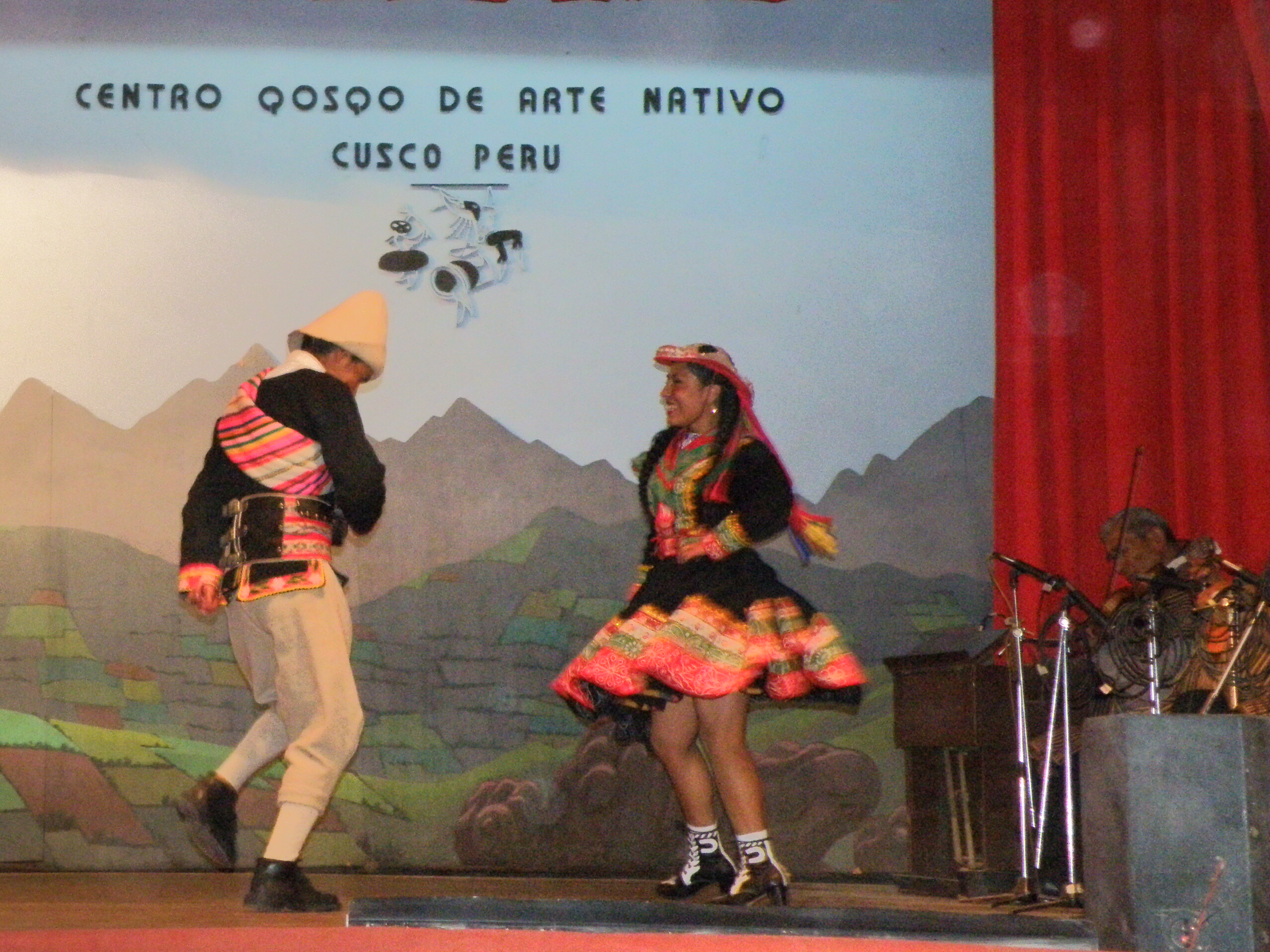
- Centro Qosqo de Arte Nativo on Avenida El Sol
-

- Centro Qosqo de Arte Nativo on Avenida El Sol



-

- Cusco, with Ausangate mountain in the distance
-
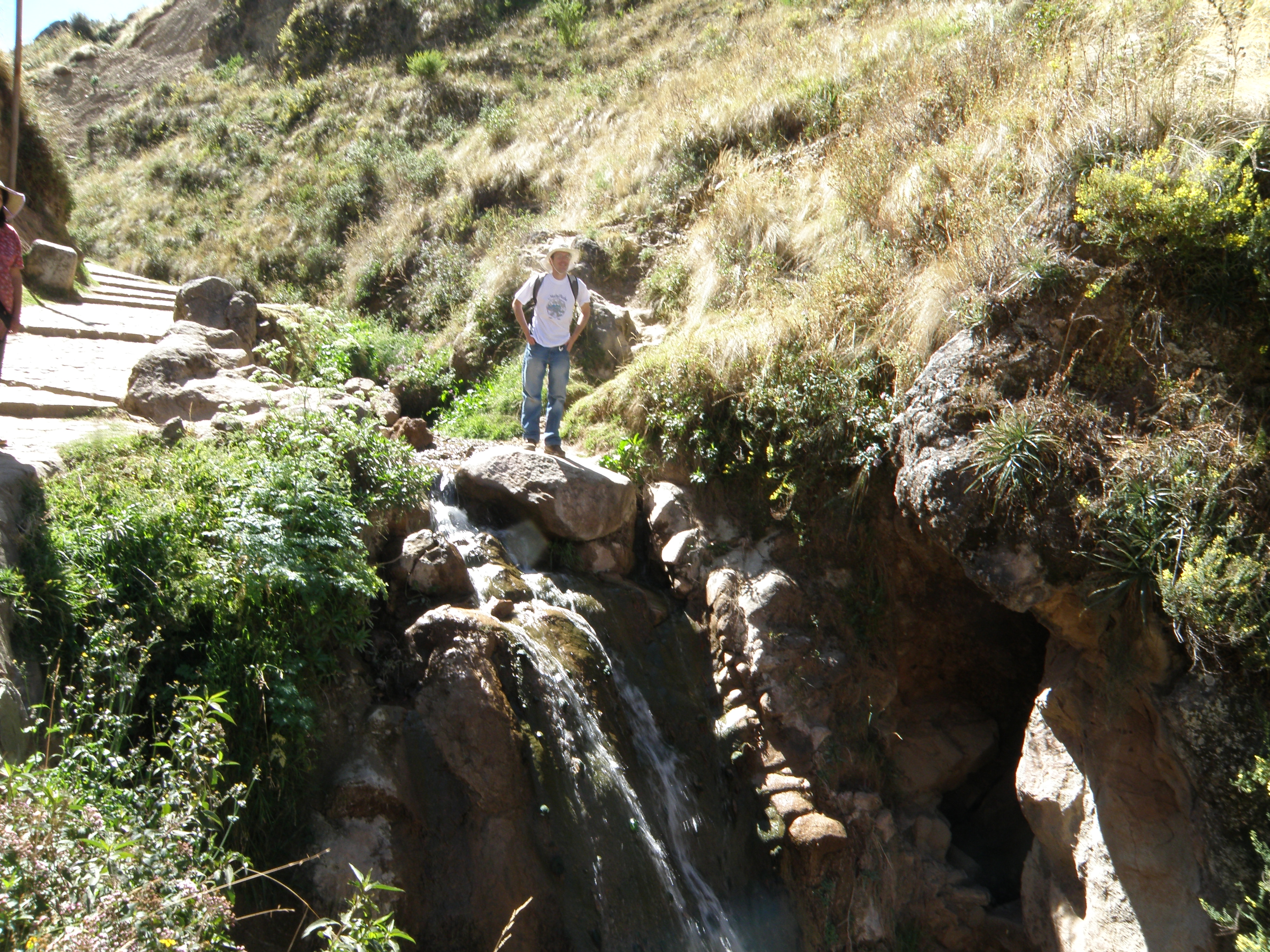
- Ana and Lourdes

-
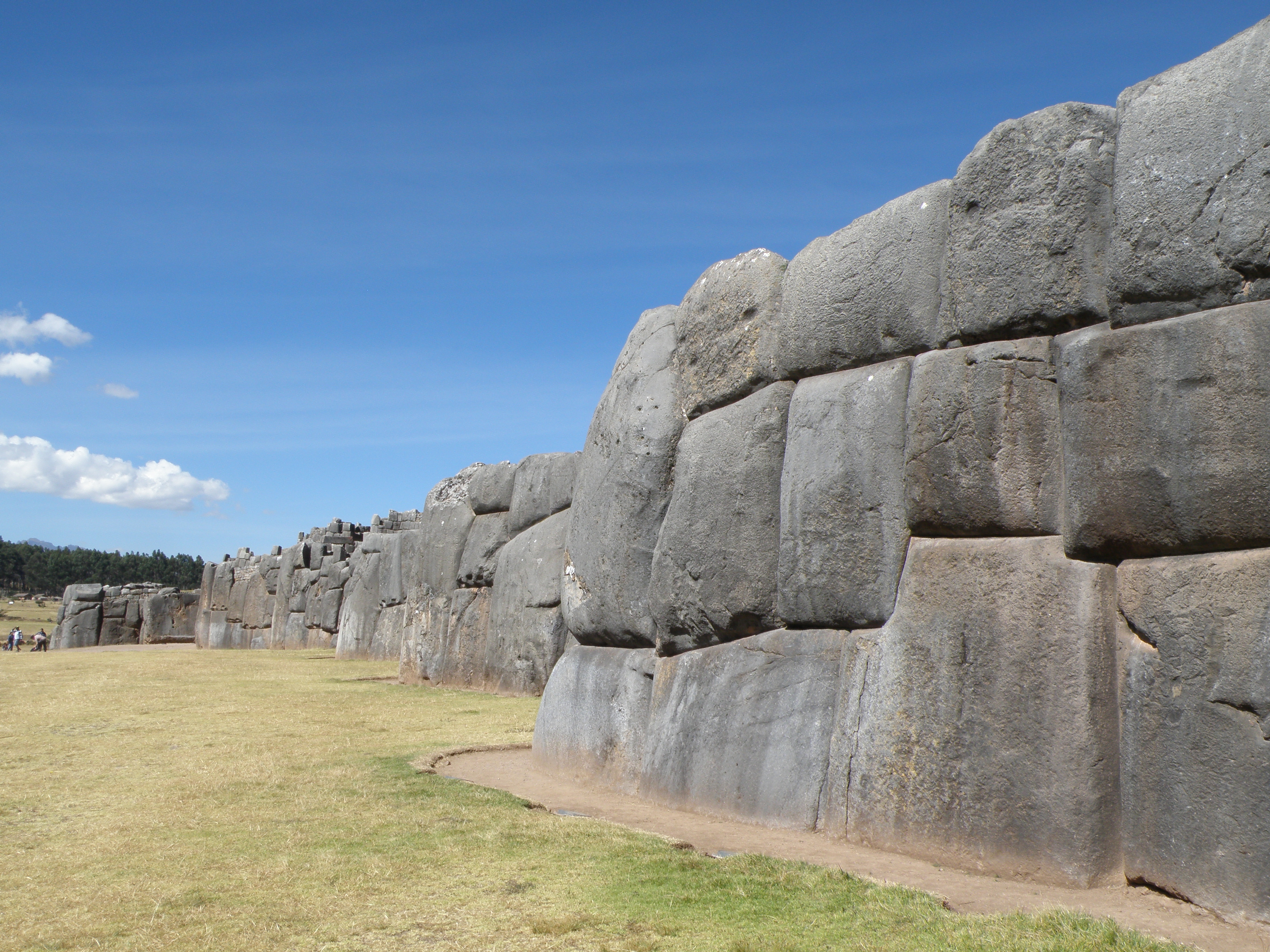
- Saqsayhuaman

-

- Ana and Lourdes in Saqsayhuaman


-

- Ana, Saqsayhuaman


-

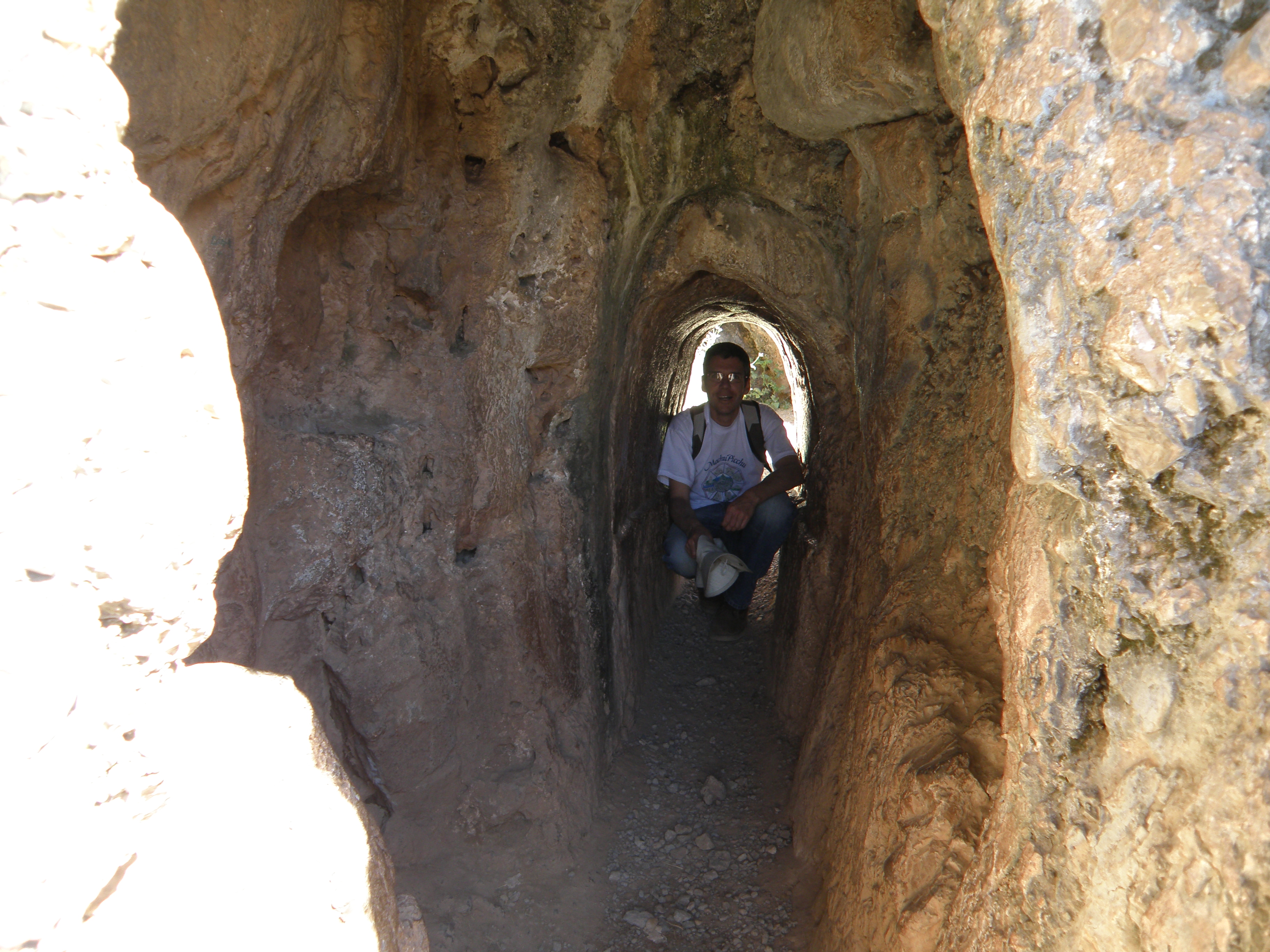
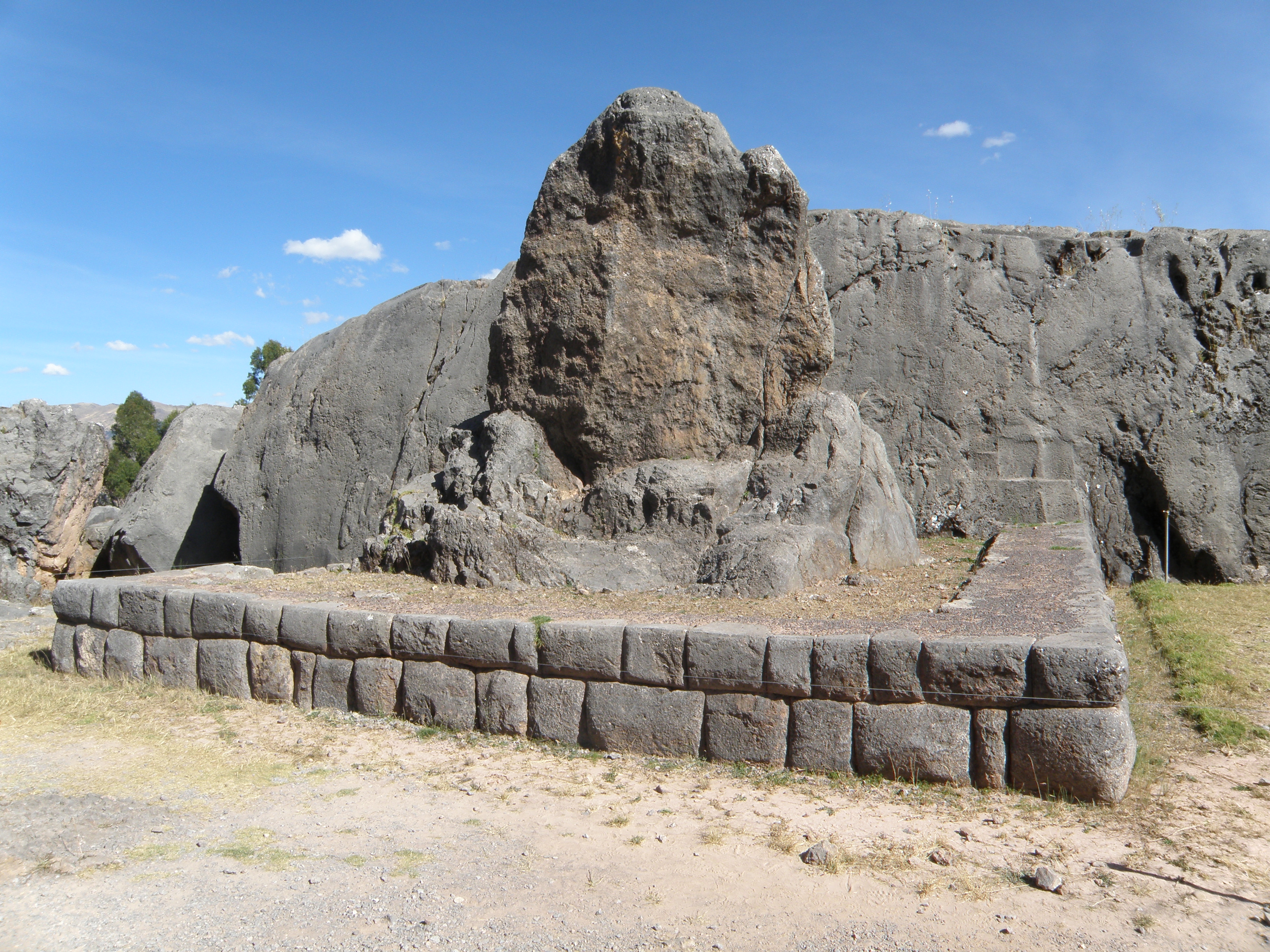
- Quenko

-
- Quenko
-

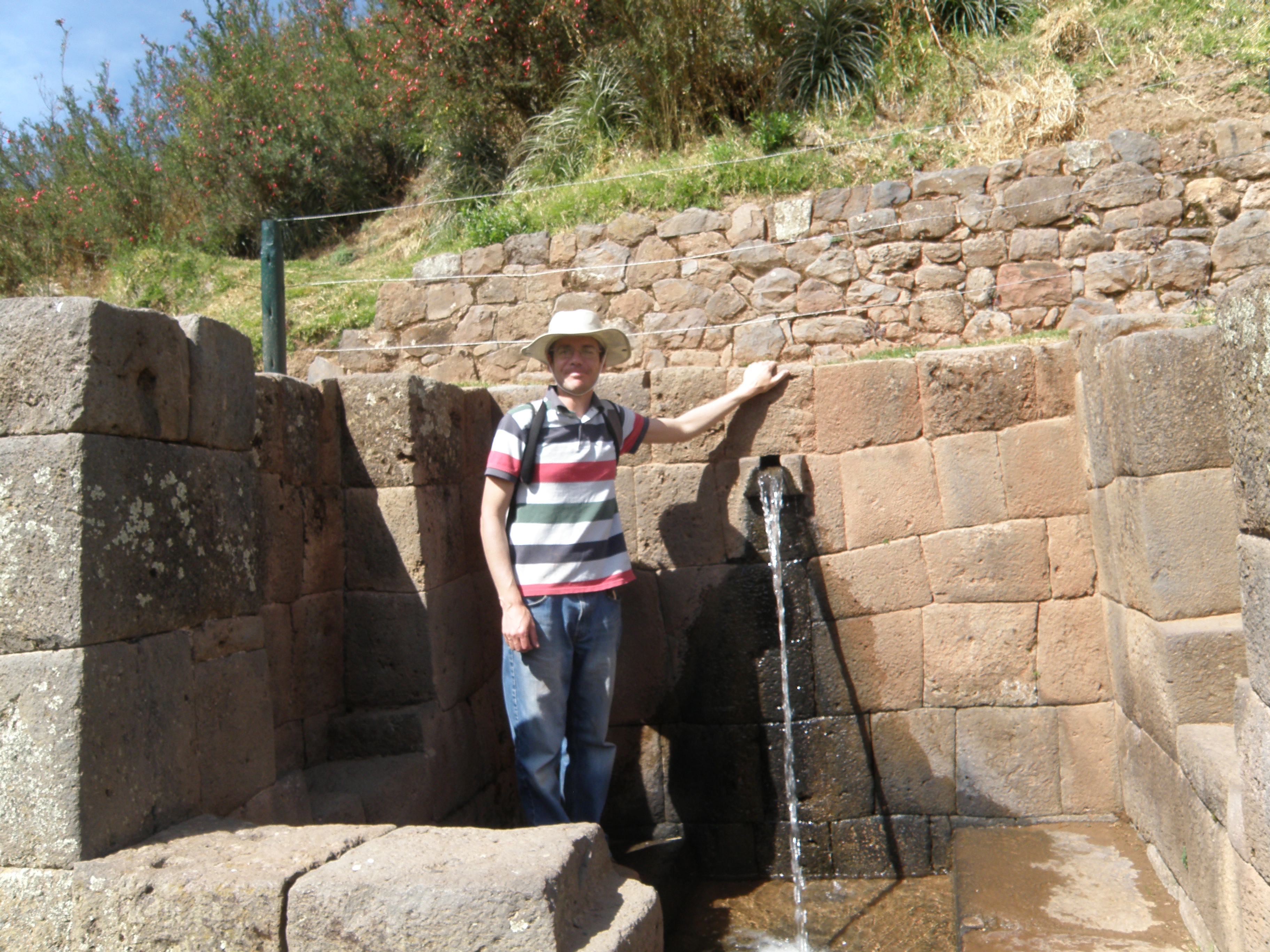
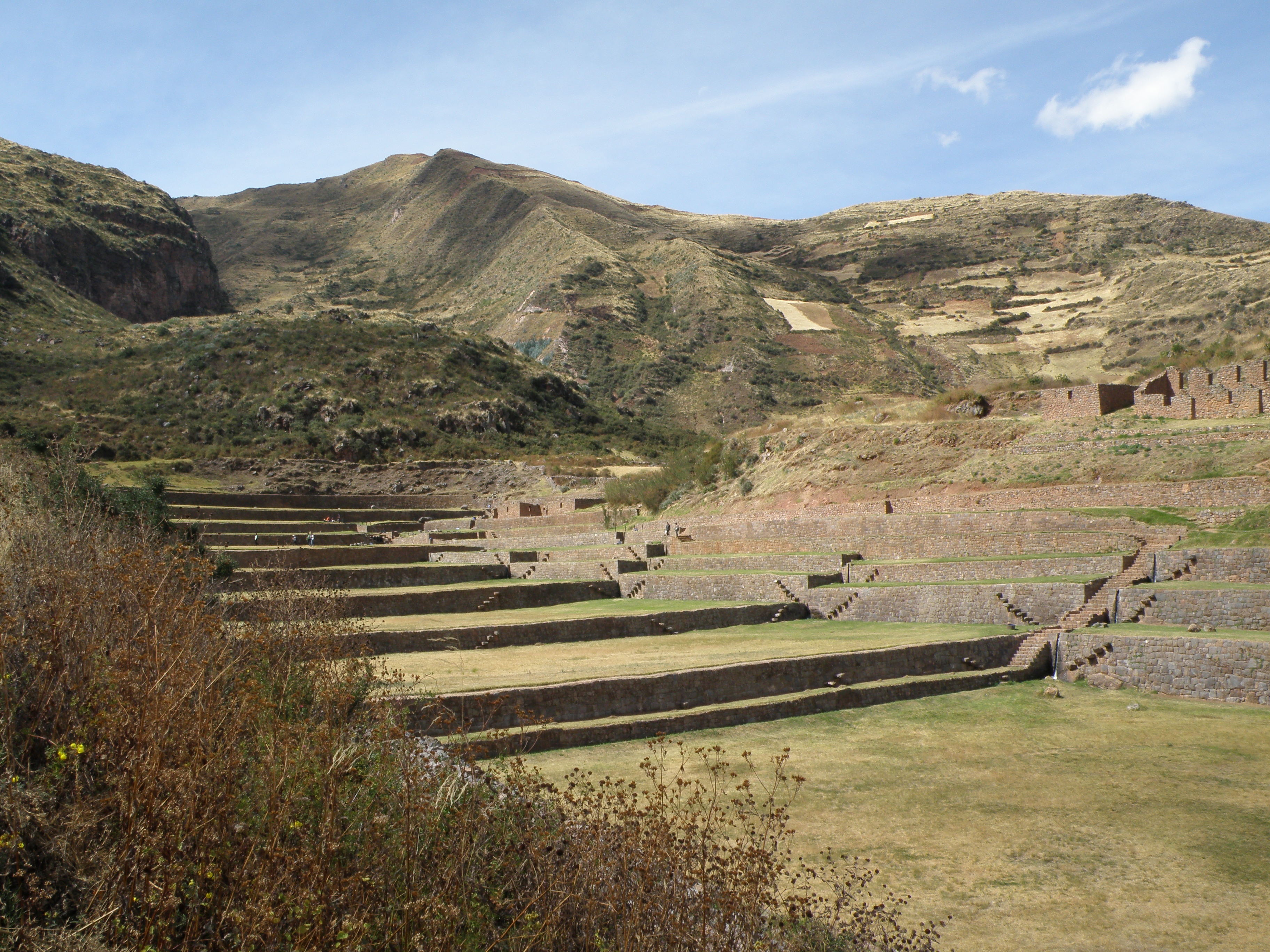
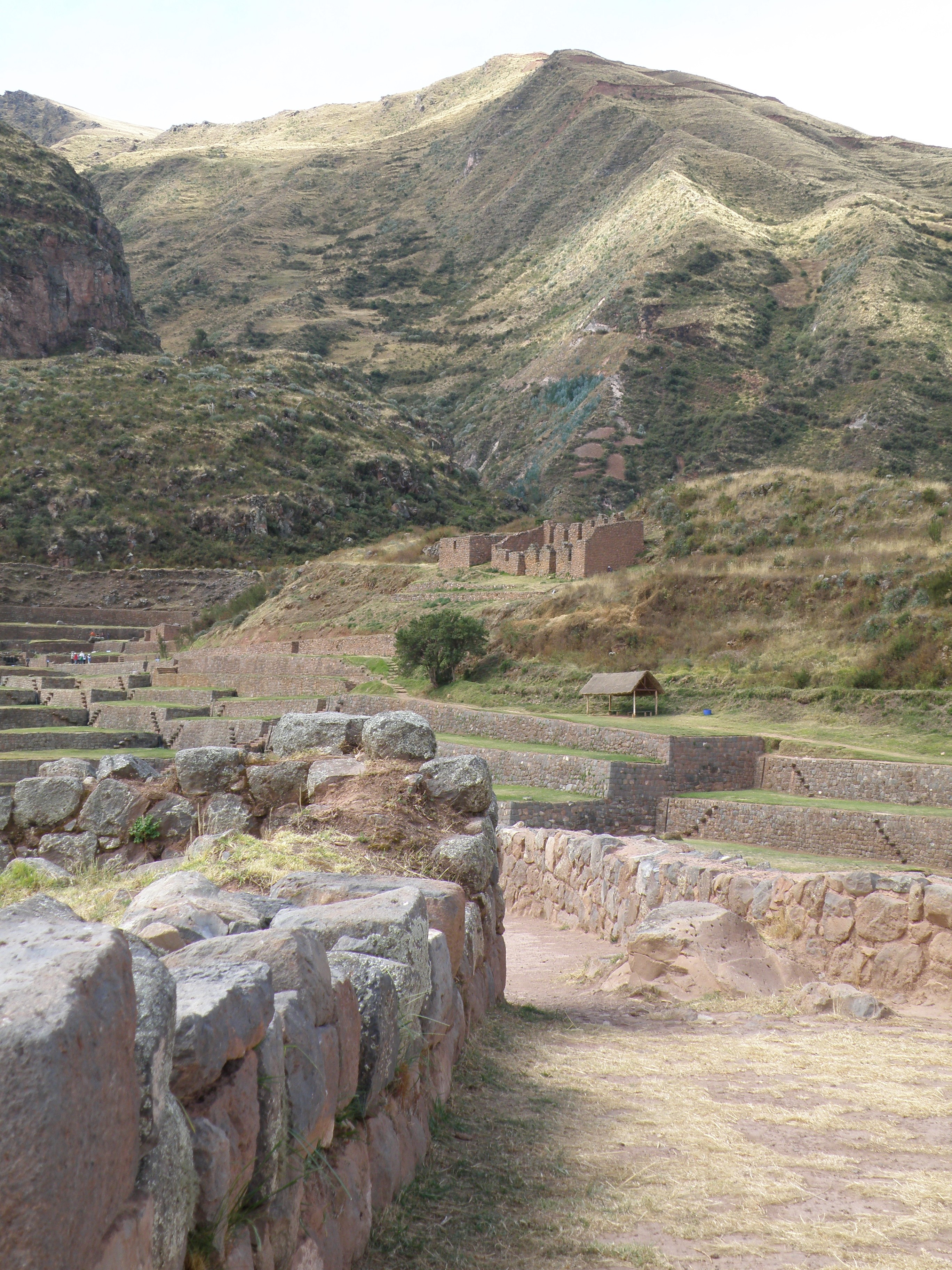
- Checking out the irrigation system in Tipon
-
- Ana in Tipon





-

- A cuy lunch with Ana and Lourdes


-

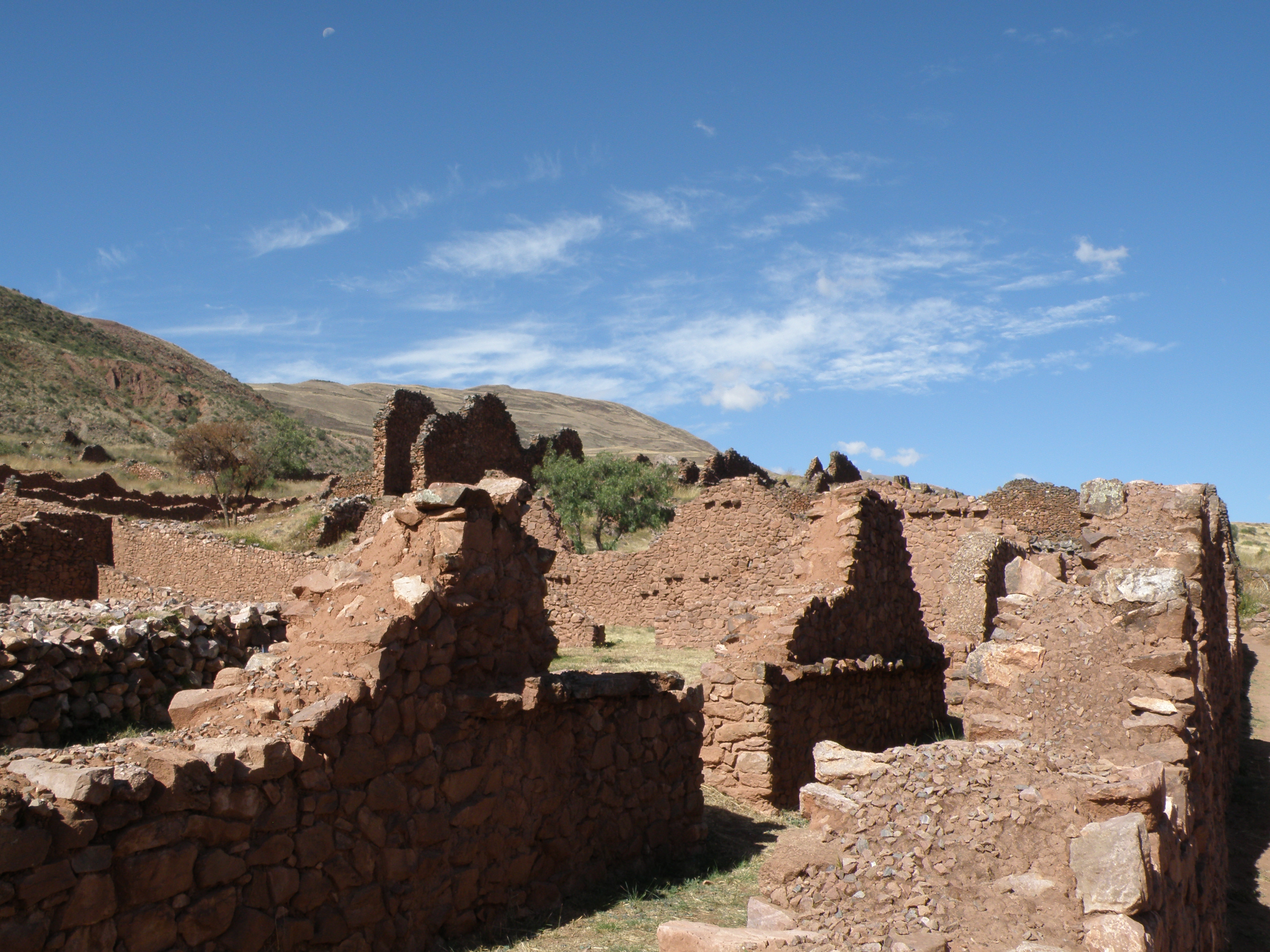
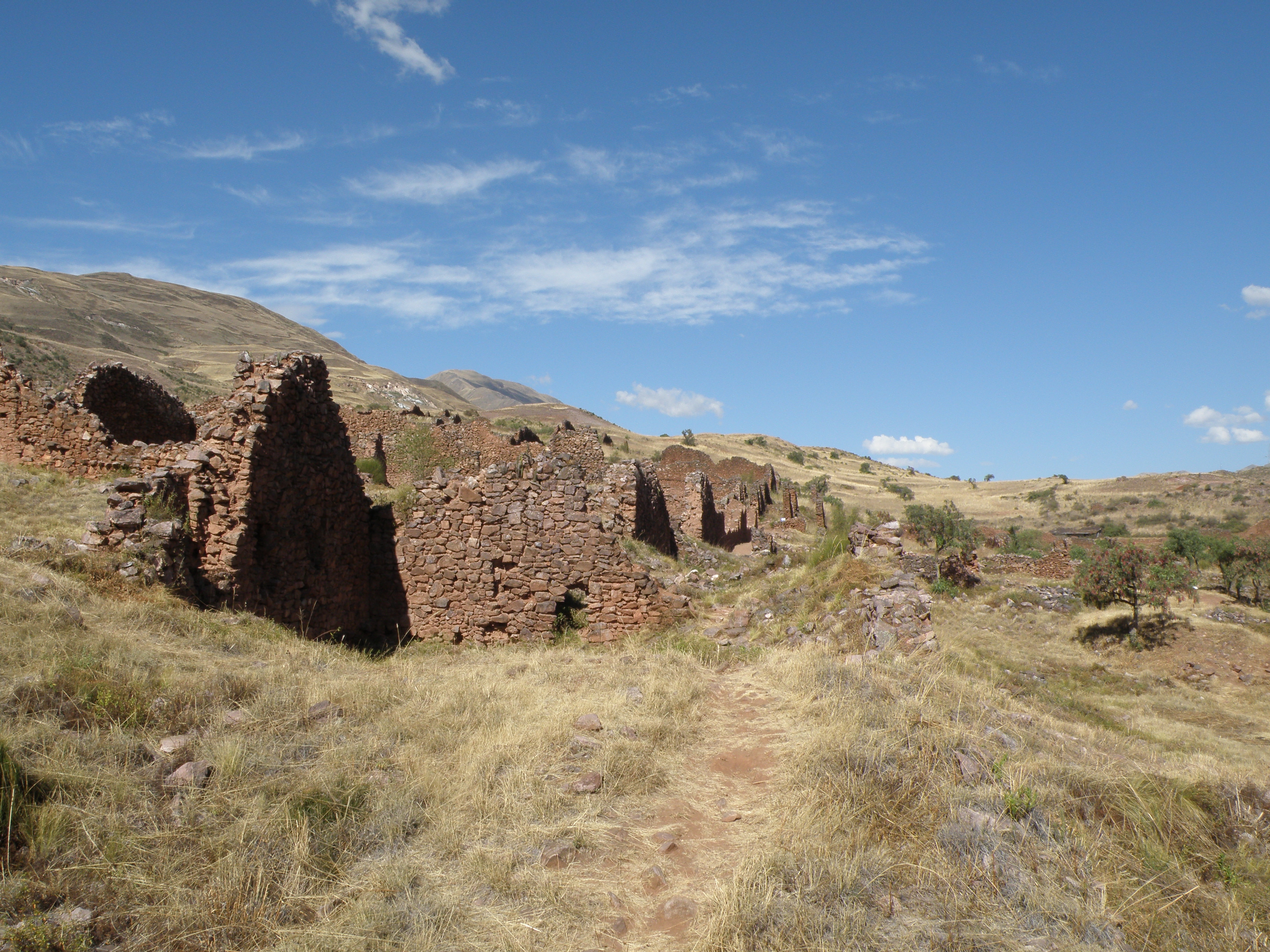
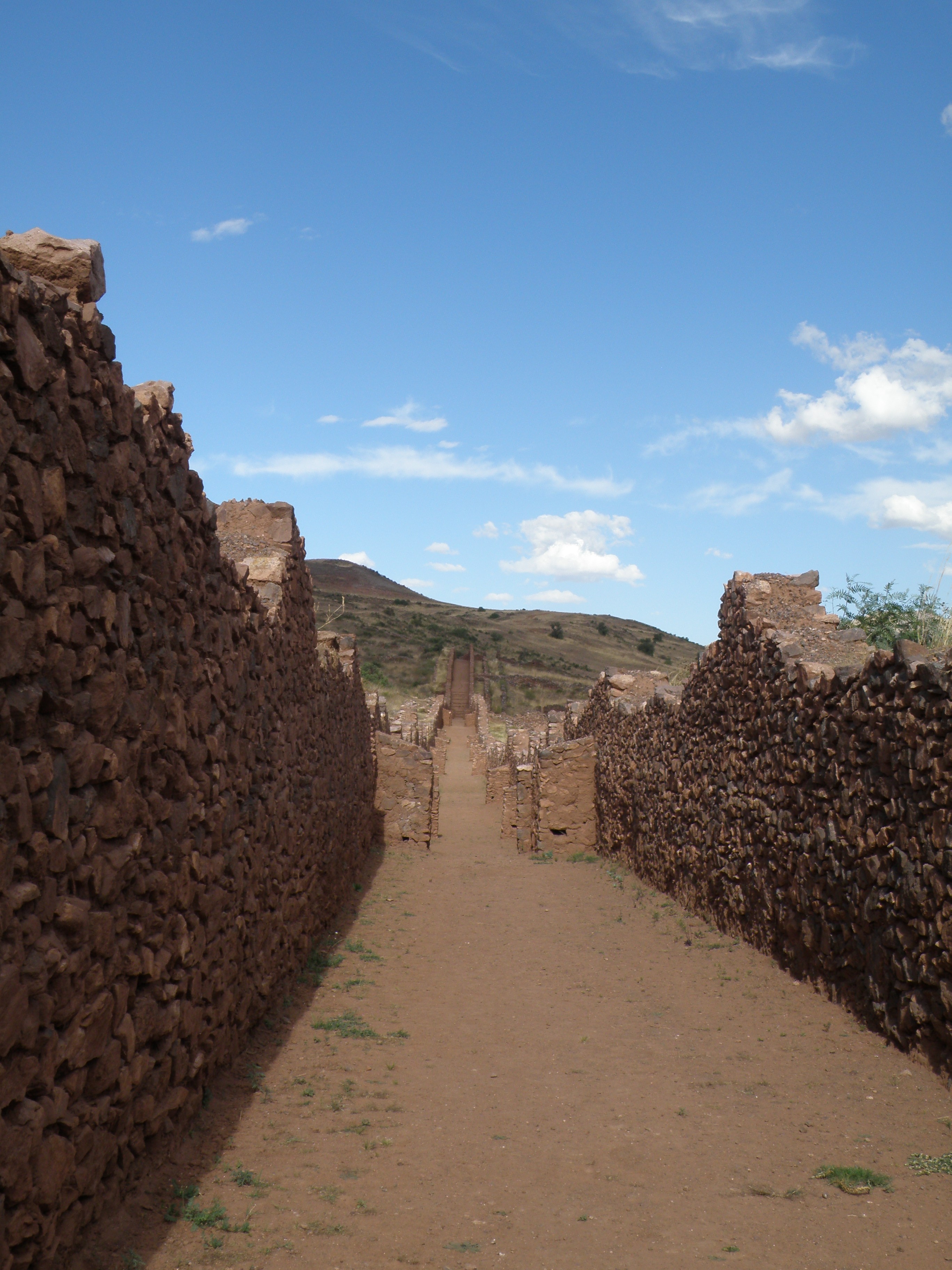
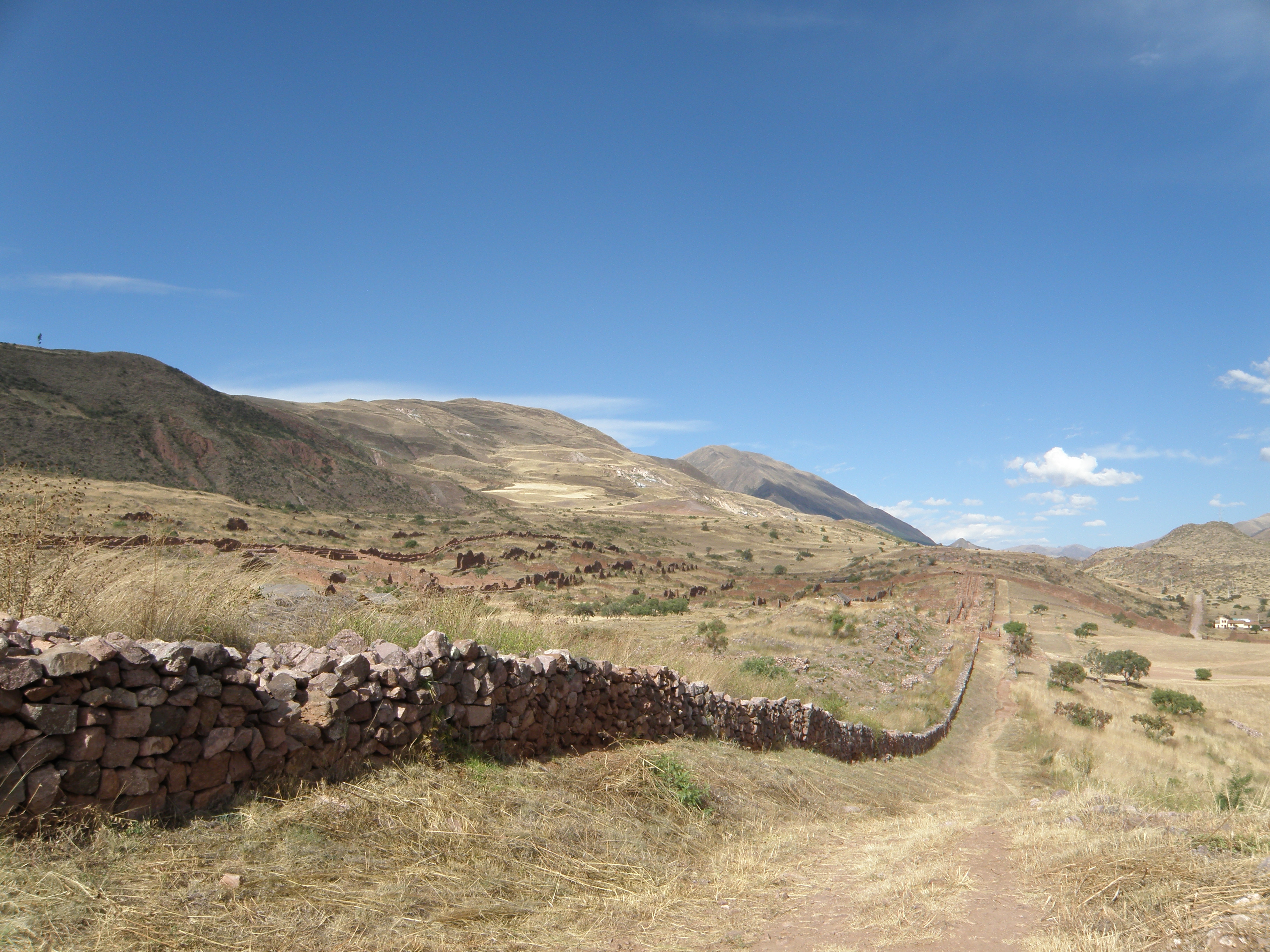
- Pikillaqta








-
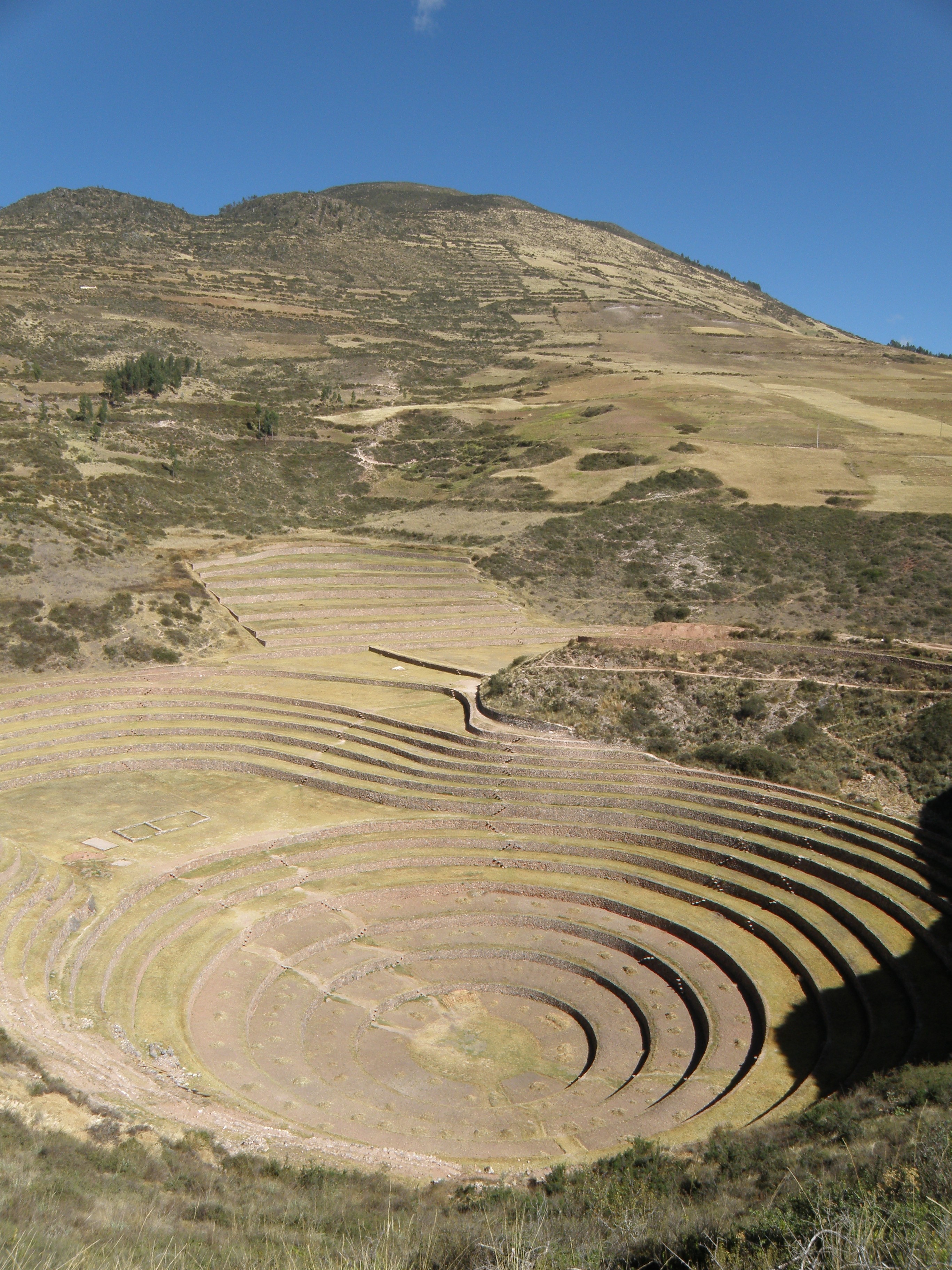
- Moray


-

- Las Salineras de Maras

-

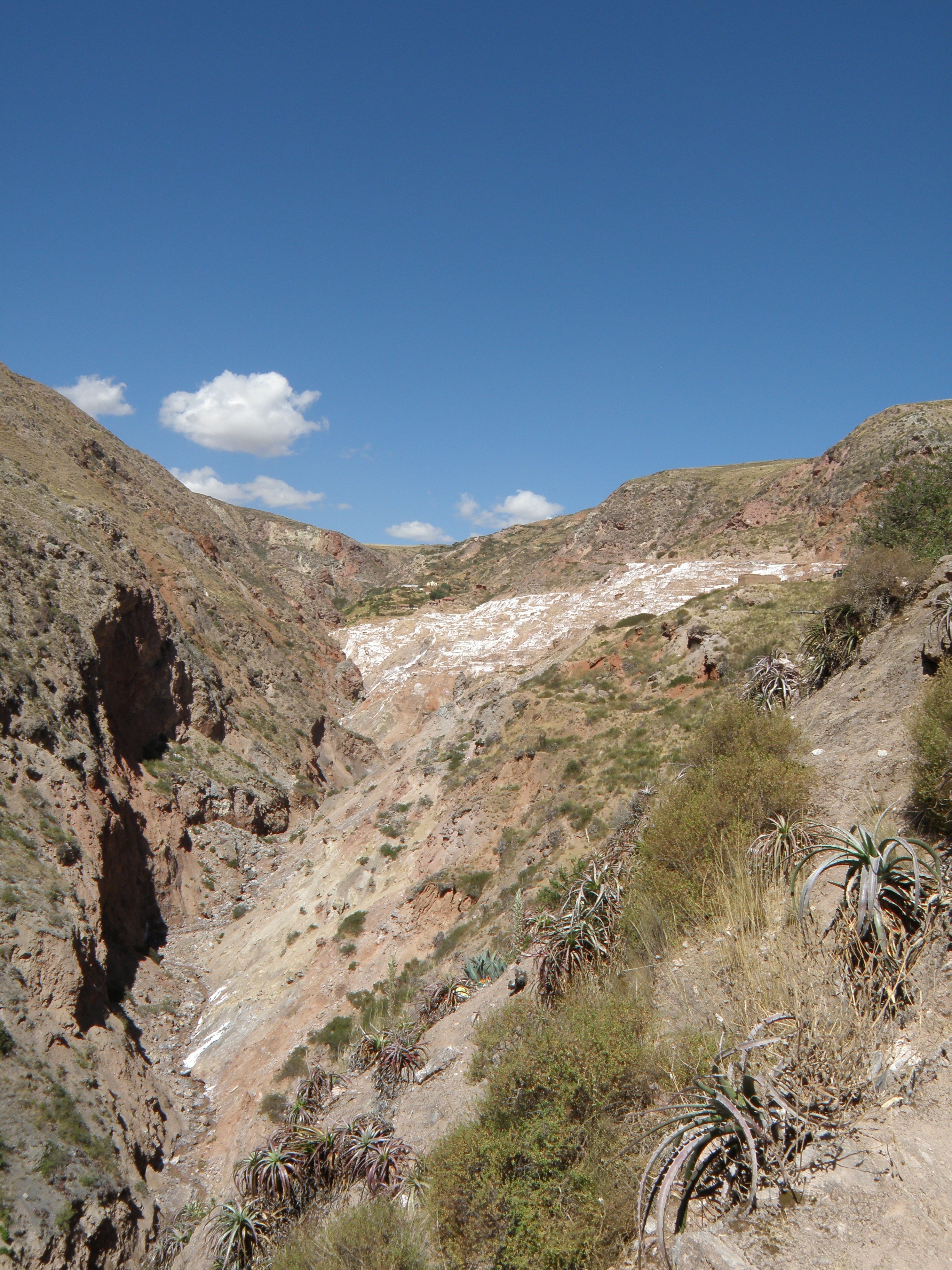
- Las Salineras de Maras

-

- Tambomachay


-

- Puka Pukara



Chapter 16: Boleto Turistico Del Cusco
Monday, June 14
Cusco’s night-time street sounds were something I quickly got used to. Loud thumping music and barking dogs were a frequent experience around the San Blas neighbourhood. It just added to the vibrancy of the place I think, and I accepted it as in keeping with the town’s busy nature. My sleeping patterns were healthy, but my dreams were quite bizarre. Many drifted beyond memory as quickly as they had entered my sleeping hours. Was the high altitude affecting these or would it now be the medication I was taking?
I bought a packet of soya milk powder and ate some bread and jam for breakfast in the hostel. Regular coca tea continued to spur me on. I started feeling much better on this lovely, sunny day. At FairPlay a gleeful looking Arne was returning home to Belgium in a fortnight. A homecoming party in the woods awaited him! He’d enjoyed a happy weekend teaching some English to Quechua-speaking infants. According to Arne the children were rather timid and hid behind a big chair when he first appeared.
My Spanish grammar lesson took in some more El Preterito Perfecto. I slowly understood a paragraph of Spanish to be an extract from Cinderella. My slowness triggered a long chuckle from Ana. We had lunch at the same vegetarian restaurant Lourdes had taken me to on Friday. I was beginning to warm to the Alpha Omega. It was a Jehovah’s Witness establishment with lots of weird stuff scrawled on the walls. The same characters as Friday filtered in again to enjoy the really good food.
We later visited the Museo de Sitio del Qoricancha. According to Lourdes, many of the original items were in Lima and much of the displays in Cusco were replicas. Nevertheless, I really took to one item, a Puchel drinking vessel, ideal for a night out at the local! Lourdes left me to continue my tour of the museum. From its basement I wandered up onto the front gardens facing Avenida El Sol. I tried my luck to walk into an area that seemed closed off to the public. It looked so flowery and very interesting. A security man, close to the road, spotted me and shouted. I immediately stopped and left the garden with a big smile. “Muchos gracias por tus ayudar” (thank you very much for your help) I shouted to the man, and he laughed in acknowledgement.
San Jose Clinic called again. They required two further insurance forms to be completed and signed. During the evening I studied Spanish grammar. I couldn’t remember being taught this much grammar structure when I was in school. It was so methodical. Perhaps 25 years on from school, it seemed to make more sense. I always regretted not pursuing languages in school. I took an early night as the cold, clear starlit sky twinkled over Cusco.
Tuesday, June 15
The end of my strict five-day dietary regime had arrived. I felt lots better and more focussed. I downloaded travel photographs to send to the Daily Post Wales. They also wanted a concise fact box to add to my pending article. My item was also about Machu Picchu reopening. Therefore, in my email I reminded the sub-editor about a story they ran in January. The Post headlined with two gap year students from Llandudno being stranded in the region following the torrential rains and landslides. The article was thus accepted as a travel update not just an adventure one.
I enjoyed another good class with Ana but the atmosphere at FairPlay wasn’t good. Lots of hushed voices floated about and a very subdued looking John sat alone in his darkened office. The independent, not for profit, school faced a real showdown with the authorities over its alleged avoidance of social security cover for the teachers. A quieter than normal Lourdes insisted on accompanying me to San Jose Clinic. The flaking heat of the hot sun pinched my skin on the walk to the clinic. There were documents to be completed, signed and faxed through to Columbus Direct. Its subsidiary was also taking care of a separate section of cover. It needed to be pushed on. I wanted my passport back. The fax machine was playing up, so Lourdes and I sat in the clinic’s cafe. We shared some fruit pie and drank mate tea while watching a bit of Brazil versus North Korea. The papers finally went through, but how much longer would I be without my passport? I still had a photocopy as proof of identity but I was anxious to know.
I left Lourdes and took a taxi to the Monumento Pachakuteq. It was a huge, modern memorial tower to the great reformer of the Inca Empire. There were nine floors and a narrow, spiralling staircase to take in the chronological history of all the Inca kings. By the ninth floor I felt quite exhausted then somewhat queasy when I stepped out onto the circular balcony to look down over Cusco. The defiant looking statue of the warrior leader Pachakuteq towered above my head. Its intensity wasn’t calming my senses so I quickly descended back down to the entrance.
On my way up to Cuesta San Blas I once again spotted an old, bedraggled fellow. I’d seen him begging, almost pleading for the last few days now. I had clothes back at the hostel to give away and lessen my load. I gathered up a jumper, pair of gloves, scarf, and trousers. I walked back down and placed the bag gently into this man’s arms and shook his hand. I also left a couple of coins for his main demand, comida (food). Whenever I’d seen him, he’d be pleading for comida and putting his fingers to his mouth in a heart-breaking gesture. The guy was in a desperate state and the cold nights of mid-winter Cusco were hardly sympathetic.
Wednesday, June 16
At least my stomach was better after taking the tablets. I feared a relapse though. I still drank plenty of bottled water to cleanse my body. After Spanish lessons I went with Lourdes and Ana for a quinoa soup and soya meat lunch at the cheap but glorious Alpha Omega. Another teacher Sonia walked with us for much of the way. Sonia made you smile but her teasing seemed to make the other teachers blush. Like all the FairPlay teachers, Sonia was an incredibly resilient character.
I was feeling tired and craving for chocolate afterwards, but I stayed out with Lourdes. The lively annual dance competition for Cusco schools and colleges was taking place at the Plaza de Armas. The judges were sat beneath a canopy on the high steps in front of the cathedral overlooking the sunny activities. Lourdes’ son suddenly appeared. He received some pocket money to re-join his friends for a fun time. Lourdes looked so happy for her son.
I later returned to Jack’s Cafe for my first taste of its culinary delights. According to the Lonely Planet, the ginger lemon tea cured all ills so who was I to argue with that bold claim? The pot of tea was delightful. It was also a perfect complement to a great meal of chicken in mushroom sauce with mash, carrots, and broccoli. Customers had to queue for this hugely popular place, but I didn’t have to wait too long. I was soon ushered in and shown to a nicely placed window table. It was close enough to the magazine rack where I grabbed myself a recent copy of Hello magazine.
In the evening I experienced another highlight of Cusco. The cultural beauty of Centro Qosqo de Arte Nativo on Avenida El Sol was an immensely enjoyable experience. The musicians and dancers put on a great show in the auditorium. The audience increasingly lost its inhibitions and joined in the fun. I bubbled with happiness at this spectacle. Sound and vision really have a home in Cusco. The narrated story of Cusco set with an Andean backdrop really delighted my senses. Piped tunes and instrumental tones invoked a yearning for home somehow. I think the authenticity touched me.
Thursday, June 17
A turbulent side to Cusco reared its ugly head on an otherwise bright morning. Rocks and stones scattered the lower end of Avenida El Sol to stop any vehicle access. Protesters were determined to unify the opposition to high gas prices in Cusco. Neighbouring countries like Bolivia were charging their customers half the price Peruvians were paying, for a resource that was extracted not too far away from Cusco. There were all sorts of supplementary arguments going on about dual prices and resource sustainability. The scene in Cusco was unpleasant but nevertheless an expression of community solidarity. I sympathised, thinking how the natural resources of my own country had been exploited.
After making my way through the crowds of public and private sector workers, I reached the school where the mood remained sombre. A young American woman was feeling very ill. She was new to the school, new to Cusco and her head was banging. Sympathetic words were fine but a visit to a doctor was highly recommended by Ana and me.
There was excitement in Ana’s voice. She’d bought a new computer for her son Ruben. After all Ana’s troubles following a marriage break up, life was beginning to look up in a big way. I loved her optimism. The lesson somehow got on to Che Guevara. She suddenly said, in Spanish, ‘oh yes, it’s all very well for Ruben to go on about the greatness of Che, but he needs to understand the harsh realities of the real world. He must realise that Che came from a wealthier background which afforded him the time, money and head space to pursue an admittedly worthy mission for socialism!’ She was saying all of this with a very enigmatic expression. There was a tender pride for she knew that Ruben was onto a bright path. He was just 15 years old and had just been accepted to a prestigious university. Ana had every right to be proud of her son.
Lourdes arrived and I asked Ana if she would like to join us for a walk up to Saqsayhuaman. She had no more lessons for the remainder of the day. We made our way up along Avenida El Sol. It was now full of protesters. We saw a motorcyclist shepherded off the road. It was very tense, so we briskly walked on. I presented a straw hat to Ana as I sought a hat seller in the Plaza de Armas. I then managed to pick up a cheap sun hat. The climb up to Saqsayhuaman was a steep one. We stopped to drink some orange juice at the entrance.
This was another way to learn Spanish. To listen when the ladies talked, to concentrate while we walked. The inspiring scenes of Saqsayhuaman’s large stone structures helped. We took lots of photos and continued up the hill to Quenko, a smaller site. There was a pretty lake full of trout being overlooked by some graceful swans. We decided not to go as far as Tambomachay. Instead, we eventually descended the steep, street steps to San Blas. This brought us out at the top end of Carmen Alto, close to the hostel. In contrast to what was happening in the town centre, we’d enjoyed a tranquil day. I was really learning a new language and getting on with things.
Friday, June 18
I strolled down Tucaman as Cusco dragged itself back to normality after the general strike. Two American women stopped to ask for directions. I gladly obliged and gave them a quick lowdown about the places to see. I wished them a happy stay in the town. Our cordial conversation was abruptly ended when a riot broke out at the farther end of Plaza de Armas. Some protestors were continuing their campaign against the gas prices. The ugly scene saw people being bashed about by big baton wielding policemen. They charged with their shields against the masses. Everyone was forced to flee down Avenida El Sol where a standoff welled up against the heavily armed authorities. I somehow squeezed my way through the roaring crowd of dissenters to get to my class.
Ana and Lourdes later joined me for a trip to Tipon. We caught a bus on Avenida El Sol and sat at the back conversing in Spanish. Lourdes started teasing me about my stay at John’s house. It was where his sister-in-law Mimi also lived. Mimi was the subject of much speculation among the teachers. Lourdes asked whether I had investigated the rumours of a boob job when I stayed at the house! I laughed so much but replied I hadn’t noticed any enhancements! Conspiracies about siphoned FairPlay funds ensued, much to the amusement of Ana.
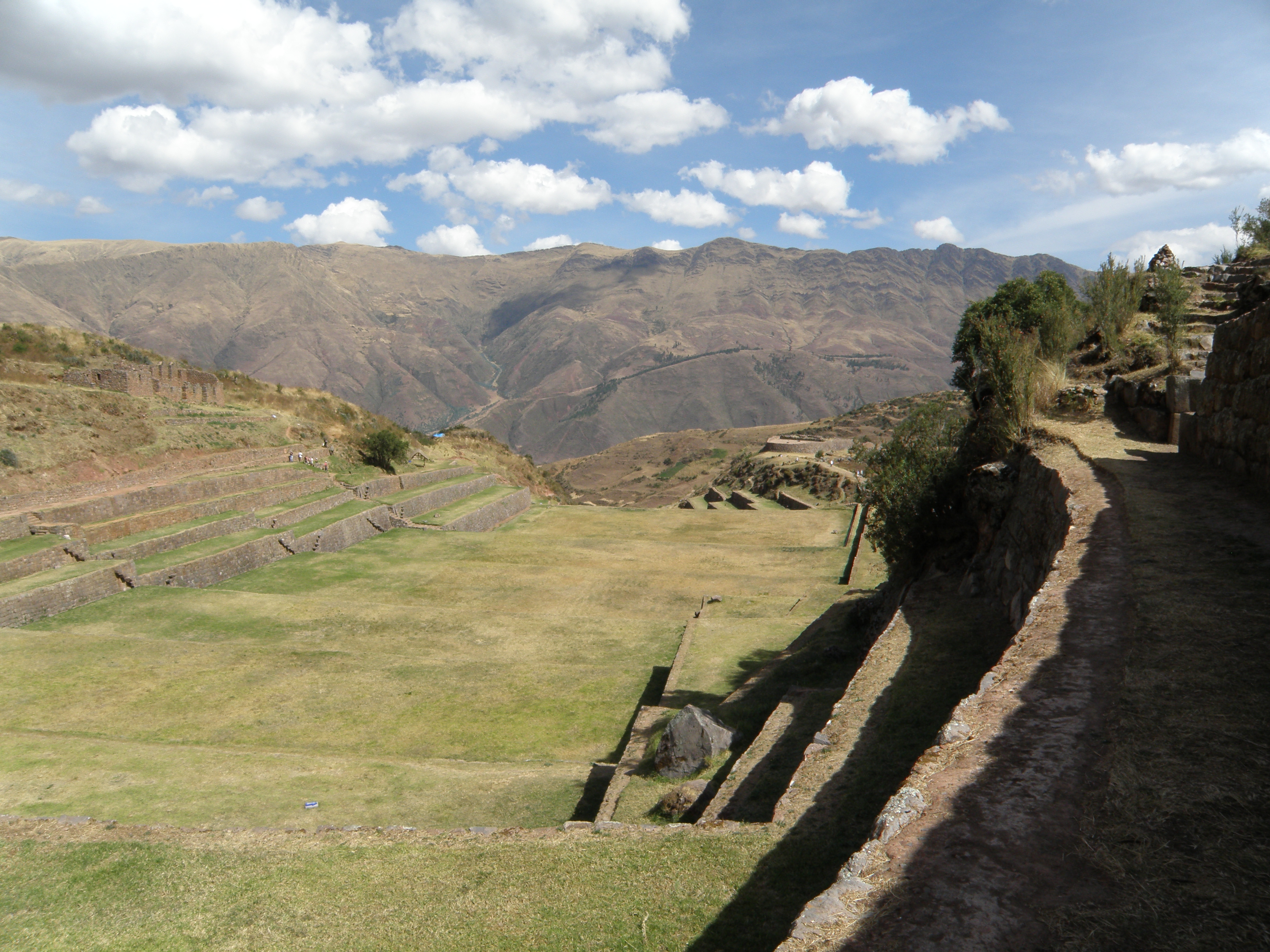
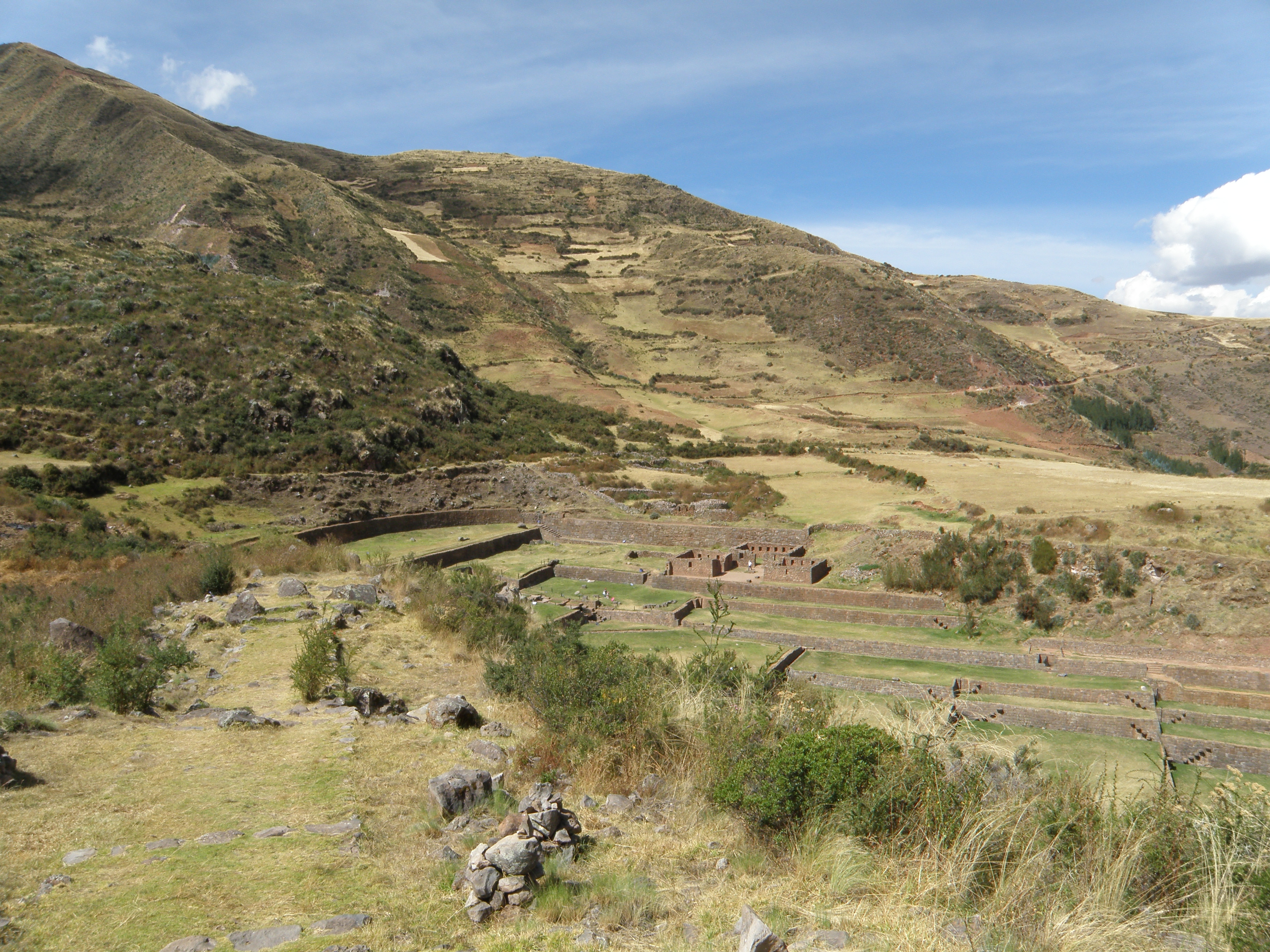
At Tipon the ladies indicated a backyard restaurant where we’d return for a guinea pig lunch. It was my treat for the ladies after their kindness and great Spanish tuition. From Tipon we took a taxi six kilometres up a steep, stony track to the 3,900 metres high Tipon ruins. More fantastic irrigation systems demonstrated the ingenuity of the Incas. These people approached matters in a truly unique way, without even the wheel or a system of writing. Hovering hummingbirds tweeted in the tranquillity as we ambled around the site. We arrived at a large stone fortification where Lourdes took a call on her mobile. Tears welled up in her eyes. The head teacher Carmen rang to say the school was closing.
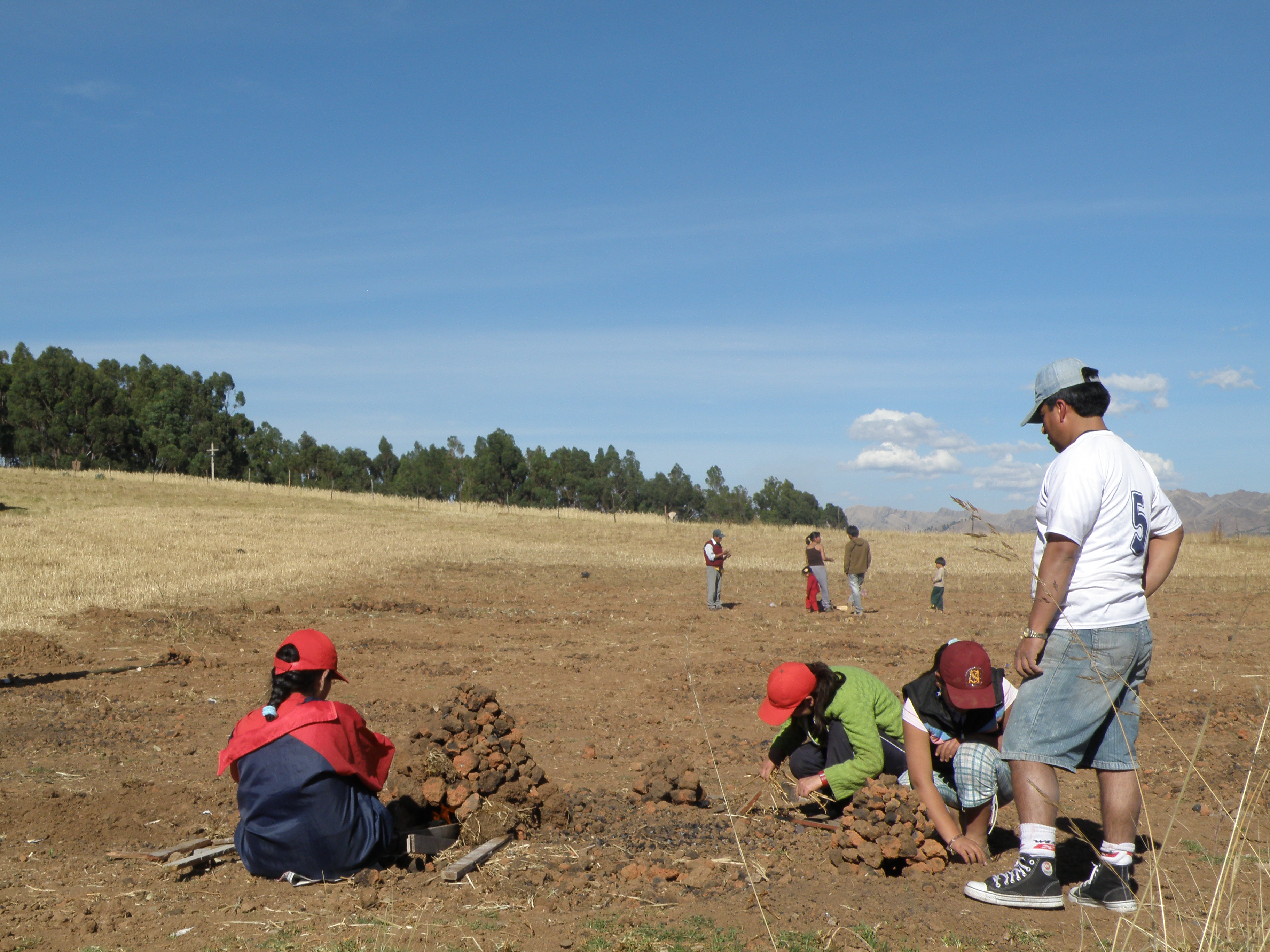
The sun started to peek out between the clouds as we took a taxi back down to Tipon village. We called in to one of the several cuy (guinea pig) restaurants. Cuy is expensive in Cusco but less so in its spiritual home of Tipon. The chef showed us a big, stone oven where skewered cuys sizzled in the wood fired heat. A somewhat disturbing spectacle but I enjoyed the meal. The meat tasted fine and tender. There were lots of bones though, and I wasn’t keen on the condiment, a traditional, centuries old herb sauce. You must use your hands to eat cuy and it can turn out to be a messy and greasy affair. Ana had the technique down to a tee as she stripped the meat bare to the bones and took some of mine.
The calls kept coming through from Carmen. A look of despair enveloped Lourdes. A hastily arranged meeting was due to take place and Carmen needed Ana and Lourdes to be there to hear the latest. We travelled back on the next bus. Later that evening I planned out my visits to the four remaining places on my Boleto ticket.
Saturday, June 19
I visited the bustling El Molina Market. There were gadgets galore to be found at cheap prices. I paid just 67 soles for a 2GB photo memory card. Close to the market I located the Orcos bus yard. Buses departed here for Pikillaqta. Timing the 40-minute ride, I got off one stop too early, in Huacarpay. I needed to stay on the bus for the extra two-kilometre ride up to the next stop. However, a lovely young woman at a roadside kiosk served me some chocolate and went out of her way to signal when the next bus was passing.
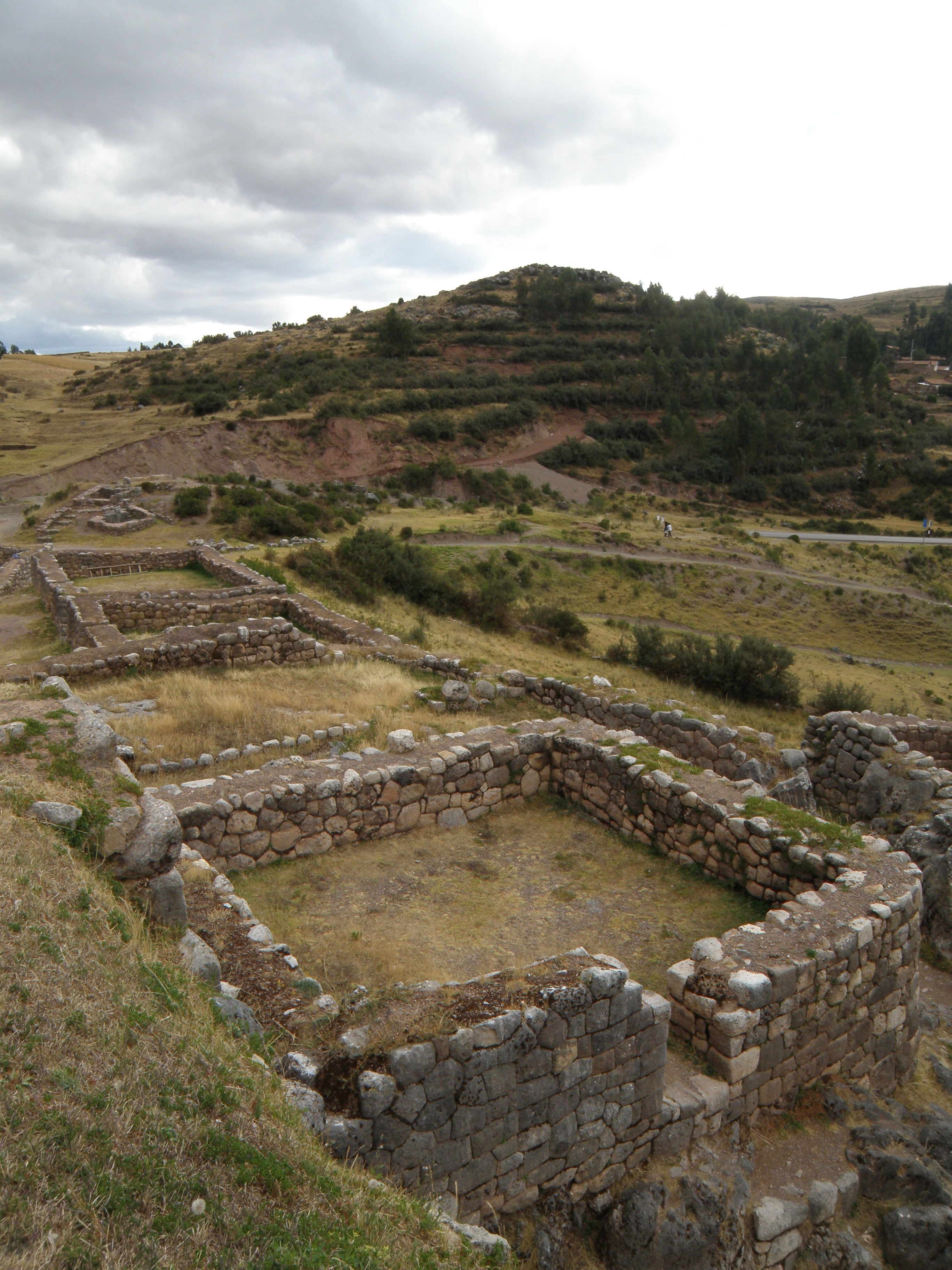
The hot wind picked up the roadside dust as the next bus dropped me off outside the Pikillaqta entrance. The site was once a sprawling ceremonial centre built by the Wari tribe, a pre-Inca people, and the only major pre-Inca place in the region. Huge, crumbling stone walls and collapsed multi-storey buildings were spread out in a most desolate scene. I only saw two other people during my two-hour stroll around the site. The stone barns had been restored to their original state with thatched roofs. I liked Pikillaqta and its additional love of the sun.
I left the peace and quiet there. Threatening clouds gathered, and I found my way down the mountainside to catch a bus back to Cusco. I loved the local buses, especially this one. The indigenous heart and soul of the Cusco passengers infused a magical, chatty atmosphere to a background of blaring music. I disembarked close to the San Jose Clinic and decided to call in on the off chance of some progress concerning my health insurance. Diana predicted it would all be settled by Monday. The insurers were negotiating the $1,085 cost of my stay. They were sending further details to the clinic, including my doctor’s report which Mam had kindly paid £25 for.
I still had a craving for chocolate and later popped into Gato’s Market, where decent food deals could be found. I also acquired a taste for soya milk, especially the Leehede brand. The Boleto was keeping me active and stimulated on journeys through the vast Cusco region. There was so much to see but I needed the energy to spur me on. Contemplating another day trip on Sunday, I stayed in for yet another quiet night.
Sunday, June 20
A firecracker shattered the peace at 6am. This alarm call prompted an early start. There was much to see and do on my final Boleto day. I took the 7.30am Urubamba-bound bus, from Avenida Grau to Maras. It was packed with local passengers. A friendly bunch in traditional costume made a space for me near the back and we started talking. A lady sitting opposite spoke some English. They were fascinating and captivating people. I spoke about the beauty of their land and told them where I came from. Smiles encouraged me to continue. When we approached Maras the driver and front seated passengers shouted to me. They all wished me good luck and exchanged friendly waves as I stood on the roadside to work out my next move.
Moray was an ancient, crop circle looking site. It had a microclimate, ideal as a test laboratory for crop growing conditions in Inca times. The most sensible way to get to this remote site, 10 miles west, was to go by taxi. People became stranded there if they weren’t careful. Rosa reminded me about a couple of Brazilians who failed to take a taxi and they spent a perishing night out there in the cold. The day ahead afforded me little time to walk the distance anyway. So, I paid a waiting driver, called Pepe, 25 soles to get me there and back.
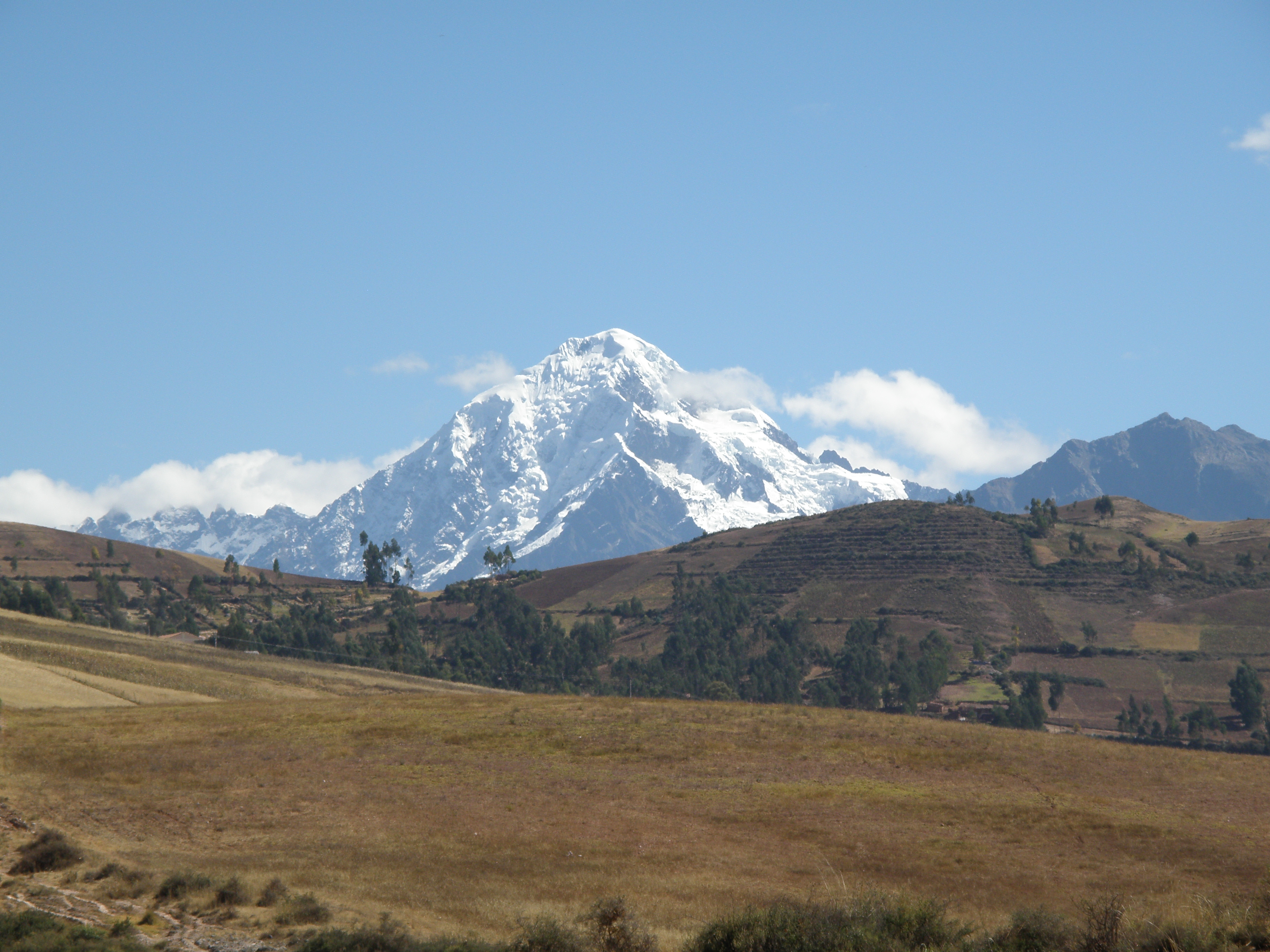
Moray astounded me with its four, deeply sunk, circular terraces. To the distance, the white peaked Nevado Veronica sparkled between the blue and the green. I don’t think I’d ever been in such mystical looking surroundings. Pepe returned to collect me. We briefly stopped in Maras, where a herd of slow moving cows blocked the narrow, dusty streets. New Zealand were beating Italy 1-0 in the World Cup. The car radio volume went up a notch as Pepe willed on Italy to fight back, which they did with an equaliser just before half-time. We both liked our football.
Pepe hailed from these remote parts. He pointed out his school, and old house, where he grew up and learned to read and write. Near to Maras we reached a drop off point for me to walk down the mountain tracks to the Las Salineras de Maras salt pools. Pepe assured me I couldn’t get lost even with my eyes closed, as the white dusty track led straight down to the old salt mine. The downhill distance of 10 kilometres wouldn’t take much more than an hour. From there I’d be just another four kilometres from Urubamba. Under a deep blue sky, I stripped down to my waist and made good distance in a short time.
Nearing the salt mine, a small group of children from a nearby farm suddenly appeared, shouting ‘gringo, gringo’ while smiling and frantically waving. I laughed and waved, calling back a big, happy ‘hola’ to them. There was a five soles charge to go through onto the salt basins, but I got in for just two soles. I took some photographs of this astonishingly bright site then reached the autopista (main road) in half an hour. I then walked the long stretch to Urubamba in just less than an hour. A regular bus service took passengers further east along the Sacred Valley to Pisac.
The bus filled up quite slowly and then we were on our way. After many stops, we reached Pisac. Then the bus continued and climbed over the pass in the direction of Cusco. Now, this was even better because the route passed Tambomachay and Puka Pukara, the two remaining sites to visit on my Boleto. But the noise and knowing where to stop were another challenge. Sat next to me was a young lad who kindly indicated when we came to the stop, as did the bus attendant collecting the fares.
I was gladly out of the hot and stuffy bus and into a heavy rain shower. It quickly dampened the dust as I entered Tambomachay. The declining afternoon sun peaked through under the clouds. It shot a spectacular golden shine over the spring water site known as El Bano del Inca (Inca’s Bath). It was all sweet as the entrance attendant pointed to Puka Pukara just on the opposite side of the road.
Close to the entrance were further ruins but certainly not part of Tambomachay. There were a few decidedly dodgy looking characters floating about, quite hidden in the large expanse of trees and ruins. This was a place where travellers had been held up and robbed before now. I had been warned so I returned to the roadside and crossed over to check out Puka Pukara, a red stoned fort with marvellous lookout points. Its positioning with the sunlight created some amazing shadows. From there I decided to walk the rest of the way back down to Cusco. It was a busy main road, and I soon reached the exact route I’d taken with Ana and Lourdes when we visited Saqsayhuaman. I reached Cusco just before darkness fell. I’d made the most of my Boleto by visiting all the 16 sites. My shins were rather sore from the latest exertions, but I felt a good sense of achievement. The sites were all remarkable and I also felt enriched by the experiences.

 Reading English, Hearing Spanish