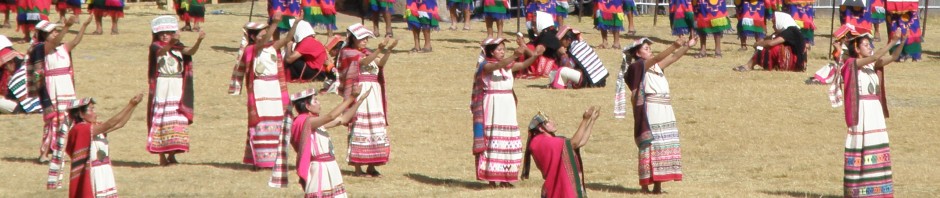

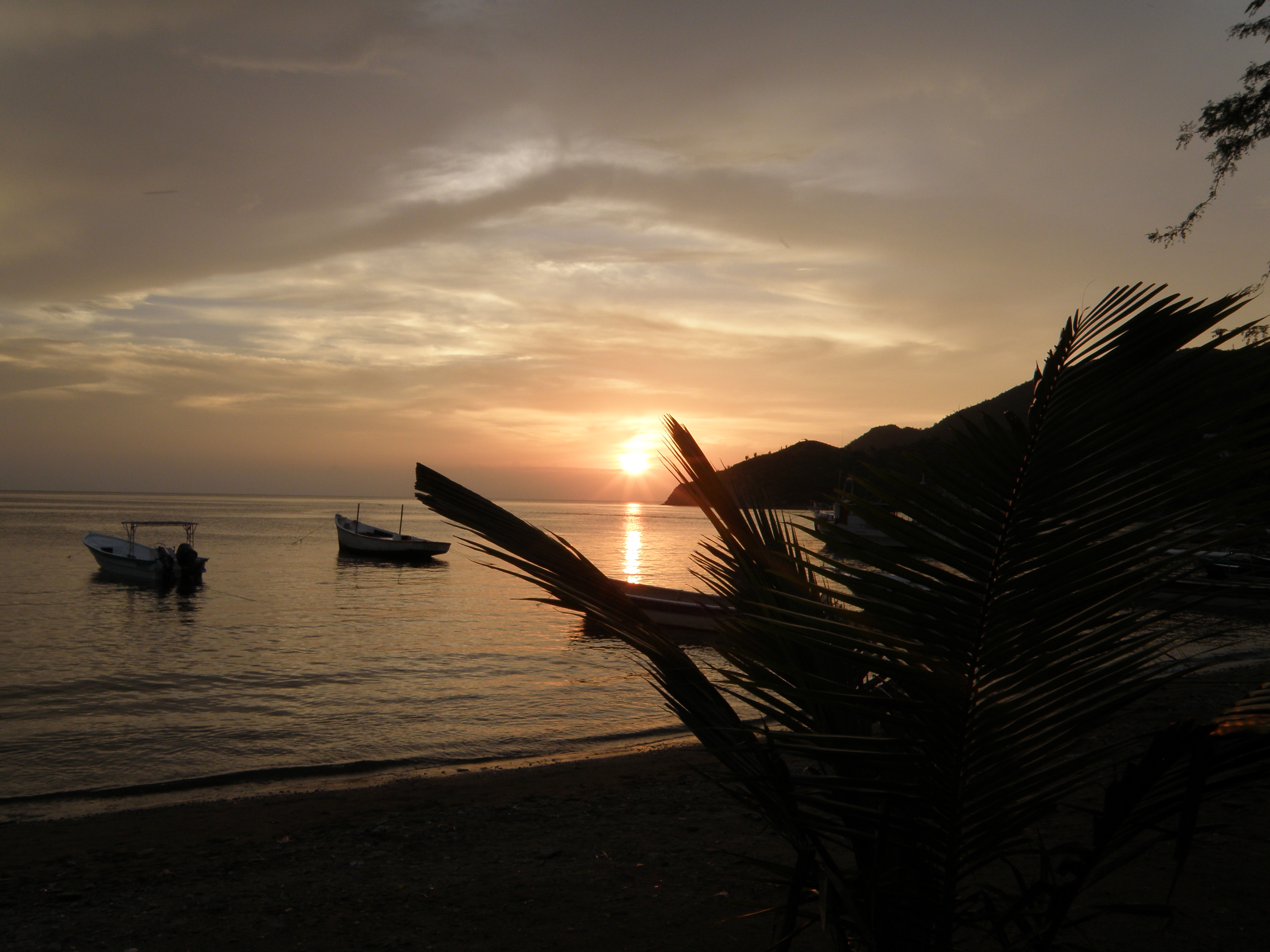
Taganga
-

- Taganga




-
- Taganga
-

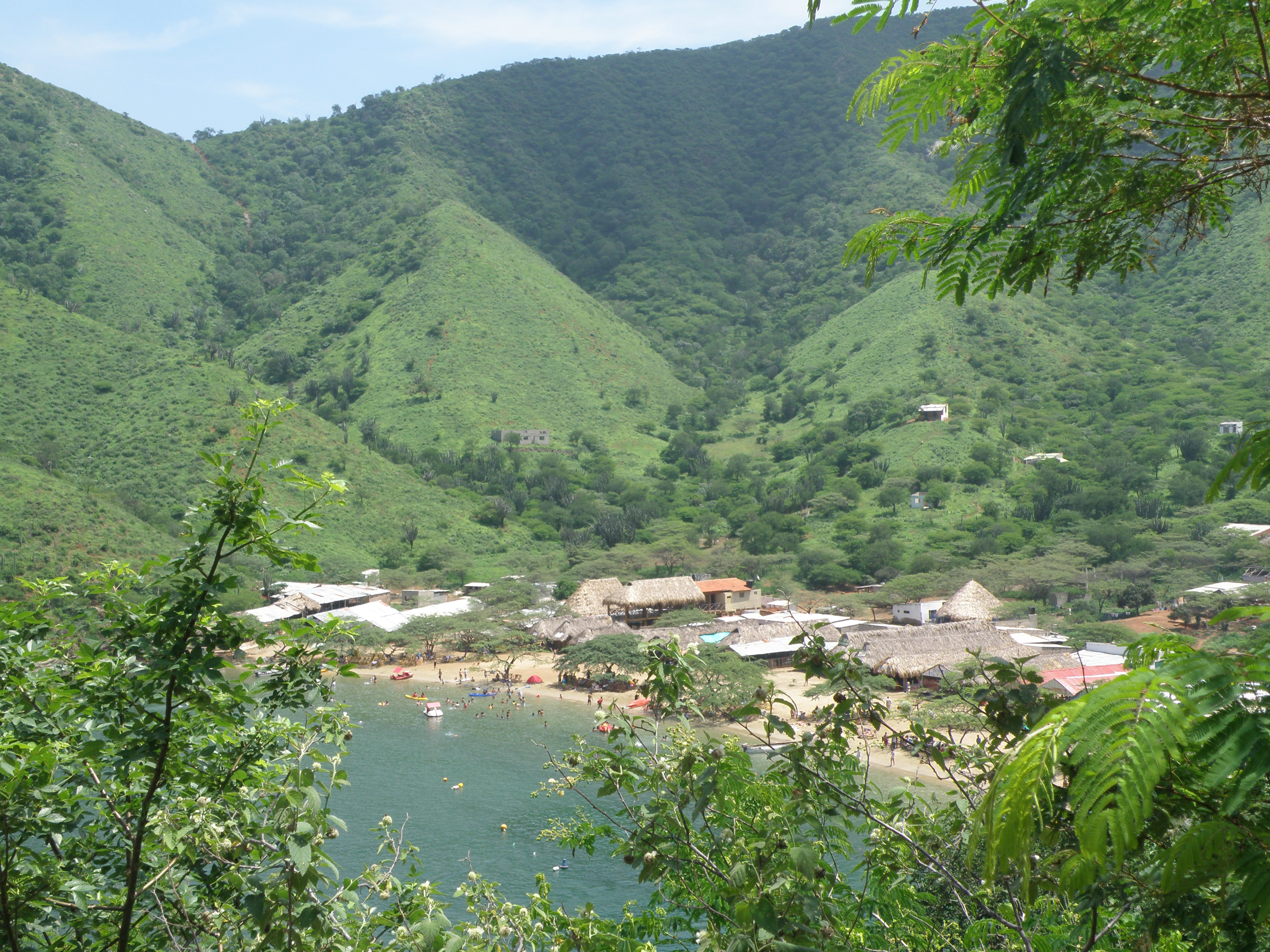
- Playa Grande



Chapter 25: Santa Marta and Taganga, Colombia
Saturday, August 7
After breakfast at the hostel, I took a taxi to Cartagena’s bus terminal. The busy Saturday morning traffic threw up clogs of dust as we journeyed along. It was difficult to see at times. A Transportes La Cestena bus was about to leave but I desperately needed to go to the bathroom. The bubbly bus attendant kindly promised to wait. I was on board minutes later. I enjoyed these quick turnarounds. Being on the move released me and raised my hopes for the day to come.
It was a lively bus, but I fell to sleep not long into the journey. I then suddenly woke up. Many of the passengers were loudly singing the Colombian National Anthem. It was being played on a television. There was live coverage of the new president being sworn in at a ceremony in Bogota’s Plaza de Bolivar. With it also being Colombia’s Bicentenary since independence, the country and its citizens were at last engaged in a reappraisal of the last few decades. But the political situation seemed as static as ever.
There were big floods in the small villages we passed beyond Barranquilla. Little children were happily jumping and splashing about in pools of brown water. We arrived in Santa Marta at about 5 in the afternoon. A cheap taxi got me to the even cheaper Hotel Miramar. I signed in for a single room. The receptionist then began a sales pitch about excursions into Parque Nacional Tayrona and Ciudad Perdida. This was Tayrona’s great pre-Hispanic city, lost in the hills till its rediscovery in the 1970s. I was hardly ready to make any decision, but it did stir my interest. I thanked the pleasant lady then climbed up to my room. It was a basic affair with an extremely loud fan.
Santa Marta was a smelly old place. Lots of recent developments added an ugliness to the town. The heavy rains constantly flooded the streets, and the stench of raw sewage made me heave. It was so unnecessarily dirty. One expected a bit of grime in a busy seaport but the poo on the streets was a bit too much. Greedy, short-sighted developers and planning officials were swamping the town with more hotels. They weren’t providing the supporting infrastructure though. It was short term gain leaving a long-term stain. I was worried that it was happening all over the world. There were many container ships docked in the small port, including one emblazoned with the Fyffes bananas logo. It was an industrious town no doubt, but I felt for the people having to put up with the pollution.
I found a quiet restaurant to enjoy a fish supper. The television was showing a live football match between Cali and Medellin. It was a lively affair, but nothing compared to the storms brewing in the mountains above Santa Marta. Increasingly loud thunder exploded in the skies. People scattered from the surrounding streets as lightning strikes closed in on the town. I ran back to Hotel Miramar and slowed down to a lethargic pace. I then crawled into bed for an early night. I still had my Marlboro Lights from Thursday night but surprisingly never felt the urge for a cigarette all day.
Sunday, August 8
The stinking streets of Santa Marta put me off staying in the town. Sub-standard drainage just couldn’t cope with the over-development. The raised sidewalks just about stayed above the rising filth from the submerged streets. When the rains did ease a dirty slime caked the town centre. I wondered if any drainage system could cope with such regular deluges though. It was just the way it poured into the ordinary people’s space in Santa Marta that really bothered me.
I walked further down the shore. Near to a sewage outflow there were boys and girls jumping into the dirty sea with their parents. There were crowds of people on the dirty beach. There were new developments going up further down the beach. I attempted to walk through one section but a guy in a hard hat appeared. I asked about the extent of infrastructure to cope with such development and mentioned the sewage on the streets. He wasn’t interested and said his only focus was on building the luxury apartments towering above his thick head. Then he politely asked me to turn back which I did.
It became a hot and sunny day, so I took a 1C bus along the headland road and down into El Rodadero. It was a fashionable beach resort five kilometres south of Santa Marta. The beach was nice and clean, and I gladly paid for a deckchair and gazebo. I then retreated into a little restaurant and enjoyed a seafood lunch. Three friendly nuns arrived soon after. They sat beside me. One of them asked what I was eating. They each agreed it looked good and ordered the same. It certainly tasted fine.
I returned to the beach for a couple of hours of sunbathing and continued reading Niall Ferguson’s book about money. The rain returned and began leaking through the gazebo. I waited for a bus back to Santa Marta. One soon arrived and it splashed through the afternoon monsoon. I got off at the southern side of Santa Marta centre. The streets weren’t so flooded, but the same disappointing stench and splashes greeted me on the surrounding streets around Calle 10 and the Hotel Miramar.
Throughout the day the massive wealth disparities in Santa Marta also came into sharper focus. The people in this town were so friendly though. Whenever I asked for any assistance or advice, I always received an eager response. A good example was when I stopped off at a pharmacy on my little mission to find the bus stop for Taganga. The elderly shopkeeper just stopped what he was doing. He left his premises wide open and came out with me along the street. With his arm around my shoulders, we walked along. He then smiled and nodded towards the exact spot.
Monday, August 9
Regular minibuses were taking people five kilometres north to a more relaxed location. I boarded one. The driver and his buddy immediately demanded a double fare as my baggage took the space of another passenger. Their eagerness and the driver’s hasty acceleration caused a couple of elderly ladies to stumble as they struggled to their seats.
We crossed over the northeastern hills and down into tiny Taganga. Where was the exact stop? I shouted over to the driver because we appeared to be travelling back towards Santa Marta. En Espanol, por favor (in Spanish please) came his reply. He smiled and added no necessitar preoccupado (no need to worry). We soon reached a small roundabout near the playa (beach) and a tourist information office where a group of backpackers were waiting to return to Santa Marta.
I was in Taganga, a relaxed little fishing town, nestled in a bay flanked by huge headlands and a mountainous background. It looked to be an idyllic kind of place. I’d already checked out the accommodation listings on the internet and called the Hostel Pelikan to book a stay. It was ideal, with a very clean and tidy dormitory space costing 15,000 pesos for the night. I also wanted to check out the highly recommended Casa Blanca. The Casa was a beach side hostel at the end of the little bay. There were places soon becoming available, so I pre-booked a single room with its own balcony overlooking the beach.
There were lots of backpackers cottoning on to the scenic and serene location. Boats for excursions and fishing trips were lined along the northern part of the shore. Taganga was also a popular scuba-diving centre. The attractive beach backed onto a tiny promenade and some alfresco restaurants. There were a few shops as well. While enjoying a late afternoon strawberries and ice cream, I noticed lots of Europeans walking about. They all had enormous smiles on their faces. Taganga was a happy place to have stumbled across.
As the night crept in, I took a shower then relaxed out on the hostel veranda. There was a power shortage and the whole street suddenly blacked out. I returned to my dormitory. An amiable bunch of young English and Australian women had just arrived. Lizianna and Julie-Anne from Sydney were extremely chatty and friendly. Dormitories weren’t to everyone’s taste but there was always a great chance of meeting nice people. The other guests, from England, had already gone out. A massive storm brewed up just before midnight. It was so intense as big thunder booms shook the window frames. The tropical rains raised the dust and aromas from the earth, but soon eased up and left a fresher air. Storms can be such a spectacle.
Tuesday, August 10
I slept well after the big storm. The young ladies were safely back in the dormitory so that was a relief. They were out till the early hours, but no doubt Taganga knew how to shelter its guests from the storm. I should have been more sociable and stayed another night or two at the Hostel Pelikan. Its pretty young people vibe was warm and welcoming. The Sydney girls were hanging around Taganga for an extra day as well.
I left for the short walk along the beach to Casa Blanca. I checked in and spent an hour on a computer. I then walked to Playa Grande. It was a beautiful bay to be found around the fertile headland northwest of Taganga. The leisurely walk in the high humidity and strong sunshine chilled my mood. There was a real Caribbean flavour to this coastline. I stopped at various points on the narrow path to admire the views. There were lizards darting across into the surrounding bushes.
Playa Grande’s beach was lovely. There were lots of palm thatched restaurants serving fried fish. A lovely looking lady came over to me when I stopped at one restaurant. She was Diana from Brazil and she worked at her stern-looking auntie’s kitchen. Diana invited me to choose from the morning’s catch. I pointed to one of the fattest fish in the straw basket. It was later served with rice, banana fritas (fried), sliced lemon and salad, with a refreshing glass of lemonade to wash it down. Diana sat with me. We practiced our basic Spanish with lots of laughter. She had lovely dark, pearly eyes so fitting for such a beautiful location.
Distant thunder rolled ever closer, so I returned to Taganga shortly after finishing my meal. Each day the humidity rose to be followed by sudden releases. Then a cooler, fresher atmosphere cleansed and calmed the air. Taganga’s weather was very seductive according to the gorgeous looking receptionist at the Casa.
I settled into my room, then read for a while out on the balcony. The sun sank in the western horizon and scattered a mellow, yellow light over the gentle sea. The waves lapped onto the shore beneath my raised, ground floor room. I noticed a small spider hurrying underneath my bed and then a tiny lizard scuttled around on the far wall by the window. Mosquitoes were my main concern. I sprayed the room with Off! insect repellent before taking a shower.
Wednesday, August 11
It was a very warm night, and I kept the fan whirring away throughout. I awoke to hear the happy sounds of a young family. They were splashing about and swimming in the high tide beneath my balcony. The morning sun had such a soothing warmth to complement this pleasant atmosphere. The afternoon and evening heat would soon send us all into the shade though.
I found the little Bonsai Cafe where delicious breakfasts were being served. I enjoyed yogurt with muesli and fruit flakes, some sweet, tangy tomate de arbol (tree tomato juice), and as much fresh coffee as I wanted. The two cups of espresso and the breakfast were to be savoured and not rushed. I thanked the hosts very much and hoped to return. Life was pretty much amplified and simplified in Taganga. Its beautiful surroundings made it easier for me unravel and take stock.
I felt so far away from it all in these balmy climes. There was a disconnection after being away from home for six months. My two cats, Rory and Georgie often crept into my thoughts though. I knew my newsroom days were behind me, but the discipline and training counted for a lot. There were journalism crafts and skills I’d worked so hard for. I now aimed to further develop as a writer while learning more about what’s out there in the world. It was all worth it because it was what I always wanted to do. I was so determined to get my foot in the door. I worked in a small factory in Ruthin on minimum wages for nearly two years. I’d passed the National Council for the Training of Journalists entrance exam and the work pay enabled to enrol on the course.
I was a bit rusty with my shorthand after being in South America since February though! My group editor Eric Langton of the Chester Chronicle said he still practised his shorthand for up to half an hour each evening when he settled down to listen to the news. I always appreciated it when senior journalists shared a few snippets about themselves and their approach to the profession. Any generosity in such a competitive field had to be appreciated, especially for someone like me. I came from a less privileged background with no family links to the profession, but I had the opportunity to offer a fresh perspective. Now in Taganga, it was time to reconnect by letting my creative juices flow.
I later walked up the Santa Marta road to look for a way down to the south side beach. There were some rocks to navigate, and I spotted a strange looking spiky fish in the shallow water. I reckoned I’d need a boat to reach the little cove, so I turned back for Taganga and continued north over to Playa Grande.
A small snake crossed the headland path and then a large lizard appeared on the brow of the little hill. Its eyes were pinned on me before scuttling off into thick undergrowth. I felt at ease with this abundance of natural wonder. Taganga wasn’t a bad place to take in some sun. Playa Grande was an especially nice place to take a dip in the warm ocean and rest back in a deckchair. Black clouds and thunder prompted a quick return to Taganga though. The storms weren’t so friendly in these parts.
Back in the hostel an Israeli guy was flaring up and preparing to put his fist through one of the computers. He had difficulties with flight bookings for Bogota to Leticia. The airline’s website kept knocking back his straightforward request. I tried to help but the guy was a bit abrupt, so I left him alone. Flyers were posted around Taganga, promoting The Hostel Oso’s free film nights. I went along and soon warmed to the rooftop balcony atmosphere. Before the film started, the gathering of about two dozen travellers were welcomed by the hosts. They were east coast Americans with academic backgrounds. We enjoyed Goodbye Lenin and its jovial take on the fall of the Berlin Wall. I’d found a cosy corner seat near the front and enjoyed the free popcorn being passed around. Beers were also served on a really engaging evening.
Thursday, August 12
There were news reports that a car bomb had exploded in Bogota. At least nine people were seriously injured. I just wished the violence would stop in this beautiful country. Colombia’s people had enormous reserves and backbone. If only their differences could be settled along with political reform there may be hope and lasting peace. There needed to be wider representation of the peoples and their energy. Instead of all the destructive bombs, it should be the country’s international reputation going through the roof. There was so much potential. It never was easy though. Some people will never get on with others. However, no one was asking for a massive love-in, just a bit more mutual respect and recognition of common interests and values. Perhaps we can’t change the world, but humanity can transform the world we live in.
I returned to Hostel Oso for a sound breakfast and enjoyable company to start the day. Back on the Santa Marta road, I found the track leading down to Playaca beach. The tiny bay was deserted. For nearly three hours I enjoyed a sun-soaked rest on the white sand. I occasionally took a dip into the crystal-clear sea. There wasn’t a soul to be seen. A couple of boats bobbed about in the water and Tropicana Radio blared away from a nearby empty cafe bar. A raved-up version of Simon and Garfunkel’s Sound of Silence seared the airwaves, so I prepared to leave. I walked back through the grassy front onto the track with some plastic clutter I’d collected from the beach. A man stirred in a nearby hut. I waved to him, and he waved back. He looked as if he was probably going to open the bar, but I was on my way up back.
Plastic bags were a particular litter on the streets and in the sea. It seemed to be the only blemish on Taganga’s haven. Its main beach was very busy, and I returned there after lunch. I’d never been one for too much sunbathing but I was developing a good tan at long last. I finished The Ascent of Money – A Financial History of the World. As the author suggested, had traditional British dinner party discussions descended to share portfolios? Yuck! I enjoyed the book though. I didn’t necessarily agree with the author, but his prose and perspective were really engaging.
Drops of rain increased as the distant thunder closed in. Back at the hostel I typed in some more of my travel diary onto email drafts. I continued drinking lots of bottled water, but I went without dinner.
Instead, I fed my head a little more after stumbling onto a new song based on an E chord voicing. Such moments mean so much personally. I gain strength from the momentum of being on the move. It can happen anytime. There is no time to wallow in the mire. Instead, I go into a trance like groove where either the words or the beat starts the rhythm. This present idea quickly came to fruition. The words flowed out about trust and money. The book had provoked me into asking some deeper questions.
Friday, August 13
What an idyllic location I’d found myself in. I had the single room and its balcony. There was the space and the beach. The ornamental iron bars kept out any unwanted guests from climbing onto the balcony. They had done in the past according to the receptionist. The sound of the waves during the night was so soothing and cast aside any concerns about intruders!
I wasn’t eating enough so I tucked into a large breakfast in the restaurant next to Casa Blanca. I returned to Playa Grande and settled into my usual deckchair spot. I’d picked up The Good Soldier Schweik by Jaroslav Hasek. It immediately grabbed my attention. With its strong satire and Schweik’s extraordinary character I was laughing aloud. I started repeating some of the phrases from his amazingly funny anecdotes. I could see how Blackadder Goes Forth went on to claim comic classic status after being inspired by Hasek’s fine writing.
I stayed at Playa Grande till mid-afternoon then walked back to Taganga. My feet were so sore. The old sandals looked to be nearing the end of their days. I bought them way back in 2004 when I was in Bologna, Italy with my ex-girlfriend Lara. They’d lasted well but the soles were coming apart. As the late afternoon rain returned, the sea became choppier.
It seemed a strange set-up at Casa Blanca. The gentle receptionist contrasted markedly with a bullish guy who kept reappearing behind the desk. He wasn’t a Colombian Basil Fawlty, but his mood and vibe were so edgy. Today he was grasping lots of paperwork and pointing his pen at various figures in a one-sided discussion with the receptionist. However, I was happy at the Casa and decided on a weekend stay. Prices were much higher in Colombia than in Peru. I wanted to slow down. Staying put in one place helped me to figure out my finances for the rest of the trip. The buses were the largest expense by a long way. At least the roads were in a far better condition than even Argentina’s.
There were lots of polite and friendly couples staying in the hostel. I continued typing out my diary. Perhaps a three-hour evening slot was rather too long though and left me rubbing my eyes. My university friend Stephen Martin emailed me to ask about the religious side of South America. He was contemplating applying for work as a guide at the Liverpool Anglican Cathedral. The tiny lizard remained in my room but there was no sign of the spider nor the rather annoying large fly.
Saturday, August 14
There was £2,000 left in my kitty for the final 50 days. Spending £20 a day would leave a grand for when I returned home. I returned to the friendly Hostel Oso and had a nice chat with the owners. The husband Peter was a warm and compassionate guy with a social conscience. He showed me the hostel’s book collection. I spotted Graham Greene’s The Power and the Glory. Peter noticed my Hasek book and exclaimed what a hoot it was. He recommended I read some of Greene’s lighter stuff, like Travels with My Aunt, saying it revealed more of the writer’s character. He also suggested PG Wodehouse. I exchanged Niall Ferguson’s book and our conversation meandered onto the 2008 banking crisis. Peter took a dim view of governmental dabbling in business. I explained how the Ascent of Money highlighted the selfishness at the core of capitalism. Peter admitted there had to be a certain selfishness in business.
I returned to Playa Grande. Along the way a little lad advised me to be careful with my camera. He and his mate passed me as I was taking photographs of Taganga. They gave a knowing look to warn me to watch out for thieves. It was easy to forget the dangers of travelling in such tranquil places. I spent the day on Playa Grande’s packed-out beach where friends and families were having a rollicking good time. At regular intervals a poor unfortunate would have sand poured down their pants followed by a leg-and-a-wing into the deep waves. It all looked quite entertaining, and the hilarity of The Good Soldier Schweik mirrored this!
It was a cloudy day. The overhead sun only occasionally peeked through. I still burnt a little despite putting on generous amounts of factor 50. The only real concern of the day cropped up when a young woman passed out nearby. She was with a group of friends and a young man, who appeared to be her boyfriend. He immediately took control of the situation as crowds gathered around them. She needed air and slowly came around. However, she looked exhausted and completely out of it. A boat arrived and she was ferried back to Taganga. Hopefully, everything was going to be alright. She looked really distressed though. I remembered she’d been in the water quite a lot.
When I returned to Casa Blanca the receptionist informed me that she had been into my room to spray it with repellent. I thanked her and asked whether I needed to take anti-malarial tablets. She doubted it but suggested I visit the village pharmacy. They asked me where I would be travelling to next. I wouldn’t need pills in Parque Nacional Tayrona nor for the Venezuelan route I intended taking to the Brazilian border. However, I would have to start taking the tablets a couple of days before my arrival in Manaus, deep in the Amazon jungle. I decided I would buy my medication in Merida, Venezuela, but it was knowing which ones I needed.
I checked the football scores from back home. Wrexham beat Cambridge United 1-0 in their first match of the season. I was delighted. Wrexham was my Dad’s team. He’d taken me to my first ever professional football match in April, 1978. On that momentous day, Wrexham beat Rotherham 7-1 to win the old Third Division and clinch promotion. It was a memory to savour.
Sunday, August 15
I woke out of a dream where I’d been sat on the stage in Telford’s Warehouse, Chester. I plugged the lead into my guitar. Nothing happened. I remained there, rooted to the spot, just staring ahead, and wondering about the future. In real life I’d taken part in some open-mic acoustic nights at Telford’s. They were always enjoyable affairs. BBC Radio presenter Mark Radcliffe appeared on one occasion with Rusty Mahone’s band The Family Mahone belting out some fine Irish tunes. On this night, I was slotted in after an alternative act featuring a guy dressed as a Viking with an industrial looking guitar crossed with a chainsaw. How could I follow that? I thought. My performances were always tinged with nervousness, but I sang four of my own songs to generous applause. Mark, sitting there at the front looking through his pint glass, pleaded for his companions to lessen their chatter and listen.
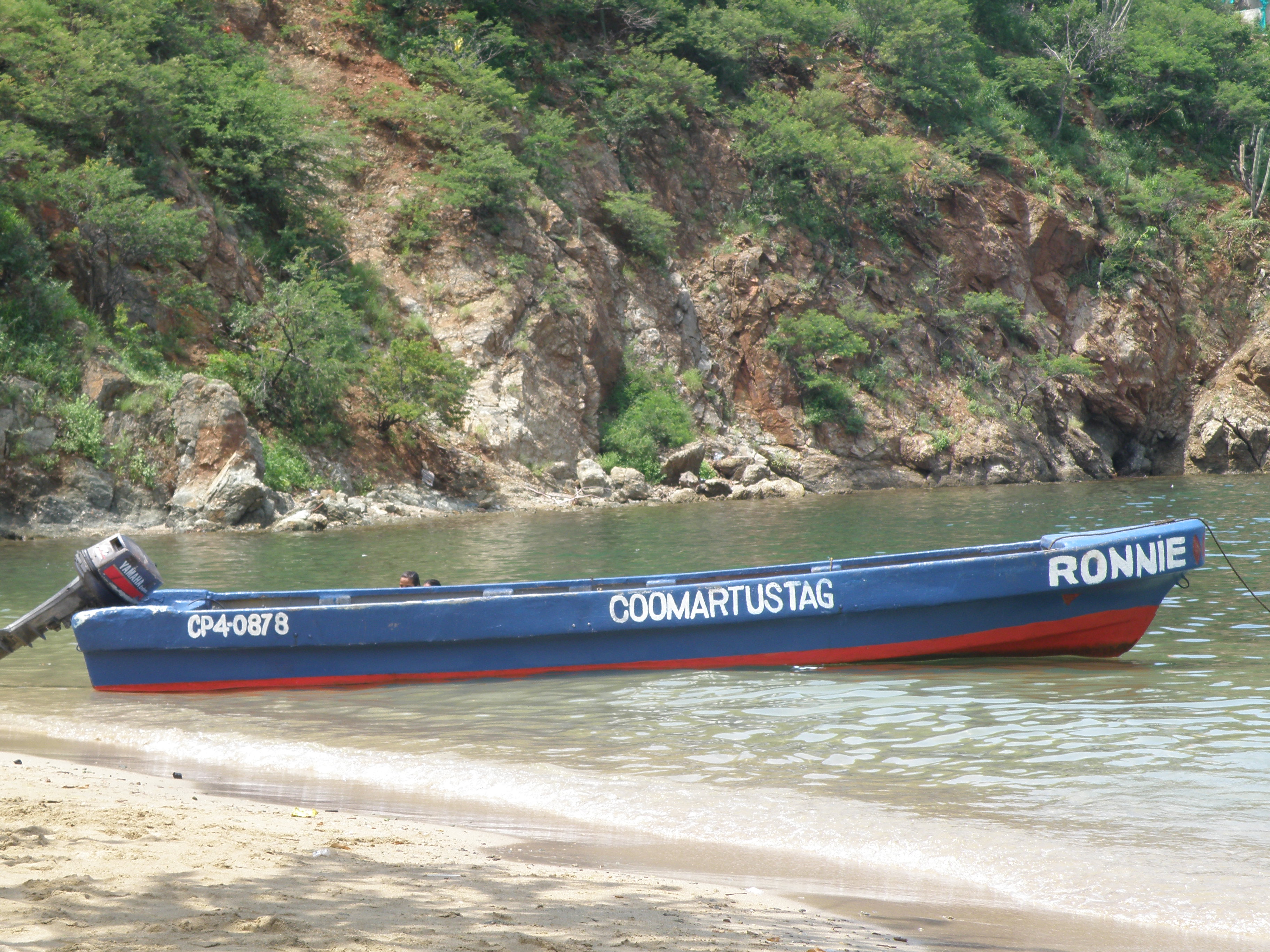
I quickly broke out of my stupor after a strong coffee. It was a hot and sunny morning in Taganga. Blue and yellow lizards darted across the footpath to Playa Grande. The crowds returned to the beach. I continued having fun reading The Good Soldier Schweik but the clouds increasingly blotted out the blazing sun. One of the boats ferrying passengers from Taganga docked nearby. The blue boat had Ronnie written in white painted letters along its side. I’d seen Ronnie the Boat moored up in Taganga a few days before. It was good to see the old floater still bobbing about!
I walked back to Taganga later in the afternoon. The tops of my legs were stinging with sunburn. I sat on my balcony for a couple of hours cooling down with a Coca Cola, reading, playing guitar, and gazing at the sunset. Happy couples stayed in the water long after sundown. A couple of sullen looking characters suddenly spotted me as they ambled past on the beach below. They approached the wall, shouting up to ask if I wanted anything. I was on my way to Parque Nacional Tayrona. Travelling with any stash might be chancing it so I declined their offer.
My new song Trust/Money began taking a life of its own. I knew it was coming together. The slide on the E chord shape was working and then the fingerpicking pattern started to fit into the rhythm. I lost all sense of time and almost missed the last servings at a tasty little fish restaurant on the front. Places were at a premium as the clock ticked on past 8. However, the kindly, smiling proprietor in a replica England football shirt guided me to a small table by a wall. He then raced into the kitchen to check how the ground lay and immediately rushed back into the dining area with a menu. I thanked him and opted for a lovely fish dinner. Missing out on meals was all very well, but I remained drastically thin after my illness in Peru.
I topped off the meal with a fresa copa dessert at a little cafe further down the sea front. A plethora of beach balls on Taganga’s beach prompted me to check out the Liverpool versus Arsenal final score. It was a 1-1 draw. The evening artisans were out on the street displaying their crafts and paintings. A lady in dreadlocks had loads of badges and wrist bands. I spotted a cracking looking badge. It featured John Lennon holding a big flower to his left eye. I bought that and a Rasta wrist band. I ended a lovely Sunday by planning Monday’s travels.

 Reading English, Hearing Spanish